The Sound Barrier is a Suggestion: Testing the Czinger 21C VMax on the Edge of Sanity
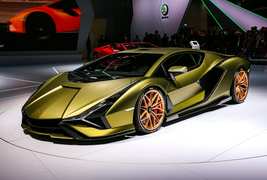
In the dizzying landscape of automotive innovation, few creations manage to bridge the chasm between pure science fiction and raw, unfiltered reality. The Czinger 21C VMax stands as the epitome of this fusion—a Southern California masterpiece that challenges the very definitions of performance, technology, and sanity. Having spent three intense days navigating the dramatic terrain of California’s wine country, my perspective on hypercars has been irrevocably altered. This isn’t merely a vehicle; it’s a vision of what’s possible when artificial intelligence, 3D printing, and sheer performance ambition collide to create something that feels less like a machine and more like a weaponized sculpture.
The journey into the world of Czinger begins not with a key, but with a biometric scan and a security clearance. To understand the 21C VMax, one must first understand Divergent Technologies, the parent company. As the pioneers of a revolutionary approach to additive manufacturing, Divergent isn’t just building cars; they are engineering the very foundation of the next generation of transportation. Their factory, a space I was fortunate enough to tour, felt less like a production line and more like a cathedral of modern engineering, where aluminum powder meets multi-million-dollar lasers to birth objects that defy traditional manufacturing limitations.
The Birth of a Spectacle: Factory Innovation in Orange County
Entering the Divergent Technologies facility felt like crossing a threshold into a different timeline. The air hummed with the low thrum of advanced machinery, and the scent of specialized metal powder hung faintly in the atmosphere. It’s here, in the heart of Orange County, that the future is being forged, not through stamping and welding, but through the precise artistry of additive manufacturing. The security protocols were not a novelty, but a necessity; Divergent’s foundational technology extends far beyond the automotive realm, supplying critical components to defense contractors. While the specifics of military projects were off-limits, the sheer scale of the operation was palpable.
Lukas Czinger, the brilliant young CEO and the visionary force behind the 21C, explained the philosophy that drives their innovation: Pareto Optimality. In simple terms, this means pushing engineering to the absolute limit where any deviation—any gram of added weight or any minor tweak to the structure—results in a net loss of performance. Imagine an engineer needing a single, structural component, like a reservoir bracket for a rear suspension. Instead of designing a conventional part, Czinger’s software generates thousands of iterations, each mathematically optimized for the exact forces it must endure and the space it must occupy. The result is an organic, seemingly impossible lattice structure that is both lighter and stronger than anything forged through traditional methods. It’s evolution on fast-forward.
This advanced approach is not confined to their own hypercar. Divergent’s technology has become a secret weapon for some of the world’s most respected automakers. Nine OEMs currently utilize their 3D-printed parts, with Aston Martin (DBR22 Roadster), Bugatti (Tourbillon), and McLaren (W1) openly acknowledging the partnership. However, discerning eyes can spot the subtle signatures of Divergent technology in many other high-performance vehicles, with the control arms of the Ferrari F80 being a prime suspect in this quiet revolution.
The Apex Predator: Decoding the Czinger 21C VMax
Czinger produces two variants of this marvel: the high-downforce, track-focused 21C and the sleek, wingless long-tail, the 21C VMax. The name, of course, is a nod to the 21st century, representing the company’s forward-thinking ethos. For this review, I was fortunate enough to be assigned the VMax for the inaugural Velocity Tour, a grueling 500-mile road rally winding through the rugged beauty of Northern California wine country.
Describing the experience as simply “driving” is a gross understatement. The cabin feels less like a car interior and more like the cockpit of a fighter jet. Czinger has designed the 21C to mimic the sensation of being in a jet fighter—a comparison I can attest to, having experienced the G-forces of an Extra 330LT stunt plane. Glass presses in close on both sides, offering an unparalleled panoramic view that is both thrilling and slightly unsettling for the uninitiated.
However, the most surreal aspect of the 21C VMax is the tandem seating configuration. This isn’t your typical supercar with a passenger in the adjacent seat. The driver sits forward, with the passenger directly behind—like a jet pilot and their co-pilot. This unique layout, combined with ultra-wide carbon sills (designed to house extensive battery packs), makes ingress and egress a comical, contortionist ballet. You must first sit on the sill, pull your knees towards your chest, pivot on your backside, tuck your legs into the footwell, and finally lower your head under the roof. It’s a process that draws stares, but once you’re settled, the view is unlike anything else on the road.
The Hybrid Heartbeat: Powering the Beast
The Czinger 21C VMax is a testament to modern hybrid engineering. The sills, which are impossibly thick, contain 2.2 kWh of battery power each, totaling 4.4 kWh. This isn’t a plug-in hybrid in the traditional sense; the batteries are charged by a mid-mounted combustion engine and can deliver a staggering 500 horsepower to the front axle, which is driven by individual electric motors.
The true heart of the beast is a Czinger-designed 2.9-liter twin-turbo V-8. This compact powerhouse is good for 750 horsepower on standard California 91-octane premium fuel. Unleash 100-octane race fuel, and the output climbs to 850 horsepower. Czinger also notes the engine is capable of running on ethanol, producing even more power, although specific figures are proprietary.
Transferring that power to the road is a custom Xtrac single-clutch automated semi-sequential gearbox. This unit is similar to the seven-speed in the Pagani Utopia, but Czinger has taken it further by 3D-printing the transmission casing and integrating small 48-volt electric motors to smooth out low-speed shifts. The result is a transmission that eliminates the dreaded “drunken lurch” of typical automated manuals. As I experienced navigating gas stations and hotel parking lots, the twin-barrel actuators work flawlessly, making low-speed maneuvering feel almost normal—a feat worthy of applause in a machine like this.
The Track as a Laboratory: Pushing the Envelope
As with many hypercars of this caliber, Czinger insisted on having a professional driver, Evan Jacobs, riding shotgun for the first day. This serves as both a safety net and a confidence booster for the team. Thankfully, Jacobs’s assessment was positive, allowing me to drive solo for the rest of the rally.
We visited the iconic Laguna Seca for some parade laps, but non-Czinger employees are barred from taking the VMax on the track, even at the slow pace of a rally. I opted to ride in the passenger seat, a position that offered a bizarre, bird’s-eye view of the track. The visibility was spectacular, reminiscent of a stunt plane, providing a unique perspective on corners I’ve experienced countless times.
Jacobs managed to convince the Skip Barber Racing School staff to allow him to take the VMax for a couple of “6/10ths” hot laps. The most impressive ride I’ve ever experienced was in an Aston Martin Valkyrie LMH race car, where the braking forces were so intense I could feel the blood pooling in my extremities. The Czinger VMax now holds the second spot on that list, even with Jacobs not pushing to the limit and without the aerodynamic advantage of the massive rear wing. It’s easy to understand how the standard 21C completed the California Gold Rush, setting five production car track records in five days while driving from track to track.
Later, Czinger returned to Laguna Seca to reclaim the track record from a highly focused Koenigsegg Jesko Sadair’s Spear. The lap time—a 1:22.30—is faster than the fastest MotoAmerica Superbike lap ever recorded at the track, a 1:22.56. This is simply mind-boggling performance for a road-legal car.
Czinger claims a vehicle weight of around 3,600 pounds, which is incredibly light for a 1,250-horsepower hybrid. For context, the Ferrari SF90 Stradale Assetto Fiorano (a 986-horsepower, three-motor V-8 PHEV) weighs 3,839 pounds. The new Lamborghini Temerario (a lower-horsepower, three-motor V-8) is even heavier at 4,185 pounds. These two Italian legends are among the quickest gasoline cars we’ve ever tested, making Czinger’s weight advantage even more remarkable. Considering that Southern California is not traditionally known for supercar manufacturing, this achievement is a testament to pure engineering ingenuity.
Living with the Alien: Navigating the Real World
The chosen route for the Velocity Tour was not the ideal smooth pavement of a race track, but the rugged, winding back roads of California wine country. While at the moment I wished for the silkier ride of a grand tourer, in retrospect, this was the most accurate simulation of what a Czinger owner will actually experience

 The Sound Barrier is a Suggestion: Testing the Czinger 21C VMax on the Edge of Sanity
In the dizzying landscape of automotive innovation, few creations manage to bridge the chasm between pure science fiction and raw, unfiltered reality. The Czinger 21C VMax stands as the epitome of this fusion—a Southern California masterpiece that challenges the very definitions of performance, technology, and sanity. Having spent three intense days navigating the dramatic terrain of California’s wine country, my perspective on hypercars has been irrevocably altered. This isn’t merely a vehicle; it’s a vision of what’s possible when artificial intelligence, 3D printing, and sheer performance ambition collide to create something that feels less like a machine and more like a weaponized sculpture.
The journey into the world of Czinger begins not with a key, but with a biometric scan and a security clearance. To understand the 21C VMax, one must first understand Divergent Technologies, the parent company. As the pioneers of a revolutionary approach to additive manufacturing, Divergent isn’t just building cars; they are engineering the very foundation of the next generation of transportation. Their factory, a space I was fortunate enough to tour, felt less like a production line and more like a cathedral of modern engineering, where aluminum powder meets multi-million-dollar lasers to birth objects that defy traditional manufacturing limitations.
The Birth of a Spectacle: Factory Innovation in Orange County
The Sound Barrier is a Suggestion: Testing the Czinger 21C VMax on the Edge of Sanity
In the dizzying landscape of automotive innovation, few creations manage to bridge the chasm between pure science fiction and raw, unfiltered reality. The Czinger 21C VMax stands as the epitome of this fusion—a Southern California masterpiece that challenges the very definitions of performance, technology, and sanity. Having spent three intense days navigating the dramatic terrain of California’s wine country, my perspective on hypercars has been irrevocably altered. This isn’t merely a vehicle; it’s a vision of what’s possible when artificial intelligence, 3D printing, and sheer performance ambition collide to create something that feels less like a machine and more like a weaponized sculpture.
The journey into the world of Czinger begins not with a key, but with a biometric scan and a security clearance. To understand the 21C VMax, one must first understand Divergent Technologies, the parent company. As the pioneers of a revolutionary approach to additive manufacturing, Divergent isn’t just building cars; they are engineering the very foundation of the next generation of transportation. Their factory, a space I was fortunate enough to tour, felt less like a production line and more like a cathedral of modern engineering, where aluminum powder meets multi-million-dollar lasers to birth objects that defy traditional manufacturing limitations.
The Birth of a Spectacle: Factory Innovation in Orange County