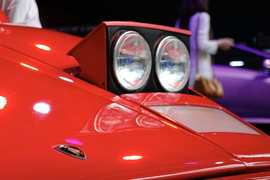
Aston Martin Valhalla: The Million-Dollar Benchmark for Extreme Performance
For over a decade in the auto press, the ritual of reviewing a million-dollar supercar often felt like a whimsical dance with the absurd. But in the current age of the 2020s, this endeavor has transcended surrealism. When close friends and colleagues asked about my experience with the 2026 Aston Martin Valhalla, I found myself pausing before replying. The truth is, the answer only makes sense if you’ve had the privilege of experiencing the zenith of modern automotive performance firsthand.
This isn’t a relic from the past; it’s a declaration of intent for the future. It shatters all expectations of what a production road car can achieve, blending the brutal force of a Formula 1 race car with the refined elegance of a grand tourer. But behind the stunning aesthetics and staggering numbers lies a narrative of intense engineering, strategic partnerships, and a relentless pursuit of performance that has spanned years of development.
A Legacy Reimagined: The Long Road to Valhalla
The journey of the Aston Martin Valhalla began seven years ago, though the isolation of the pandemic made those years feel like an eternity. It was at the 2019 Geneva Motor Show that Aston Martin first unveiled the concept that was then known as the AM-RB 003. The original name reflected the company’s sponsorship ties with the Red Bull Racing Formula 1 team, a partnership that gave birth to the Valkyrie and promised a road-going racer with unprecedented capabilities.
The automotive landscape, however, proved to be as volatile as the track itself. By the end of the 2020 Formula 1 season, Aston Martin and Red Bull Racing parted ways. Lawrence Stroll, the new head of Aston Martin, rebranded the Racing Point F1 team as Aston Martin, ending the partnership. More significantly, Aston Martin was undergoing a profound internal transformation.
The company’s vision for the Valhalla’s powertrain also evolved. Initially conceived as a bespoke turbocharged 3.0-liter V-6, engineered in-house with performance metrics that rivaled hybrid hypercars like the LaFerrari and Porsche 918 Spyder, the plan shifted. The automotive world was moving towards electrification and turbocharging, and Aston Martin adapted, ultimately integrating a hybrid powertrain based on the Mercedes-AMG GT Black Series.
When I first sat in a mock-up of the Valhalla at the Pebble Beach Concours in August 2022, the projected specs had already increased significantly. The hybrid system, now based on a V-8 engine, was projected to produce 1,012 horsepower and massive torque. Aston Martin emphasized that while the powertrain was still under development, the performance projections were already astonishing. “Please, I want to drive it, whenever it’s ready,” I remember thinking.
The Art of the Deal: Engineering the Impossible
The production hardware of the 2026 Aston Martin Valhalla exceeds all those earlier expectations. The car features a flat-plane-crank, dry-sump, twin-turbo 4.0-liter V-8 that alone produces a staggering 817 horsepower. This combustion engine is complemented by three electric motors, one positioned on each front wheel and a third integrated into the new eight-speed dual-clutch transmission (a first for Aston Martin). Combined, these electric motors deliver an additional 248 horsepower, bringing the total peak output to an astronomical 1,064 horsepower and 811 lb-ft of torque.
This hybrid system is not just about raw power; it’s a marvel of engineering designed for both road and track performance. The battery pack, composed of 560 cells, utilizes an off-the-shelf AMG battery that is immersed in dielectric oil. As Aston Martin chief engineer Andrew Kay explained, “We’re able to push energy into the battery and cycle it out very quickly. This is very good for track use, in particular.”
Furthermore, the production Valhalla is a plug-in hybrid, capable of driving solely on electric power for up to 8.7 miles and achieving a top speed of 80 mph in EV mode. For those interested in the technical nuances of this groundbreaking hybrid system, Aston Martin has provided an in-depth technical overview that explains the synergy between the combustion engine and electric motors.
Beyond the Numbers: A True Supercar Experience
While the raw numbers are undeniably impressive, the Valhalla’s significance lies in its transformation of the modern supercar landscape. The company itself refers to the Valhalla as its first-ever mid-engine supercar. However, many would argue that with its price tag of nearly $1.1 million and a production run limited to 999 units, it falls squarely into the hypercar category. Yet, the Valkyrie exists, leaving Aston Martin in a peculiar position regarding marketing descriptions.
For younger generations of car enthusiasts, who are accustomed to million-dollar cars dominating their social media feeds with unheard-of power figures, the Aston Martin Valhalla might seem like just another entry in a crowded field. But for those who remember the shockwave dealt by cars like the McLaren F1 or the Bugatti Veyron—the first production hypercars to break the 1,000-horsepower barrier—the Valhalla represents a paradigm shift.
In just the few years since the Valhalla was first shown at Pebble Beach, we have seen the arrival of cars like the Ferrari F80, the 849 Testarossa, the Czinger 21C VMax, and even the seemingly ubiquitous Porsche 911 Turbo S. Furthermore, the emergence of the hybrid Corvette ZR1X with 1,250 horsepower, an engine nobody predicted when the Valhalla was conceived, underscores the pace of innovation in the hypercar segment.
In this landscape of rapidly advancing technology, the phrase “comparison is the thief of joy” has never been more relevant. The Aston Martin Valhalla exists in a realm where comparisons are nearly impossible, not least because many of its rivals, particularly Ferrari, are notoriously selective about loaning their cars for head-to-head comparisons. Nevertheless, to truly appreciate the Valhalla, one must experience it on its own merits.
The Road Ahead: Luxury Meets Performance
For a car that appears so race-ready, the Valhalla’s road manners are surprisingly refined. Despite its low-slung, aerodynamic design, the Valhalla is not the compromise one might expect. The only significant sacrifice is luggage storage; while there are small cubbies in the door panels, there is no frunk. This space is occupied by three high-temperature radiators and the pushrod-actuated, horizontally mounted inboard suspension system.
This unique suspension setup is necessitated by the F1-inspired seating position. The driver sits so low that a conventional suspension would raise the bodywork’s height and obstruct the forward sightline. There is no backrest angle adjustment; the driver must adapt to the fixed seat position. Furthermore, the seats are bolted so low into the carbon-fiber monocoque tub that there is no motor to slide the seat forward or backward. Instead, occupants must use a leather strap between their legs to make these adjustments.
Despite these eccentricities, the driving position quickly becomes second nature. Within the first two miles, it becomes clear that the Valhalla’s specialized Bilstein DTX active damper system and overall suspension layout provide a remarkably comfortable experience for a car of this magnitude. On a mixed road route in Spain, the suspension’s Sport and Sport+ modes were both usable, a welcome trait also found in other new Aston Martins, such as the Vantage. The Race mode introduces a harsher ride that would likely become tedious in daily cruising, but it is perfectly suited for track driving.
The steering wheel, with its square-ish design, feels mostly comfortable to use. However, the molded crease that runs vertically along the back of the grip might not be the most comfortable for everyone. The steering feel itself is intuitive, maintaining a lovely weight that is neither too light nor too heavy across various drive modes.
When I found a long, empty stretch of country road, I brought the car to a halt, depressed the brake and throttle pedals, and launched the Valhalla as hard as it would go. Aside from a slight, sliding wiggle from the rear as the tires gripped, it was a simple matter of instant acceleration. Aston Martin claims a 0–62 mph time of 2.5 seconds, which translates to approximately 0–60 mph in 2.4 to 2.3 seconds. The speed is no more shocking than in other similar cars, but an impressively flat torque curve means 90 percent of the peak 811 lb-ft is available from 2,500 rpm to 6,700 rpm. The acceleration never seems to relent.
The only potential disappointment for supercar enthusiasts might be the engine’s redline, set at 7,000 rpm. Furthermore, the engine’s sound profile is a complex symphony of electric motors, turbos, induction, and exhaust. While it is loud enough to be satisfying when pushing the car hard, it is unlikely to be remembered as one of the best-sounding engines of all time. The complexity of the powertrain is evident in every note.
The Track Experience: Precision and Control
On the track, Spain’s Circuito de Navarra—a 2.7-mile circuit with a balanced blend of corners, braking zones, and elevation changes—the Aston Martin Valhalla truly shines. This closed environment reveals the full potential of the Valhalla’s trick torque vectoring, aerodynamics, and monster braking system.
To maximize performance, drivers should select Race mode. This mode offers a crucial advantage over

 Aston Martin Valhalla: The Million-Dollar Benchmark for Extreme Performance
For over a decade in the auto press, the ritual of reviewing a million-dollar supercar often felt like a whimsical dance with the absurd. But in the current age of the 2020s, this endeavor has transcended surrealism. When close friends and colleagues asked about my experience with the 2026 Aston Martin Valhalla, I found myself pausing before replying. The truth is, the answer only makes sense if you’ve had the privilege of experiencing the zenith of modern automotive performance firsthand.
This isn’t a relic from the past; it’s a declaration of intent for the future. It shatters all expectations of what a production road car can achieve, blending the brutal force of a Formula 1 race car with the refined elegance of a grand tourer. But behind the stunning aesthetics and staggering numbers lies a narrative of intense engineering, strategic partnerships, and a relentless pursuit of performance that has spanned years of development.
A Legacy Reimagined: The Long Road to Valhalla
The journey of the Aston Martin Valhalla began seven years ago, though the isolation of the pandemic made those years feel like an eternity. It was at the 2019 Geneva Motor Show that Aston Martin first unveiled the concept that was then known as the AM-RB 003. The original name reflected the company’s sponsorship ties with the Red Bull Racing Formula 1 team, a partnership that gave birth to the Valkyrie and promised a road-going racer with unprecedented capabilities.
Aston Martin Valhalla: The Million-Dollar Benchmark for Extreme Performance
For over a decade in the auto press, the ritual of reviewing a million-dollar supercar often felt like a whimsical dance with the absurd. But in the current age of the 2020s, this endeavor has transcended surrealism. When close friends and colleagues asked about my experience with the 2026 Aston Martin Valhalla, I found myself pausing before replying. The truth is, the answer only makes sense if you’ve had the privilege of experiencing the zenith of modern automotive performance firsthand.
This isn’t a relic from the past; it’s a declaration of intent for the future. It shatters all expectations of what a production road car can achieve, blending the brutal force of a Formula 1 race car with the refined elegance of a grand tourer. But behind the stunning aesthetics and staggering numbers lies a narrative of intense engineering, strategic partnerships, and a relentless pursuit of performance that has spanned years of development.
A Legacy Reimagined: The Long Road to Valhalla
The journey of the Aston Martin Valhalla began seven years ago, though the isolation of the pandemic made those years feel like an eternity. It was at the 2019 Geneva Motor Show that Aston Martin first unveiled the concept that was then known as the AM-RB 003. The original name reflected the company’s sponsorship ties with the Red Bull Racing Formula 1 team, a partnership that gave birth to the Valkyrie and promised a road-going racer with unprecedented capabilities.