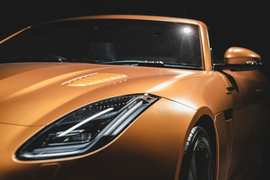
Aston Martin Valhalla: The 1,064-HP Masterpiece That Reimagines Hypercar Performance
By Mac Morrison
The Insanity of Modern Speed
“So, what was the drive like?”
The question is as predictable as the sunrise when you’ve just driven Aston Martin’s Valhalla, a 1,064-horsepower hybrid hypercar carrying a price tag approaching $1.1 million. But today, in the hyper-saturated 2020s, this tradition of reviewing exotic cars has shifted from exhilarating to frankly surreal. It’s not just about speed anymore; it’s about a technological saturation point that leaves you questioning the limits of automotive engineering.
When faced with this question, I found myself hesitating before replying, “Well… it was exactly what you expect.” This answer might sound dismissive, but it’s only meaningful if you’ve experienced the cutting edge of performance firsthand in this decade. The Valhalla isn’t just a fast car; it’s a benchmark for a new generation of hybrid hypercars where the lines between reality and simulation are increasingly blurred.
A Decade in the Making
It feels like a lifetime since the 2019 Geneva Motor Show, but the Aston Martin AM-RB 003—as it was then known—was unveiled just seven years ago. That name, a nod to the sponsorship ties with the Red Bull Racing Formula 1 team, has since been replaced by Valhalla, a name steeped in Norse mythology that pays homage to the afterlife for heroic warriors and aligns with Aston’s traditional naming conventions.
Aston Martin has undergone significant transformations since the AM-RB 003 concept. The Red Bull Racing partnership dissolved after the 2020 season, and the automotive landscape continued to evolve at a dizzying pace. Internal restructuring at Aston Martin was inevitable, and the Valhalla’s original plans for an in-house turbocharged V6 were replaced by a hybridized Mercedes-AMG GT Black Series-derived V8. Aston modified the V8 with larger turbos, a new intake manifold, stronger pistons, and modified camshafts, pushing its output to nearly 100 hp and 50 lb-ft more than the AMG donor car. This updated V8 is now exclusive to the Valhalla.
Redefining the Hypercar Experience
In August 2022, when I sat in a mock-up of the Valhalla at Pebble Beach, the projected power output from the V8 hybrid system had jumped from a combined 937 hp and 738 lb-ft to 1,012 hp, with the torque figure undisclosed at the time. While the specs weren’t finalized, the excitement was palpable. The prospect of driving this marvel on the open road and the racetrack was a promise that took more than three years to fulfill, but the production version’s specifications exceeded those early expectations.
The Valhalla’s flat-plane-crank, dry-sump, twin-turbo 4.0-liter V8 delivers 817 hp. When combined with two Aston-designed radial-flux permanent-magnet motors on the front axle and a third motor integrated into the new eight-speed dual-clutch transmission, the Valhalla boasts a peak output of 1,064 hp and 811 lb-ft of torque.
The hybrid system, developed with Aston-developed motors, utilizes a 560-cell battery pack sourced from AMG, kept cool by immersion in dielectric oil. This setup allows for rapid charge and discharge cycles, making it ideal for track performance. Furthermore, the Valhalla is a plug-in hybrid, offering up to 8.7 miles of all-electric range and an 80-mph top speed in EV mode.
For a deeper look into the technical aspects of the Valhalla, including its aerodynamic package and hybrid powertrain, reference our previous technical breakdown.
Aston Martin Valhalla Performance: A Benchmark for the Future
The evolution of the supercar has led to a remarkable blurring of lines. Where a $2 million hypercar was once defined by raw power, the current market offers a landscape where million-dollar machines are becoming commonplace. Automakers are constantly unveiling new models with unprecedented power, torque, acceleration, and technology, pushing the boundaries of what we once thought possible.
In the past few years alone, we’ve tested cars that would have been considered the pinnacle of performance a decade ago, such as the Porsche 911 GT3 RS with its race-derived aerodynamics and the Ferrari F80 with its groundbreaking performance metrics. Even mainstream brands have entered the fray, like the hybrid Corvette ZR1X, boasting 1,250 hp—a level of power that was unimaginable just a few years prior.
The Pursuit of Perfection: The Aston Martin Valhalla Experience
In this hyper-competitive landscape, comparison is the thief of joy. It is nearly impossible to organize a comprehensive head-to-head comparison test against many of these vehicles, as automakers often restrict access to media outlets for head-to-head showdowns. Nevertheless, the Valhalla offers a compelling experience that stands on its own merits.
The overall driving experience is paramount in modern performance cars. It’s no longer enough for a car to be pleasant on the road and thrilling on the track. The Valhalla achieves a remarkable balance, offering a composed yet exhilarating driving experience that belies its raw power and sophisticated technology.
Aston Martin Valhalla On the Road
The Aston Martin Valhalla presents an intriguing dichotomy as a supercar—appearing like a low-slung hypercar with a pseudo Le Mans-inspired design, it defies expectations with a surprisingly comfortable and composed ride. But it’s not without its compromises. Luggage storage is minimal, with only small door card cubbies available, as the space is occupied by three high-temperature radiators, the electric motors, and an F1-style, pushrod-actuated inboard suspension.
The F1-style seating position places the driver extremely low, and since the seats are bolted to the carbon-fiber tub, they cannot be adjusted forward or back using electric motors. Instead, the driver must pull a leather strap between their legs and push or pull to make adjustments. While this might sound extreme, it’s easy to adapt to within the first few miles.
The Valhalla’s Bilstein DTX active damping system and overall suspension setup ensure a comfortable ride. The Spanish road route we drove featured a mix of smooth pavement and uneven surfaces, and the suspension provided a smooth and compliant ride. The Sport and Sport+ settings were nearly indistinguishable, a welcome feature found in other Aston Martins, like the Vantage. Race mode introduces a harsher ride suitable for track use but potentially tiring for daily driving.
The square-shaped steering wheel feels pleasant to use, although the molded crease on the backside, designed for a better grip, may not suit every driver’s preference. The steering feel is intuitive, maintaining a balanced weight across different drive modes.
When an open stretch of road presented itself, I activated the launch control. Aside from a brief, slight rear wiggle as the tires hooked up, the experience was simply exhilarating. Aston claims 0-62 mph in 2.5 seconds, which translates to 0-60 mph in 2.4 or 2.3 seconds. The acceleration is impressive, with a flat torque curve delivering 90% of peak torque from 2,500 rpm to 6,700 rpm. The power delivery feels relentless.
However, supercar aficionados might note the lack of ultra-high revs, with a redline set at 7,000 rpm. The soundtrack is a complex mix of electric motors, turbos, induction, and exhaust—loud but not overwhelming. While satisfying, it doesn’t quite match the visceral roar of a naturally aspirated V12.
Aston Martin Valhalla on the Track
On the track, the Aston Martin Valhalla truly shines. At Circuito de Navarra, a 2.7-mile circuit with a mix of corners, braking zones, and elevation changes, the Valhalla’s torque vectoring, aerodynamics, and braking system come into their own.
Race mode is essential for track driving, as it optimizes the hybrid system. In Sport+, the car dumps a massive amount of electric boost to the wheels, draining the battery rapidly and relying on brake regeneration to replenish it. In Race mode, however, the car holds back up to 15% state of charge to prevent running out of battery during sustained driving. This results in a loss of 15-20 hp, or a maximum of 30 hp, ensuring consistent performance throughout the lap. Chief Engineer Andrew Kay explains that this prevents the “derating” of performance often experienced in Sport+ on the track.
The Valhalla’s performance on the track confirms its versatility. As Angus MacKenzie experienced in a previous prototype drive, the Valhalla feels benign even at high speeds, offering stability and control that inspire confidence. The car handles everything thrown at it with ease, thanks to its stable platform that never feels on the verge of misbehavior.
Drivers seeking a dramatic, sideways circus might want to look elsewhere. The Valhalla focuses on pure, unadulterated performance with minimal fuss. The front-axle torque vectoring and rear e-differential work in tandem to keep the chassis rotating through corners with precision, enticing drivers to push harder while maintaining their confidence. This is the essence of modern supercar performance, and Aston has successfully achieved this balance.
The active aerodynamics and braking system play a crucial role in the Valhalla’s performance. The brake pedal provides a firm, consistent response, with the majority of the braking performed by battery regeneration. While some brake-by-wire

 Aston Martin Valhalla: The 1,064-HP Masterpiece That Reimagines Hypercar Performance
By Mac Morrison
The Insanity of Modern Speed
“So, what was the drive like?”
The question is as predictable as the sunrise when you’ve just driven Aston Martin’s Valhalla, a 1,064-horsepower hybrid hypercar carrying a price tag approaching $1.1 million. But today, in the hyper-saturated 2020s, this tradition of reviewing exotic cars has shifted from exhilarating to frankly surreal. It’s not just about speed anymore; it’s about a technological saturation point that leaves you questioning the limits of automotive engineering.
When faced with this question, I found myself hesitating before replying, “Well… it was exactly what you expect.” This answer might sound dismissive, but it’s only meaningful if you’ve experienced the cutting edge of performance firsthand in this decade. The Valhalla isn’t just a fast car; it’s a benchmark for a new generation of hybrid hypercars where the lines between reality and simulation are increasingly blurred.
A Decade in the Making
Aston Martin Valhalla: The 1,064-HP Masterpiece That Reimagines Hypercar Performance
By Mac Morrison
The Insanity of Modern Speed
“So, what was the drive like?”
The question is as predictable as the sunrise when you’ve just driven Aston Martin’s Valhalla, a 1,064-horsepower hybrid hypercar carrying a price tag approaching $1.1 million. But today, in the hyper-saturated 2020s, this tradition of reviewing exotic cars has shifted from exhilarating to frankly surreal. It’s not just about speed anymore; it’s about a technological saturation point that leaves you questioning the limits of automotive engineering.
When faced with this question, I found myself hesitating before replying, “Well… it was exactly what you expect.” This answer might sound dismissive, but it’s only meaningful if you’ve experienced the cutting edge of performance firsthand in this decade. The Valhalla isn’t just a fast car; it’s a benchmark for a new generation of hybrid hypercars where the lines between reality and simulation are increasingly blurred.
A Decade in the Making