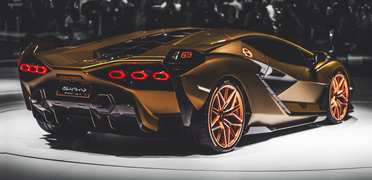
Aston Martin Valhalla: Engineering the Future of Performance
The year 2026 has undeniably arrived, and with it, a wave of automotive innovation that continues to redefine the boundaries of speed, handling, and driving pleasure. In this era of hybridized supercars and accessible hypercars, the Aston Martin Valhalla emerges not just as another competitor, but as a true paradigm shift in automotive engineering. This is not a review in the traditional sense; rather, it is a deep-dive into what makes the Valhalla so special, written with the insider knowledge of a seasoned automotive journalist who has spent decades behind the wheel.
The Genesis of a Legend
For anyone following the automotive landscape, the journey to the Aston Martin Valhalla has been a long and fascinating one. The story began back in 2019 at the Geneva Motor Show, where Aston Martin unveiled what was then known as the AM-RB 003. It was a bold statement of intent, signaling a departure from the brand’s traditional front-engine grand tourers and marking its foray into the mid-engine hypercar segment.
The original name was a nod to the brand’s partnership with the Red Bull Racing Formula 1 team, a collaboration that brought engineers and insights from the pinnacle of motorsport to a road car. However, as the industry evolved, so did Aston Martin. The brand’s relationship with Red Bull ended after the 2020 F1 season, and Aston Martin entered a new phase of development.
The powertrain concept also evolved. Initially envisioned as a high-tech, in-house turbocharged V-6, the Valhalla ultimately adopted a heart derived from the Mercedes-AMG GT Black Series. This decision speaks volumes about the strategic thinking behind the project. Mercedes-AMG, under its performance-focused Black Series designation, had already pushed the boundaries of what the AMG V8 was capable of. By building upon that foundation, Aston Martin was able to bypass years of internal R&D and focus on the unique challenges of making a road-legal hypercar perform as close to a race car as possible.
The Powertrain: Where Science Meets Speed
The heart of the 2026 Aston Martin Valhalla is a beastly, flat-plane-crank, dry-sump, twin-turbo 4.0-liter V8 engine. This is not just any V8; it has been meticulously modified by Aston Martin engineers to produce a staggering 817 horsepower. But the V8 is only part of the story. The Valhalla is a plug-in hybrid, utilizing three electric motors. Two are positioned on the front axle, providing all-wheel-drive capability, while a third is integrated into the all-new eight-speed dual-clutch gearbox.
Together, these motors generate a total of 248 horsepower. When combined with the roaring V8, the Valhalla produces an earth-shattering 1,064 horsepower and 811 lb-ft of torque. This staggering output is delivered through an Aston Martin-designed 560-cell battery pack, cooled by immersion in dielectric oil. This advanced cooling system allows the battery to rapidly accept and dispense electrical energy, making it ideal for track use where heavy regenerative braking and high-speed acceleration are the norm.
Compared to the original concept and its bigger brother, the Valkyrie, the production Valhalla is also a plug-in hybrid, offering the unique ability to drive on electric power alone for up to 8.7 miles and a top speed of 80 mph. For the true connoisseur, the Valhalla represents the pinnacle of hybrid performance, delivering instant torque, tire-melting acceleration, and an experience that truly blurs the line between road car and race car.
Form Follows Function: Aerodynamics and Design
The design of the Aston Martin Valhalla is a masterpiece of automotive engineering. Its low, wide stance and aggressive aerodynamics are a direct result of its F1-inspired roots. The cockpit features a reclined, elevated leg position that allows the driver to feel more connected to the car and the road. However, this design choice also comes with certain tradeoffs. The seats are fixed in place, meaning adjustments are made via a strap between the legs, and there is no room for traditional luggage, as the storage space is occupied by radiators and suspension components.
These tradeoffs are a necessary price to pay for the performance benefits. The rear suspension utilizes a sophisticated five-link layout, optimized to work with the flat-plane-crank V8 and the hybrid system. The suspension system features adjustable damping that allows the driver to switch between Sport and Sport+ modes, providing a comfortable ride on the road and razor-sharp handling on the track.
One of the most striking features of the Valhalla is its active aerodynamics. The underbody front wing and deployable rear wing adjust their positions based on speed and dynamic conditions. In Race mode, the rear wing raises to provide maximum downforce and acts as an air brake. However, the rear wing cannot be raised with the car turned off due to crash regulations, and the engine cover requires manual removal, meaning the V8 won’t be on display at Cars and Coffee.
The Driving Experience: From Smooth to Savage
Driving the Aston Martin Valhalla is an experience that few can truly comprehend until they are behind the wheel. While it shares some superficial similarities with the McLaren F1 in terms of the driving position, the Valhalla feels both familiar and utterly unique.
On the road, the Valhalla is surprisingly comfortable. The ride is smooth and refined, even on less-than-perfect surfaces. The steering is responsive and intuitive, with a weight that is neither too light nor too heavy. The driving position, once you get used to it, feels natural and engaging.
When you push the Valhalla to its limits, however, it truly comes alive. The combination of massive torque and all-wheel drive results in brutal acceleration. Aston claims a 0-62 mph time of 2.5 seconds, and it feels even faster. The flat-plane-crank V8 has a redline of 7,000 rpm and a flat torque curve that keeps you glued to your seat from 2,500 rpm all the way to the power peak.
But the real magic happens on the track. In Race mode, the Valhalla transforms into a precision instrument. The hybrid system is programmed to hold back up to 15 percent charge, ensuring that you never run out of power. The aerodynamics keep the car planted through high-speed corners, and the braking system is massive, delivering consistent performance lap after lap. The feeling of control is so intuitive that you can easily push the car to its limits without fear of breaking traction or losing control.
The Verdict: Redefining the Supercar
The Aston Martin Valhalla is not just another supercar; it is a statement of intent. It is a car that challenges the definition of performance and pushes the boundaries of what is possible on the road. It is a testament to the power of engineering, innovation, and the relentless pursuit of excellence.
For those who seek the ultimate driving experience, the Aston Martin Valhalla is the ultimate choice. It is a car that will leave you breathless, exhilarated, and hungry for more.
If you’re ready to experience the future of performance, visit Aston Martin today and schedule a test drive. The Valhalla is not just a car; it’s a legend in the making.

 Aston Martin Valhalla: Engineering the Future of Performance
The year 2026 has undeniably arrived, and with it, a wave of automotive innovation that continues to redefine the boundaries of speed, handling, and driving pleasure. In this era of hybridized supercars and accessible hypercars, the Aston Martin Valhalla emerges not just as another competitor, but as a true paradigm shift in automotive engineering. This is not a review in the traditional sense; rather, it is a deep-dive into what makes the Valhalla so special, written with the insider knowledge of a seasoned automotive journalist who has spent decades behind the wheel.
The Genesis of a Legend
For anyone following the automotive landscape, the journey to the Aston Martin Valhalla has been a long and fascinating one. The story began back in 2019 at the Geneva Motor Show, where Aston Martin unveiled what was then known as the AM-RB 003. It was a bold statement of intent, signaling a departure from the brand’s traditional front-engine grand tourers and marking its foray into the mid-engine hypercar segment.
Aston Martin Valhalla: Engineering the Future of Performance
The year 2026 has undeniably arrived, and with it, a wave of automotive innovation that continues to redefine the boundaries of speed, handling, and driving pleasure. In this era of hybridized supercars and accessible hypercars, the Aston Martin Valhalla emerges not just as another competitor, but as a true paradigm shift in automotive engineering. This is not a review in the traditional sense; rather, it is a deep-dive into what makes the Valhalla so special, written with the insider knowledge of a seasoned automotive journalist who has spent decades behind the wheel.
The Genesis of a Legend
For anyone following the automotive landscape, the journey to the Aston Martin Valhalla has been a long and fascinating one. The story began back in 2019 at the Geneva Motor Show, where Aston Martin unveiled what was then known as the AM-RB 003. It was a bold statement of intent, signaling a departure from the brand’s traditional front-engine grand tourers and marking its foray into the mid-engine hypercar segment.