Here is a completely new article written in the language of the United States, approximately 2000 words long, focusing on the Aston Martin Valhalla with updated content for 2025, written from the perspective of an experienced auto journalist.
Aston Martin Valhalla Review: A Million-Dollar Supercar That Defies Physics and Expectations
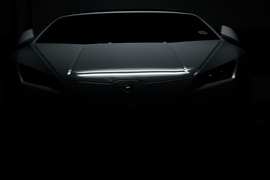
Seven years. It’s a long time by any measure, but in the high-stakes world of million-dollar hypercars, it can feel like an eternity. Aston Martin’s Valhalla, the mid-engine machine that promised to fuse Formula 1-grade aerodynamics with boutique British luxury, has finally shed its Geneva Motor Show prototype skin and arrived on the tarmac, bringing with it a legacy of anticipation that’s nearly impossible to meet.
For enthusiasts of the marque, this isn’t just another supercar; it’s a statement of intent. It’s the bridge between the aristocratic grand tourers that defined Aston Martin and the unbridled digital warfare being waged in the hybrid hypercar segment. But in an era where 1,200-horsepower plug-in hybrids are becoming more common, does a $1.1 million, 1,064-hp machine still feel like the future?
After spending a substantial amount of time with the production-spec Valhalla—driving it on the demanding Spanish road courses and cruising through sun-drenched coastal highways—the answer is a resounding, exhilarating yes. The Valhalla isn’t just a performance car; it’s a manifesto. It recalibrates your perception of speed, grip, and technological integration. And in doing so, it proves that Aston Martin hasn’t just been playing catch-up; it’s been plotting a course to reclaim its title as the world’s most desirable performance automotive brand.
A Legacy of Evolution: From AM-RB 003 to Valhalla
When Aston Martin first unveiled the AM-RB 003 in 2019, the automotive world was captivated. It was a concept born of a partnership between the British marque and the Red Bull Racing Formula 1 team, with a vision to translate Formula 1 technology into a limited-production road car. The name “Valhalla,” inspired by Norse mythology, signifies a glorious afterlife for heroic warriors—a fitting metaphor for a car designed to be the pinnacle of performance engineering.
However, the road to production has been anything but linear. The world changed, partnerships shifted, and engineering philosophies evolved. Lawrence Stroll, the executive chairman of Aston Martin Lagonda, famously rebranded his Racing Point F1 team as Aston Martin, necessitating a breakup with Red Bull Racing’s F1 venture. Internally, Aston underwent significant restructuring, pushing the responsibility for this complex machine onto an engineering team tasked with transforming a theoretical concept into a drivable reality.
The powertrain strategy also underwent a radical transformation. The original plans for an in-house-developed turbocharged 3.0-liter V6 were abandoned in favor of sourcing hardware from Mercedes-AMG. This strategic alignment with the German giant provided Aston Martin with access to cutting-edge technology while allowing the engineers to implement a unique hybrid architecture that sets the Valhalla apart.
The decision to utilize a hybrid system was crucial. In the 2020s, electrifying performance cars is no longer just an environmental imperative; it’s a performance necessity. Electrification allows for instantaneous torque, enhanced stability, and optimized efficiency, all of which are critical components of the Valhalla’s unique driving character.
Engineering Masterclass: The Hybrid Heart of the Beast
At the core of the Aston Martin Valhalla lies a masterpiece of engineering: a twin-turbo 4.0-liter V8 engine derived from the Mercedes-AMG GT Black Series. This isn’t just a slightly hotter version of an existing engine. Aston has fitted larger turbos, a new intake manifold, reinforced pistons, and revised camshafts, boosting the output to a staggering 817 horsepower. But the true magic happens when this internal combustion powerhouse is integrated with its hybrid siblings.
The Valhalla incorporates an Aston Martin-designed electric powertrain comprising two radial-flux permanent-magnet motors on the front axle and a third integrated into the new eight-speed dual-clutch gearbox. The combined output of this system is a jaw-dropping 1,064 horsepower and 811 lb-ft of torque. This electrifying symphony isn’t just about raw numbers; it’s about control, balance, and delivering power exactly where and when it’s needed.
The battery pack, a 560-cell unit supplied by AMG, is immersed in dielectric oil, allowing for extremely fast charging and discharging cycles. As chief engineer Andrew Kay explained, this setup is optimized for demanding environments. “We’re able to push energy into the battery and cycle it out very quickly. This is very good for track use, in particular.” This technical precision means that the Valhalla can sustain intense performance without the crippling degradation that plagues simpler hybrid systems.
Furthermore, the Valhalla is a plug-in hybrid, capable of autonomous electric travel for up to 8.7 miles and a top speed of 80 mph. While this feature might seem ancillary to the primary performance mission, it adds a layer of versatility that modern buyers expect. It transforms the Valhalla from a track-only weapon into a capable road-legal hypercar.
Design and Driving Position: A Sci-Fi Cockpit
Walking up to the Valhalla, the first thing you notice is its aggressive stance and aerodynamic purity. The low, wide body, with its sweeping lines and massive rear wing, screams performance. But the cabin is where the design truly transforms into something otherworldly.
The Valhalla features a F1-inspired reclined and elevated leg seating position. The driver and passenger sit low, with their feet raised, placing them at the epicenter of the driving experience. This isn’t just a gimmick; it’s a necessity dictated by the complex engineering beneath the skin. The lack of a traditional front trunk (frunk), which is occupied by cooling radiators and the suspension system, necessitates an integrated cabin layout.
Adjusting to the seating position is surprisingly easy. The carbon fiber monocoque is incredibly rigid, and the seats are bolted directly into the chassis. There are no motors for sliding forward or backward; instead, the driver utilizes a leather strap between their legs to adjust positioning, pulling it to slide forward and pushing to slide back. While this might seem unconventional, it is remarkably intuitive and surprisingly comfortable once you adapt to it.
The steering wheel feels natural in the hands, and the molded grip, designed for positive engagement, works effectively without being overly aggressive. The overall cockpit layout feels focused, purposeful, and utterly unique. You sit as if strapped into a fighter jet, surrounded by an intricate web of carbon fiber and high-tech materials.
On the Road: A Comfortable Hypercar
In an era where supercar performance is often defined by raw acceleration and track times, the Valhalla distinguishes itself with its road manners. Aston Martin engineers have achieved something remarkable by integrating their complex powertrain and suspension systems into a chassis that is both comfortable and confidence-inspiring for daily driving.
The ride quality is surprisingly compliant, thanks to the adaptive Bilstein DTX dampers and the sophisticated five-link rear suspension. Aston’s familiar Sport and Sport+ modes provide a smooth transition between cruising comfort and performance-oriented stiffness. Even the Race mode, which introduces a harsh ride suitable for the track, is manageable on smooth, sweeping roads.
The steering feel is precise, maintaining a pleasing weight that changes intuitively with the drive modes. It feels less reactive and twitchy than many track-focused hypercars, allowing the driver to confidently attack corners without the constant fear of losing traction.
When you’re alone on the open road, the Valhalla transforms into a ballistic missile. Launching the car is an experience of physics-defying acceleration. Aston quotes a 0-62 mph time of 2.5 seconds, which translates to a 0-60 mph in the low 2s. But it’s the flat torque curve of the V8 that makes the experience so visceral. The car pulls hard from 2,500 rpm all the way to its 7,000 rpm redline, with no let-up in momentum.
However, the Valhalla is not without its quirks. The lack of luggage space is a significant drawback, with only small cubbies in the door cards offering storage. The engine cover, designed to maintain aerodynamic integrity, requires manual removal with simple tools, making it unlikely to be seen on display at car shows. And while the hybrid system provides remarkable performance, the engine note—a complex blend of motors, turbos, and exhaust—is powerful but never reaches the soaring heights of a naturally aspirated engine.
On the Track: A Masterclass in Control
The true measure of a hypercar is its performance on the racetrack. Aston Martin didn’t just design the Valhalla to be fast; they designed it to be stable, controllable, and confidence-inspiring even at its absolute limit.
Driving on the Circuito de Navarra, a demanding road course with a mix of corners, braking zones, and elevation changes, reveals the Valhalla’s true potential. The hybrid torque vectoring, advanced aerodynamics, and monster braking system work in seamless harmony to deliver incredible performance without punishing the driver.
The Race mode is crucial for track driving. While Sport+ floods the wheels with electric boost, draining the battery quickly, Race mode meters electric assist with a recharge strategy that protects the battery. Chief engineer Andrew Kay notes, “In Race mode, it doesn’t derate [the battery]—it’s overall the most efficient and usable.” This allows drivers to focus on the task at hand

 Here is a completely new article written in the language of the United States, approximately 2000 words long, focusing on the Aston Martin Valhalla with updated content for 2025, written from the perspective of an experienced auto journalist.
Aston Martin Valhalla Review: A Million-Dollar Supercar That Defies Physics and Expectations
Seven years. It’s a long time by any measure, but in the high-stakes world of million-dollar hypercars, it can feel like an eternity. Aston Martin’s Valhalla, the mid-engine machine that promised to fuse Formula 1-grade aerodynamics with boutique British luxury, has finally shed its Geneva Motor Show prototype skin and arrived on the tarmac, bringing with it a legacy of anticipation that’s nearly impossible to meet.
For enthusiasts of the marque, this isn’t just another supercar; it’s a statement of intent. It’s the bridge between the aristocratic grand tourers that defined Aston Martin and the unbridled digital warfare being waged in the hybrid hypercar segment. But in an era where 1,200-horsepower plug-in hybrids are becoming more common, does a $1.1 million, 1,064-hp machine still feel like the future?
After spending a substantial amount of time with the production-spec Valhalla—driving it on the demanding Spanish road courses and cruising through sun-drenched coastal highways—the answer is a resounding, exhilarating yes. The Valhalla isn’t just a performance car; it’s a manifesto. It recalibrates your perception of speed, grip, and technological integration. And in doing so, it proves that Aston Martin hasn’t just been playing catch-up; it’s been plotting a course to reclaim its title as the world’s most desirable performance automotive brand.
A Legacy of Evolution: From AM-RB 003 to Valhalla
Here is a completely new article written in the language of the United States, approximately 2000 words long, focusing on the Aston Martin Valhalla with updated content for 2025, written from the perspective of an experienced auto journalist.
Aston Martin Valhalla Review: A Million-Dollar Supercar That Defies Physics and Expectations
Seven years. It’s a long time by any measure, but in the high-stakes world of million-dollar hypercars, it can feel like an eternity. Aston Martin’s Valhalla, the mid-engine machine that promised to fuse Formula 1-grade aerodynamics with boutique British luxury, has finally shed its Geneva Motor Show prototype skin and arrived on the tarmac, bringing with it a legacy of anticipation that’s nearly impossible to meet.
For enthusiasts of the marque, this isn’t just another supercar; it’s a statement of intent. It’s the bridge between the aristocratic grand tourers that defined Aston Martin and the unbridled digital warfare being waged in the hybrid hypercar segment. But in an era where 1,200-horsepower plug-in hybrids are becoming more common, does a $1.1 million, 1,064-hp machine still feel like the future?
After spending a substantial amount of time with the production-spec Valhalla—driving it on the demanding Spanish road courses and cruising through sun-drenched coastal highways—the answer is a resounding, exhilarating yes. The Valhalla isn’t just a performance car; it’s a manifesto. It recalibrates your perception of speed, grip, and technological integration. And in doing so, it proves that Aston Martin hasn’t just been playing catch-up; it’s been plotting a course to reclaim its title as the world’s most desirable performance automotive brand.
A Legacy of Evolution: From AM-RB 003 to Valhalla