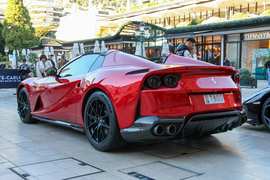
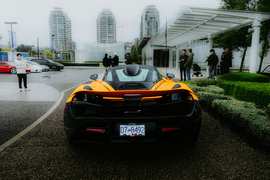
Aston Martin Valhalla: A Masterclass in Precision Engineering
The Aston Martin Valhalla is not just another hypercar; it’s a carefully orchestrated fusion of Formula 1-inspired technology, cutting-edge hybrid power, and the refined luxury that has defined the Aston Martin marque for over a century. With a pedigree rooted in the Red Bull Racing partnership and the engineering genius of Adrian Newey, the Valhalla redefines the boundaries of performance, not through brute force, but through intelligent, driver-focused dynamics.
A Legacy Forged in the Fast Lane
The journey of the Aston Martin Valhalla began not with a concept sketch, but with a strategic ambition. Unveiled first as the AM-RB 003 at the 2019 Geneva Motor Show, the name reflected Aston Martin’s deep ties with the Red Bull Racing Formula 1 team. This collaboration was the crucible where the Valhalla’s core DNA was forged. However, the automotive landscape is as volatile as the racetrack, and significant shifts followed.
Following the 2020 F1 season, Aston Martin’s then-new leadership—led by Lawrence Stroll—made the strategic decision to rebrand the Racing Point F1 team as Aston Martin. This pivot marked a new era for the marque, one that required a diverse product portfolio to compete at the highest echelons of the performance market. Simultaneously, the industry was rapidly evolving, and internal engineering teams underwent flux. The Valhalla, originally envisioned with an in-house designed 3.0-liter twin-turbo V-6 hybrid powertrain—a rival to contemporaries like the LaFerrari and Porsche 918 Spyder—was reimagined. The engineering team leaned on a new strategic partner, Mercedes-AMG, adapting their potent V-8 foundation.
The transition resulted in a hybridized engine based on the Mercedes-AMG GT Black Series. Aston Martin engineers pushed the limits of this foundation, incorporating larger turbochargers, a re-engineered intake manifold, strengthened pistons, and bespoke camshafts. The result was a significant performance uplift—nearly 100 horsepower and 50 lb-ft of torque above the AMG donor. In 2022, during a prototype preview at the Pebble Beach Concours, the powertrain specifications had jumped again, now boasting an estimated 1,012 horsepower and an unconfirmed torque figure. The engineering team confirmed that the system was still under development, but the preliminary figures were more than enough to stir anticipation for the final production model.
Engineering a New Breed of Hypercar
When the Valhalla finally emerged from development, it surpassed all initial expectations. At its heart lies a flat-plane-crank, dry-sump, twin-turbocharged 4.0-liter V-8 engine producing 817 horsepower. This mechanical masterpiece is complemented by a groundbreaking hybrid system developed in-house by Aston Martin. The system features three advanced radial-flux permanent magnet motors. Two are positioned on the front axle, providing intelligent torque vectoring and all-wheel-drive capabilities, while a third is seamlessly integrated into the new eight-speed dual-clutch transmission. This intricate assembly generates a combined output of 1,064 horsepower and 811 lb-ft of torque.
The hybrid system is built around a 560-cell battery pack. Aston Martin’s engineers utilized an off-the-shelf AMG battery pack, which is the only component of the hybrid system not manufactured by the British marque. To ensure optimal performance and energy density, the cells are immersed in dielectric oil. Chief Engineer Andrew Kay explained this innovative approach: “We’re able to push energy into the battery and cycle it out very quickly [meaning recharge and deployment of electrical energy]. This is very good for track use, in particular.”
In a departure from the original concept and its larger sibling, the Valkyrie, the production Valhalla is a plug-in hybrid. This grants drivers a unique blend of extreme performance and everyday usability, offering up to 8.7 miles of EV-only driving and a top speed of 80 mph in pure electric mode. This hybridization ensures that the Valhalla is not merely a spectacle but a truly versatile machine capable of navigating urban environments with zero emissions.
A Paradigm Shift in Performance
The arrival of the Aston Martin Valhalla challenges conventional categorizations. While the brand designates it as its first-ever mid-engine supercar, its specifications firmly place it in the hypercar category. The distinction, however, is somewhat semantic, largely dictated by the existence of the Valkyrie. The Valkyrie remains the absolute pinnacle of Aston Martin’s engineering might, with a starting price of over $3 million and a production run of just 285 units. In comparison, the Valhalla’s million-and-change price tag and 999-unit production run suddenly seem almost pedestrian.
This seemingly absurd juxtaposition speaks to a broader phenomenon in the world of modern high-performance automobiles. For younger generations—millennials, Zoomers, and Gen Alpha—a constant stream of million-dollar cars appearing on social media feeds has become the new normal. Each iteration boasts unprecedented power figures, mind-bending acceleration times, and lists of tech specs and bespoke luxury options that rival the length of the Nürburgring.
However, for those of us who remember the automotive landscape just a few decades ago, the current reality is nothing short of surreal. The McLaren F1, with its 627 horsepower and price tag around $800,000 in 1993–94, was the benchmark. The Bugatti Veyron, merely twenty years ago, was hailed as the first million-dollar, 1,000-horsepower hypercar—a technological marvel that defied the imagination.
Today, the landscape has transformed. Since the Valhalla prototype was unveiled at Pebble Beach, we have sampled the Porsche 911 GT3 RS, a car with half the horsepower but an arsenal of racing-derived aerodynamics that demand a professional driver’s skill to master. Its suitability as a road car, given its uncompromising suspension setup, is open to debate.
Stepping up in price, construction, and technological sophistication, MotorTrend has recently sampled the Ferrari F80, the 849 Testarossa, the Czinger 21C VMax, and even the relatively \”run of the mill but dizzyingly fast\” Porsche 911 Turbo S, to name just a few. Aston Martin has even debuted the Valkyrie Spider and the electric Lagonda All-Terrain in their pursuit of innovation. And in a development that no one could have predicted when the Valhalla was merely a nascent idea, the American automotive giant Chevrolet has announced the introduction of a hybrid Corvette ZR1X with a staggering 1,250 horsepower, further blurring the lines between automotive segments.
The Art of Driving: Valhalla on the Road
The proverb often attributed to Teddy Roosevelt, \”comparison is the thief of joy,\” has never been more relevant than in the realm of contemporary supercars. It is also coincidentally pertinent here because coordinating a proper head-to-head comparison test among the vehicles listed above—with the possible exception of the ZR1X—is virtually impossible. This is largely due to Ferrari’s long-standing reluctance to supply publications like MotorTrend with vehicles for such showdowns. (Shame on you, Ferrari.)
However, given the extremely high dynamic limits of cars like the Valhalla, a more satisfying approach is to appreciate them on their own merits and experience the unique driving experience they offer.
Make no mistake, the overall experience matters in a car of this caliber. For quite some time, it hasn’t been good enough for a car to be thrilling on the road but understeer like a freight train on the racetrack, or to perform brilliantly on the track but provide a chiropractor’s billable-hours wet dream on the road. We already knew, mostly, that this Aston Martin was a winner on all fronts after MotorTrend’s Angus MacKenzie sampled a \”prototype\” that was essentially the finished article, save for some transmission calibration, a few months prior.
For the first leg of our driving experience, Aston Martin provided a 50-minute road loop in Spain. While the Valhalla’s pseudo Le Mans Hypercar appearance and low-slung stance might suggest a compromised daily driver, this is far from the case. The only significant limitation is the near-total lack of luggage storage. There are small cubbies in the door cards, but no frunk due to the space being occupied by three high-temperature radiators, the electric motors, and a racing-style, pushrod-actuated, horizontally mounted inboard suspension system.
Aston executed this suspension design in part due to the Formula 1-style driving position. The driver sits so low that a conventional suspension would have raised the bodywork too much, compromising the line of sight ahead. There is no backrest angle adjustment, forcing drivers to adapt to the seating position. Furthermore, the seats are bolted so low into the carbon-fiber monocoque tub that there is no motor beneath them to slide the occupant forward and back. Instead, the driver must pull a leather strap located between their legs to make these adjustments.
You quickly get used to the driving position—it’s not as extreme as it might seem—and within two miles, you realize that the Valhalla’s bespoke Bilstein DTX active damper system and overall suspension setup (the rear uses a five-link layout) provide a surprisingly comfortable experience for a car in this class. The Spanish road route provided was not exceptionally rough, but it wasn’t perfectly smooth either, yet the suspension managed the transitions between Sport and Sport+ settings without significant disparity—a welcome and usable trait we’ve praised on other

 Aston Martin Valhalla: A Masterclass in Precision Engineering
The Aston Martin Valhalla is not just another hypercar; it’s a carefully orchestrated fusion of Formula 1-inspired technology, cutting-edge hybrid power, and the refined luxury that has defined the Aston Martin marque for over a century. With a pedigree rooted in the Red Bull Racing partnership and the engineering genius of Adrian Newey, the Valhalla redefines the boundaries of performance, not through brute force, but through intelligent, driver-focused dynamics.
A Legacy Forged in the Fast Lane
The journey of the Aston Martin Valhalla began not with a concept sketch, but with a strategic ambition. Unveiled first as the AM-RB 003 at the 2019 Geneva Motor Show, the name reflected Aston Martin’s deep ties with the Red Bull Racing Formula 1 team. This collaboration was the crucible where the Valhalla’s core DNA was forged. However, the automotive landscape is as volatile as the racetrack, and significant shifts followed.
Aston Martin Valhalla: A Masterclass in Precision Engineering
The Aston Martin Valhalla is not just another hypercar; it’s a carefully orchestrated fusion of Formula 1-inspired technology, cutting-edge hybrid power, and the refined luxury that has defined the Aston Martin marque for over a century. With a pedigree rooted in the Red Bull Racing partnership and the engineering genius of Adrian Newey, the Valhalla redefines the boundaries of performance, not through brute force, but through intelligent, driver-focused dynamics.
A Legacy Forged in the Fast Lane
The journey of the Aston Martin Valhalla began not with a concept sketch, but with a strategic ambition. Unveiled first as the AM-RB 003 at the 2019 Geneva Motor Show, the name reflected Aston Martin’s deep ties with the Red Bull Racing Formula 1 team. This collaboration was the crucible where the Valhalla’s core DNA was forged. However, the automotive landscape is as volatile as the racetrack, and significant shifts followed.