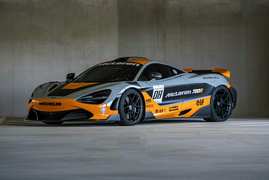
Aston Martin Valhalla: The 2025 Hypercar Benchmark Redefined
The question echoes with a mix of curiosity and disbelief: “So, how was it?”
Asking this of someone who has just driven the Aston Martin Valhalla—a machine carrying a nearly $1.1 million price tag and boasting a staggering 1,064 horsepower—is a rite of passage in the automotive world. But as the years stack up, the traditional review process of these hyper-exotic machines has morphed from a somewhat frivolous pastime into a dive into the truly surreal.
In 2026, when I shared this exact question with four different colleagues after spending time behind the wheel of the Valhalla, I paused briefly before responding with a variation of, “Exactly how you’d expect it to be.” In hindsight, this answer isn’t flippant. It only truly resonates if you’ve actually experienced the pinnacle of supercar engineering in this current era of the 2020s.
Seven Years in the Making: A Journey of Transformation
Seven years feels like an eternity in automotive development, amplified by the disorienting blur of the pandemic years that rendered time abstract. Yet, that’s how long we’ve waited since the 2019 Geneva Motor Show unveiled the prototype then known as the AM-RB 003.
The original codename, later replaced by a Norse mythological name (Valhalla—the legendary afterlife for heroic warriors—conveniently starting with a ‘V,’ aligning with Aston’s traditional naming scheme), reflected the automaker’s initial sponsorship ties with the Red Bull Racing Formula 1 team.
However, much has changed since then. The sponsorship ended after the 2020 season when the new management, under Lawrence Stroll, rebranded the team as Aston Martin F1. More significantly, the automotive landscape has been evolving rapidly, and Aston Martin with it. Internal staff turnover has been chaotic. The original plan for an in-house V6 hybrid powertrain, meant to rival hypercars like the LaFerrari and Porsche 918 Spyder, was scrapped. Instead, Aston turned to Mercedes-AMG, adopting a hybrid system based on the AMG GT Black Series twin-turbo V8.
Aston enhanced this already potent engine with larger turbos, a new intake manifold, and stronger internals, boosting output by nearly 100 horsepower and 50 lb-ft of torque. The Valhalla is now the exclusive home for this modified unit.
When I first saw a mockup of the car at the Pebble Beach Concours in August 2022, marveling at the F1-style reclined seating position, the projected specs for the V8 powertrain had already jumped. The original 937 hp combined output was revised to 1,012 hp, with the torque figure remaining undisclosed. Even then, Aston insisted the specs weren’t finalized, but the prospect was enough to make me say, “Please, I want to drive it, whenever it’s ready.”
A Decade of Disruption: Supercars vs. Hypercars in 2025
Those initial projections didn’t hold for long. Based on Aston Martin’s development schedule back then, I expected another three and a half years to pass before I’d get my chance. Instead, the production version’s hardware has far exceeded those earlier expectations.
The dry-sump, flat-plane-crank, twin-turbo 4.0-liter V8 now produces 817 horsepower on its own. Coupled with 248 horsepower from three Aston-designed radial-flux permanent-magnet electric motors—one on the front axle, another driving the rear axle, and a third integrated into the new eight-speed dual-clutch gearbox (an Aston first)—the total output reaches an astonishing 1,064 horsepower and 811 lb-ft of torque.
The hybrid system includes a 560-cell battery pack. Engineers confirm it’s an off-the-shelf AMG unit—the only component in the hybrid system not manufactured by Aston. This battery is fully immersed in dielectric oil, allowing for incredibly rapid energy cycling. As chief engineer Andrew Kay explained, “We’re able to push energy into the battery and cycle it out very quickly. This is very good for track use, in particular.”
Unlike the concept or its elder sibling, the Valkyrie, the production Valhalla is a plug-in hybrid (PHEV). It can travel up to 8.7 miles on pure electric power, reaching speeds of 80 mph. For a detailed technical breakdown, readers can refer to our previous deep-dive.
Supercar vs. Hypercar: The Semantic Split
The term “supercar” might raise some eyebrows among the hyper-nerdy or pedantic readers. Aston Martin itself, however, refers to the Valhalla as its first-ever mid-engine supercar. But isn’t it a hypercar?
Yes, except for the existence of the Valkyrie, which forces marketing departments into an awkward linguistic corner. If marketing phrases like “first ever” are to remain accurate, “super” becomes the preferred prefix. But let’s be honest, the Valkyrie is barely a street car. Its starting price of over $3 million and limited production run of 285 units make the Valhalla’s $1 million-ish price tag and 999-unit inventory seem almost pedestrian by comparison.
Of course, that’s absurd in the real world. But it speaks to a broader shift in the realm of modern high-performance automobiles, concerning both price and capability.
Millennial, Zoomer, and Gen Alpha car enthusiasts are likely desensitized to seeing yet another million-dollar car dominating their social media feeds. Each one boasts previously unimaginable power and torque figures, acceleration and lap times, and lists of tech features, options, and bespoke luxury choices longer than the Nürburgring’s full endurance layout.
For those of us who are older but far from retiring, it’s easy to recall the seismic shockwave generated by something like the 627-hp, $800,000 McLaren F1 back in 1993–94. Or even more so the Bugatti Veyron just 20 years ago, widely considered the first thousand-horsepower, million-dollar hypercar.
Today’s Landscape: A Million-Dollar Free-for-All
But today? Since I sat in the Valhalla prototype at Pebble Beach, we’ve driven vehicles that push every boundary. Consider the Porsche 911 GT3 RS, boasting only half the Valhalla’s horsepower and overall technological complexity, yet packing so much racing-derived aerodynamics and hardware that it requires professional driver skills to maximize on a track. Its suitability as a road car, given its stiff suspension, remains debatable.
Stepping up in price, construction, and technological prowess, MotorTrend has recently sampled the Ferrari F80, 849 Testarossa, Czinger 21C VMax, and even the more “standard” but blisteringly fast Porsche 911 Turbo S, to name just a few. Aston Martin, the company that used to supply engines to Mercedes, now has an engine that forms the basis of the AMG GT Black Series. And that’s not all—you can buy a hybrid Corvette ZR1X with 1,250 horsepower, an invention that seemed impossible when the Valhalla was merely a glimmer in Aston Martin’s eye, or rather, in the minds of Aston’s F1 partner Adrian Newey.
Driving Without Comparison: The Realist’s Approach
With this backdrop in mind, the adage “comparison is the thief of joy” has never been more relevant in the world of hypercars—ahem, supercars. It’s also ironically fitting because we know the odds of ever orchestrating a proper comparison test among the vehicles listed above—perhaps excluding the ZR1X—are nonexistent. This is largely due to Ferrari’s long-standing reluctance to provide publications like ours with cars for head-to-head showdowns.
Regardless, the dynamic limits of these cars are so high that driving something like the Valhalla on its own merits, focusing solely on the experience it provides, is far more rewarding.
This experience matters immensely in a car like this. For a long time, it wasn’t enough for a car to be fast and thrilling on the road but handle like a disaster on the track, or vice versa. We already knew, mostly, that this Aston Martin was a winner on all fronts after Angus MacKenzie of MotorTrend drove a prototype that was essentially the finished article, save for some transmission calibration, a few months prior.
The Road Experience: A Comfortable, Predictable Rocket
For the first leg of our test, Aston gave us a 50-minute road loop in Spain. Based on the Valhalla’s Le Mans-style looks and low-slung profile, you might expect a compromised daily driver. Surprisingly, that’s not the case at all. The only exception is the utter lack of luggage storage. There are some small cubbies in the door panels, but no frunk. That space is occupied by three high-temperature radiators, the electric motors, and a racing-style, pushrod-actuated inboard suspension system.
This suspension layout was implemented partly due to the F1-style seating position. You sit so low that a conventional suspension would have raised the car’s roofline too high to maintain a clear forward sightline. The seats are bolted low into the carbon-fiber monocoque tub and lack seat-mounted motors for

 Aston Martin Valhalla: The 2025 Hypercar Benchmark Redefined
The question echoes with a mix of curiosity and disbelief: “So, how was it?”
Asking this of someone who has just driven the Aston Martin Valhalla—a machine carrying a nearly $1.1 million price tag and boasting a staggering 1,064 horsepower—is a rite of passage in the automotive world. But as the years stack up, the traditional review process of these hyper-exotic machines has morphed from a somewhat frivolous pastime into a dive into the truly surreal.
In 2026, when I shared this exact question with four different colleagues after spending time behind the wheel of the Valhalla, I paused briefly before responding with a variation of, “Exactly how you’d expect it to be.” In hindsight, this answer isn’t flippant. It only truly resonates if you’ve actually experienced the pinnacle of supercar engineering in this current era of the 2020s.
Seven Years in the Making: A Journey of Transformation
Seven years feels like an eternity in automotive development, amplified by the disorienting blur of the pandemic years that rendered time abstract. Yet, that’s how long we’ve waited since the 2019 Geneva Motor Show unveiled the prototype then known as the AM-RB 003.
The original codename, later replaced by a Norse mythological name (Valhalla—the legendary afterlife for heroic warriors—conveniently starting with a ‘V,’ aligning with Aston’s traditional naming scheme), reflected the automaker’s initial sponsorship ties with the Red Bull Racing Formula 1 team.
Aston Martin Valhalla: The 2025 Hypercar Benchmark Redefined
The question echoes with a mix of curiosity and disbelief: “So, how was it?”
Asking this of someone who has just driven the Aston Martin Valhalla—a machine carrying a nearly $1.1 million price tag and boasting a staggering 1,064 horsepower—is a rite of passage in the automotive world. But as the years stack up, the traditional review process of these hyper-exotic machines has morphed from a somewhat frivolous pastime into a dive into the truly surreal.
In 2026, when I shared this exact question with four different colleagues after spending time behind the wheel of the Valhalla, I paused briefly before responding with a variation of, “Exactly how you’d expect it to be.” In hindsight, this answer isn’t flippant. It only truly resonates if you’ve actually experienced the pinnacle of supercar engineering in this current era of the 2020s.
Seven Years in the Making: A Journey of Transformation
Seven years feels like an eternity in automotive development, amplified by the disorienting blur of the pandemic years that rendered time abstract. Yet, that’s how long we’ve waited since the 2019 Geneva Motor Show unveiled the prototype then known as the AM-RB 003.
The original codename, later replaced by a Norse mythological name (Valhalla—the legendary afterlife for heroic warriors—conveniently starting with a ‘V,’ aligning with Aston’s traditional naming scheme), reflected the automaker’s initial sponsorship ties with the Red Bull Racing Formula 1 team.