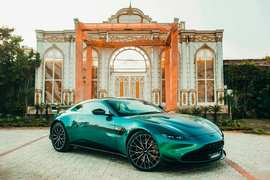
Aston Martin Valhalla: The Modern Hypercar That Rewrites the Rules
The once unimaginable reality of 1,000+ horsepower, electrified performance is here—and Aston Martin has delivered a drama-free rocket that still makes you question everything.
“So, how was it?”
It’s the inevitable question whenever someone gets behind the wheel of Aston Martin’s latest $1.1 million creation, the 2026 Aston Martin Valhalla. But in the current era of hypercar madness, the traditional question of a supercar review feels almost quaint. For a driver who has recently experienced the state of the art in performance, the answer isn’t a simple “it was amazing”—it’s more like, “exactly what you’d expect, and yet, somehow more.”
When a vehicle like the Valhalla arrives, it doesn’t just represent the evolution of the supercar; it represents a complete restructuring of what’s possible. It bridges the gap between Formula 1 innovation and street-legal drivability, wrapped in Aston Martin’s iconic design language. But beneath the sculpted carbon fiber lies a powertrain and chassis that challenge the very definition of a road car.
A Long Road to Valhalla
The journey from concept to production has been an odyssey, spanning nearly seven years since the 2019 Geneva Motor Show debut of the AM-RB 003. The original name, a nod to Aston’s technical partnership with the Red Bull Racing Formula 1 team, reflected a design pedigree rooted in motorsport. Back then, the plan was a bespoke 3.0-liter twin-turbo V6 hybridized to compete with benchmarks like the LaFerrari and Porsche 918 Spyder.
However, the automotive world evolves at a relentless pace. Aston Martin’s strategic direction shifted, culminating in the parting of ways with Red Bull Racing after the 2020 F1 season. More significantly, the internal structure of Aston Martin underwent restructuring, leading to the transformation of the Valhalla’s powertrain from an in-house V6 to a hybridized version of the Mercedes-AMG GT Black Series twin-turbo V8. Aston engineers adapted the AMG unit with larger turbos, a new intake manifold, and stronger internal components, boosting the output by nearly 100 hp and 50 lb-ft. Aston Martin has made this engine its exclusive domain in the Valhalla.
By the time I sat in a mockup at the Pebble Beach Concours in August 2022, giggling at the Aston Martin Valhalla’s F1-inspired reclined seating, the projected specs had jumped to 1,012 hp and an undisclosed torque figure. Even then, it was clear that Aston was aiming for something extraordinary.
Worth the Wait… and Then Some
Based on the development timeline, one might have expected the Aston Martin Valhalla hypercar to be in production much sooner. However, the reality of 2025-2026 is that the production version significantly exceeds those earlier expectations. The Aston Martin Valhalla 1064 hp V8 engine is a marvel of modern engineering, combined with a sophisticated hybrid system that redefines performance.
The heart of the Valhalla is a flat-plane-crank, dry-sump, twin-turbo 4.0-liter V8 delivering a staggering 817 hp. This internal combustion powerhouse is supported by three Aston-designed radial-flux permanent-magnet electric motors—two powering the front axle and one integrated into the new eight-speed dual-clutch transmission. The result: a combined output of 1,064 hp and 811 lb-ft of torque.
The hybrid system is further enhanced by a 560-cell battery pack, effectively an off-the-shelf AMG unit that serves as the brain of the electrical architecture. The cells are fully submerged in dielectric oil, a cooling strategy that allows for incredibly rapid charge and discharge cycles. As Aston Martin chief engineer Andrew Kay explained, “We’re able to push energy into the battery and cycle it out very quickly. This is very good for track use, in particular.”
What sets the Valhalla apart from earlier concepts and the Valkyrie is its status as a plug-in hybrid, offering up to 8.7 miles of EV-only range with a top speed of 80 mph. For the enthusiast seeking a deeper dive into the technology that powers this machine, details on the Aston Martin Valhalla specifications are available elsewhere, but the real story isn’t in the brochure; it’s in the drive.
When “Supercar” Isn’t Enough
The automotive press often debates the terminology—is the Valhalla a supercar or a hypercar? For Aston Martin, the distinction is clear: the Valhalla is their first-ever mid-engine supercar. Yet, in the context of the Valkyrie, the term “hypercar” begins to feel more appropriate. Aston Martin’s preference for “supercar” stems from a marketing strategy designed to differentiate from the Valkyrie, while simultaneously ensuring the Valhalla remains in the minds of consumers as a pinnacle achievement.
Whatever you call it, the Valhalla exists in a rarefied atmosphere. Its $1 million price tag and production run of 999 units make it seem almost pedestrian next to the Valkyrie’s $3 million+ price point and 285-unit inventory. This comparison, absurd as it sounds, speaks to the extraordinary state of high-performance automobiles in the 2020s.
For millennials, zoomers, and Gen Alpha, the arrival of a million-dollar car every few months is the new normal. These machines consistently break previous benchmarks in power, torque, acceleration, and lap times, all while featuring bespoke luxury options that dwarf the specs of anything available even a decade ago.
If you’re older than that, perhaps you recall the seismic shift caused by something like the 627-hp McLaren F1 in 1993, or the Bugatti Veyron just 20 years ago—the undisputed king of the first thousand-horsepower era. Today, however, we live in a different world. Since the Aston Martin Valhalla prototype was shown at Pebble Beach, we’ve driven the Porsche 911 GT3 RS, which, despite having half the horsepower, offers track-focused aerodynamics and handling that demand professional skills to maximize—making its road usability debatable.
Stepping up the ladder, MotorTrend has sampled offerings that range from the hyper-exclusive Ferrari F80 and 849 Testarossa to the wildly aerodynamic Czinger 21C VMax. Even the 2026 Aston Martin Vantage, priced far below the Valhalla’s 1-million-dollar mark, offers world-class performance. But as the Aston Martin Valhalla 0-60 time boasts a 2.3 second dash, it feels like a different species entirely.
The Joy of the Drive: No Comparisons Needed
With such a wealth of extreme performance vehicles available today, the mantra “comparison is the thief of joy” has never been more relevant in the supercar and hypercar realm. It’s also coincidental here because organizing a true comparison test between the Valhalla and the other cars mentioned is virtually impossible. Ferrari, for instance, has long been reluctant to lend publications like ours cars for head-to-head showdowns.
However, given the extreme dynamic limits of cars like the Valhalla, focusing on the experience the car provides on its own merits is often more satisfying. Aston Martin Valhalla reviews consistently highlight this unique balance of raw power and accessible control.
For those seeking a luxurious Aston Martin supercar, the Valhalla delivers in spades. The interior design is a testament to Aston Martin’s commitment to craftsmanship, with exquisite materials and ergonomic considerations. But unlike some of its rivals, the Valhalla isn’t just a pretty face; its performance is the true star of the show.
On the Road: The Unexpectedly Civilized Experience
When I sat in the Valhalla prototype, I was impressed by the F1-style reclined seating position. It’s an unconventional setup that forces you to adapt to the car, rather than the other way around. The seats are bolted so low into the carbon-fiber monocoque tub that there’s no motor to slide them forward or back. Instead, you use a leather strap located between your legs to make adjustments.
It takes only a few minutes to get used to the seating position, which is surprisingly comfortable once you settle in. What’s even more surprising is the ride quality. The Valhalla features a Valhalla-specific Bilstein DTX active damper system and a five-link rear suspension layout that provide a remarkably smooth ride, even on less-than-perfect roads.
The Spanish roads chosen for this drive were far from smooth, yet the suspension performed admirably across Sport and Sport+ settings. While Race mode introduces a harsher ride that you might tire of in everyday driving, it’s perfectly suitable for spirited road driving, especially on well-maintained, fast, sweeping roads.
The steering wheel, a square-ish design, feels nice to the touch. The molded-in crease/edge on the backside provides a positive grip, although some drivers may find it slightly uncomfortable after long periods. The steering feel, however, is intuitive and maintains a lovely weight that is neither too light nor heavy across the different drive modes.
When I found a wide, open stretch of country road with no one in sight, I came to a stop, pressed the brake and throttle pedals, and launched the Valhalla. Aside from a slight, playful wiggle from the rear as the tires

 Aston Martin Valhalla: The Modern Hypercar That Rewrites the Rules
The once unimaginable reality of 1,000+ horsepower, electrified performance is here—and Aston Martin has delivered a drama-free rocket that still makes you question everything.
“So, how was it?”
It’s the inevitable question whenever someone gets behind the wheel of Aston Martin’s latest $1.1 million creation, the 2026 Aston Martin Valhalla. But in the current era of hypercar madness, the traditional question of a supercar review feels almost quaint. For a driver who has recently experienced the state of the art in performance, the answer isn’t a simple “it was amazing”—it’s more like, “exactly what you’d expect, and yet, somehow more.”
When a vehicle like the Valhalla arrives, it doesn’t just represent the evolution of the supercar; it represents a complete restructuring of what’s possible. It bridges the gap between Formula 1 innovation and street-legal drivability, wrapped in Aston Martin’s iconic design language. But beneath the sculpted carbon fiber lies a powertrain and chassis that challenge the very definition of a road car.
A Long Road to Valhalla
Aston Martin Valhalla: The Modern Hypercar That Rewrites the Rules
The once unimaginable reality of 1,000+ horsepower, electrified performance is here—and Aston Martin has delivered a drama-free rocket that still makes you question everything.
“So, how was it?”
It’s the inevitable question whenever someone gets behind the wheel of Aston Martin’s latest $1.1 million creation, the 2026 Aston Martin Valhalla. But in the current era of hypercar madness, the traditional question of a supercar review feels almost quaint. For a driver who has recently experienced the state of the art in performance, the answer isn’t a simple “it was amazing”—it’s more like, “exactly what you’d expect, and yet, somehow more.”
When a vehicle like the Valhalla arrives, it doesn’t just represent the evolution of the supercar; it represents a complete restructuring of what’s possible. It bridges the gap between Formula 1 innovation and street-legal drivability, wrapped in Aston Martin’s iconic design language. But beneath the sculpted carbon fiber lies a powertrain and chassis that challenge the very definition of a road car.
A Long Road to Valhalla