The Porsche 911 Pantheon: A Definitive Ranking of the 5 Greatest 911s Ever Driven
For the last 40 years, I’ve had the privilege of putting the legendary Porsche 911 through its paces—from the early air-cooled icons that defined a generation of sports cars to the cutting-edge hybrid monsters of today. Over thousands of miles across continents, I’ve witnessed the 911 evolve, adapt, and ultimately dominate the premium sports car landscape. Every new iteration promises innovation, but some models don’t just meet expectations; they redefine them.
In the hyper-competitive world of automotive engineering, the Porsche 911 stands as a testament to endurance, precision, and unwavering commitment to driver experience. From the raw, visceral thrills of the original Turbo to the surgical precision of modern GT cars, the 911 has consistently proven that its unique rear-engine configuration is not a flaw to be engineered around, but a signature trait that delivers unparalleled tactile feedback and driver engagement.
Let’s delve into the archives and evaluate the cars that truly captured the soul of the 911. These are not just my personal favorites; they are the 911s that have fundamentally shaped the identity of the marque and set the benchmark for sports car performance and handling.
The Original Widowmaker: 1975 Porsche 911 Turbo (930)
When the first 911 Turbo—the legendary 930—rolled out of the factory in 1975, it wasn’t just a new model; it was a declaration of intent. At a time when most sports cars were naturally aspirated, Porsche embraced forced induction to unleash a level of performance that was, frankly, terrifying. Veteran journalists of the era spoke in hushed tones about its unforgiving nature, warning drivers that the 911 Turbo was a “widowmaker” that punished even the slightest mistake with brutal ferocity. It demanded respect, technique, and the courage to tame a force of nature.
Thirty-five years after the 930’s debut, I finally got behind the wheel of one of the first 30 production Turbos ever built, now preserved in Porsche’s exclusive classic fleet. The reputation preceded it, and I approached the experience with extreme caution, testing the throttle inputs and mapping the power delivery of the 3.0-liter flat-six. The engine was remarkably docile at lower revs, but once the turbocharger spooled up around 3,500 rpm, there was a noticeable rush of acceleration, though it didn’t deliver the sledgehammer blow I expected.
The secret to harnessing the original 911 Turbo’s power, I discovered, was to keep the engine spinning above 4,000 rpm. While turbo lag was substantial by modern standards, it was manageable. Even with only 256 horsepower, the car weighs just 2,513 pounds, making it incredibly agile. First gear screams to 50 mph, second to 90 mph, and third to nearly 130 mph. In a world where most drivers rely on sophisticated electronic aids, the 930 is a raw, analog experience that forces you to become one with the machine. The sensation of harnessing that immense power through the rear wheels is unmatched. It’s a thrilling reminder that in the hands of a skilled driver, less sophisticated engineering can often yield the most rewarding results.
The Last of the Mohicans: 1996 Porsche 911 (993)
For Porsche purists, the 993 represents the pinnacle of the 911 lineage. It is the last of the true air-cooled 911s, a car that still demands a physical connection between driver and machine. But back in 1994, when the 993 was unveiled, it was the 911 of the future. It was the first redesign of the 911 in 34 years, an engineering marvel that addressed the Achilles’ heel of the classic 911 platform while retaining its iconic character.
The most significant change was the introduction of a new multilink rear suspension that replaced the semi-trailing arms of the past. This revolutionary design reduced camber changes and provided an astonishing level of control, making the 993 easier to drive than any previous 911. The new six-speed manual transmission perfectly complemented the revised 3.6-liter flat-six, which produced 268 horsepower thanks to lighter internals and improved engine management.
Compared to its predecessor, the 964, the 993 was a revelation. Ulrich Bez, the visionary engineer who led the project, created a 911 that was not only faster and more forgiving but also more desirable. Harm Lagaay’s exterior design corrected the 964’s proportions, resulting in a cleaner, more elegant look that has aged like fine wine. Driving the 993 today is an experience that transcends nostalgia; it’s a reminder of what made the 911 a sports car unlike any other. The mechanical symphony of the air-cooled engine, the satisfying precision of the shifter, and the confident grip of the chassis combine to create a driving experience that remains deeply engaging and profoundly rewarding.
The Modern Icon: 2017 Porsche 911 Carrera (991.2)
In 2016, Porsche released the 991.2, a refresh of the critically acclaimed 991 generation. While many enthusiasts overlooked the base 911 Carrera in favor of the more powerful Turbo and GT models, this model proved to be the surprise of the year. It was the 911 that truly stole my heart and demonstrated the mastery of modern automotive engineering.
The 991.2 introduced a new 3.0-liter turbocharged engine with 370 horsepower in the base model. This engine delivered a broad band of torque and impressive efficiency, all while remaining incredibly responsive. What truly set this car apart was its chassis. The 991.2 was astonishingly communicative, allowing drivers to feel the subtle nuances of the road and the grip of the tires with remarkable clarity. It was a testament to the fact that even with increasing levels of performance, Porsche never loses sight of the importance of driver engagement.
Visually, the 991.2 was a masterful refinement of the 991 generation, blending modern aesthetics with classic 911 proportions. Inside, a new infotainment system offered a seamless blend of style and functionality. And then there was the transmission. Porsche’s PDK dual-clutch automatic is a benchmark for smooth, precise shifting, but the seven-speed manual transmission on the base Carrera was the star of the show. It had an oily, rifle-bolt action that made us all fall in love with driving again. It was a car that summed up the 911 ethos: a driver-focused machine that makes you feel connected to the road and thrilled by the act of driving.
The Purest Experience: 2023 Porsche 911 GT3 RS (992.1)
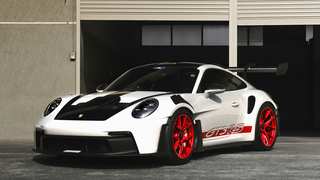
When the letters “RS” are etched onto the side of a Porsche 911, it signifies a commitment to the track—a declaration of purpose that defines the ultimate expression of the marque’s engineering prowess. The 992-series GT3 RS is the most extreme road-going 911 ever produced, a car engineered to lap the world’s most iconic circuits at breathtaking speeds.
Driving the GT3 RS on the Silverstone Formula 1 circuit was a visceral experience that redefined my understanding of what a road car is capable of. The aerodynamic grip it generates is monumental, allowing you to attack high-speed corners with a level of confidence that belies the car’s road-legal status. It accelerates, brakes, and corner-entry with violence that is more akin to a pure race car than a road car.
What sets the GT3 RS apart is that its aerodynamic prowess doesn’t come at the expense of driver feel. Even for a mortal driver, the chassis telegraphs its every move with astonishing clarity. The suspension remains sensitive, the steering is razor-sharp, and the steering response is instantaneous. It doesn’t demand the reflexes of Max Verstappen to handle, but it does require you to trust the physics of the car and push its limits. The GT3 RS is the ultimate track-day machine—a car you can drive to the circuit, hammer around all day, and then drive home again. It makes you feel like a driving god.
The Modern Icon: 2017 Porsche 911 Carrera (991.2)
In 2016, Porsche released the 991.2, a refresh of the critically acclaimed 991 generation. While many enthusiasts overlooked the base 911 Carrera in favor of the more powerful Turbo and GT models, this model proved to be the surprise of the year. It was the 911 that truly stole my heart and demonstrated the mastery of modern automotive engineering.
The 991.2 introduced a new 3.0-liter turbocharged engine with 370 horsepower in the base model. This engine delivered a broad band of torque and impressive efficiency, all while remaining incredibly responsive. What truly set this car apart was its chassis. The 991.2 was astonishingly communicative, allowing drivers to feel the subtle nuances of the road and the grip of the tires with remarkable clarity. It was a testament to the fact

 The Porsche 911 Pantheon: A Definitive Ranking of the 5 Greatest 911s Ever Driven
For the last 40 years, I’ve had the privilege of putting the legendary Porsche 911 through its paces—from the early air-cooled icons that defined a generation of sports cars to the cutting-edge hybrid monsters of today. Over thousands of miles across continents, I’ve witnessed the 911 evolve, adapt, and ultimately dominate the premium sports car landscape. Every new iteration promises innovation, but some models don’t just meet expectations; they redefine them.
In the hyper-competitive world of automotive engineering, the Porsche 911 stands as a testament to endurance, precision, and unwavering commitment to driver experience. From the raw, visceral thrills of the original Turbo to the surgical precision of modern GT cars, the 911 has consistently proven that its unique rear-engine configuration is not a flaw to be engineered around, but a signature trait that delivers unparalleled tactile feedback and driver engagement.
Let’s delve into the archives and evaluate the cars that truly captured the soul of the 911. These are not just my personal favorites; they are the 911s that have fundamentally shaped the identity of the marque and set the benchmark for sports car performance and handling.
The Porsche 911 Pantheon: A Definitive Ranking of the 5 Greatest 911s Ever Driven
For the last 40 years, I’ve had the privilege of putting the legendary Porsche 911 through its paces—from the early air-cooled icons that defined a generation of sports cars to the cutting-edge hybrid monsters of today. Over thousands of miles across continents, I’ve witnessed the 911 evolve, adapt, and ultimately dominate the premium sports car landscape. Every new iteration promises innovation, but some models don’t just meet expectations; they redefine them.
In the hyper-competitive world of automotive engineering, the Porsche 911 stands as a testament to endurance, precision, and unwavering commitment to driver experience. From the raw, visceral thrills of the original Turbo to the surgical precision of modern GT cars, the 911 has consistently proven that its unique rear-engine configuration is not a flaw to be engineered around, but a signature trait that delivers unparalleled tactile feedback and driver engagement.
Let’s delve into the archives and evaluate the cars that truly captured the soul of the 911. These are not just my personal favorites; they are the 911s that have fundamentally shaped the identity of the marque and set the benchmark for sports car performance and handling.