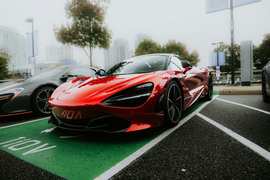
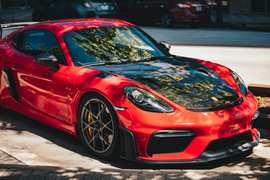
Top 5 Porsche 911s in Four Decades of Driving: The Cars That Define Porsche Excellence
For over 40 years, I’ve had the privilege of putting Porsche 911s through their paces. Over that time, I’ve experienced a stunning evolution of an automotive icon, moving from the raw mechanical purity of early models to the astonishing technological prowess of the latest GT machines.
It’s a strange reality to contemplate: four decades have passed since I first got behind the wheel of a Porsche 911. I recall that initial encounter as clearly as if it were yesterday. It was a white 3.0-liter Carrera, fitted with classic black Fuchs alloys. With its narrow body, no rear wing, and no power steering, coupled with a five-speed manual transmission, it was about as pure a 911 as Porsche had ever produced. I remember the car feeling fast, though not without its flaws—a state that made me question what all the fuss was about at the time. It didn’t help that I was testing it alongside the Porsche 944 Turbo. In my home country of Australia, those two cars were almost identical in price, but the 944 Turbo possessed more power and torque. Over any road, it was faster and required significantly less effort than its legendary stablemate.
Yet, despite the 944 Turbo’s technical superiority, I found myself captivated by the 911. As I wrote in my review, “After two days and 600 miles, I’m certain. I know the 944 Turbo is the better car. But I also know that if it came to the crunch, that if it were me agonizing over how to spend my money, I’d take the 911 Carrera home.” It wasn’t a simple decision. I acknowledged the 944 Turbo’s competence, noting that “Its soaring, searing performance is superbly counterbalanced by a chassis of astounding ability,” capable of making even a novice driver look good. Nevertheless, the 911 had a hold on the emotions. “The gloriously imperfect 911 Carrera is a sports car of a different age and reflects different values. It’s not tailored to meet the needs of most drivers. It demands understanding and respect. That’s why I’d take it home.”
Since that first drive, I have tested dozens of 911 variants. With the exception of the 964 model, which in the early 1990s genuinely worried me that the 911 concept might have reached its expiration date, I have marveled at how Porsche has refined its icon, maintaining its relevance, excitement, and engagement decade after decade. Four decades after my initial drive, the 911 remains one of the few new cars I would genuinely purchase with my own savings. From the extensive list of 911 models I have driven over the years, here are the five that remain most memorable in my memory.
The 1975 Porsche 930: The Original Widowmaker
Back in the era when I drove that 3.0-liter Carrera, veteran road-test journalists spoke of the original Porsche 911 Turbo in tones of reverence and awe. They described it as a car that demanded absolute respect when pushed to its limits—a machine where the binary boost states made the traditional 911 tightrope act (balancing corner-entry understeer with corner-exit oversteer) a task requiring swift hands and considerable nerve. The original 911 Turbo did not forgive mistakes or tolerate sloppiness. It was, in their words, a widowmaker. It took me 35 years to finally get behind the wheel of an original 911 Turbo and discover the truth for myself.
The car I drove was one of the first 30 production Turbos ever built, now a treasured part of Porsche’s impressive classic fleet. Aware of its fearsome reputation, I approached the experience cautiously at first, subtly modulating the throttle, monitoring the boost build-up and watching the tachometer, trying to develop a mental map of the power and torque curves. Surprisingly, the engine proved to be remarkably tractable and happy to cruise at 2,000 rpm in top gear, allowing the 911 Turbo to glide along at 45 mph. However, once the engine hit 3,500 rpm, there was a distinct surge of acceleration as the turbocharger pumped 0.8 bar of pressure into the intake system. But contrary to expectations, I didn’t feel that expected sledgehammer blow between my shoulder blades.
I learned that the trick to smooth yet brisk progress in the original 911 Turbo was to keep the 3.0-liter flat-six spinning at 4,000 rpm or higher to maintain turbocharger responsiveness. Yes, there is turbo lag—very noticeable by modern standards—but it is manageable. Even though it is now more than 50 years old, this 911 remains an impressively fast car on the road today. First gear reaches 50 mph, second gear 90 mph, and third gear nearly 130 mph. This means it can effortlessly dominate winding two-lane roads using only second and third gears. And while it might have a modest 256 hp, its weight of only 2,513 pounds allows it to maneuver into and out of corners with agility. A half-century ago, its performance would have seemed nothing short of otherworldly.
The 1996 Porsche 911 (993): The Last of the Air-Cooled Legends
For Porsche purists, this model represents the conclusion of an era—the final iteration of the “real” 911. It’s the Porsche that demands focus, where your knuckles graze the dashboard and the snarling metallic clatter of an air-cooled flat-six fills the air behind you. Yet, back in 1994, when I first drove the 993, it was the 911 of the future, the first to challenge the established laws of physics. While the 993 retained the slightly tail-happy nature that required careful loading on corner entry to hit the apex, and the rear end still danced through rougher turns, the harmony between the front and rear axles was significantly improved. The 993 still performed 911 behaviors, but with a much wider margin of error.
The key to this transformation was a revolutionary rear suspension system that replaced the semi-trailing arms of the past with a new multilink setup. This design allowed for minimal initial toe-out during corner entry and then progressive toe-in as lateral loads increased, all while reducing the camber change that had been the Achilles’ heel of 911s since 1963. This was combined with a new, faster steering system—2.5 turns lock-to-lock, 16% quicker than its predecessor—which made the front end feel far more decisive. Furthermore, the new six-speed manual transmission effectively utilized the 3.6-liter flat-six, which revved harder to its 268-hp power peak at 6,100 rpm thanks to lighter internal components, a Bosch Motronic 2.0 engine management system, and a new dual exhaust.
Compared to the 964 model it replaced, the 993 was a revelation. This wasn’t just about the engineering advancements, overseen by Ulrich Bez, who later headed Aston Martin. The exterior redesign, directed by design chief Harm Lagaay, addressed the visual imbalances of the 964, a car he felt was too tall at the front and disproportionately low at the rear. The interior was cleaner, too, with a more logical arrangement of buttons. The 993 was a 911 that was faster and more forgiving than ever before. Most importantly, it was also more desirable.
The 1996 Porsche 911 (996): The Engine That Saved Porsche
At the time of its release, this was considered heresy. Porsche’s decision to replace the air-cooled flat-six with a water-cooled engine in the 996-series 911 was, in the eyes of aficionados, the automotive equivalent of Bob Dylan abandoning his acoustic guitar and picking up a Fender Stratocaster at the 1965 Newport Folk Festival. However, the 996, the first clean-sheet redesign of Porsche’s enduring sports car in 34 years, was a hero car in my eyes. It was the 911 that ultimately saved Porsche.
Engineered and developed under the leadership of Porsche R&D chief Horst Marchart, the 996 was a clever 911, not least because it shared 38 percent of its components with an entirely new, lower-cost mid-engine roadster the world would come to know as the Boxster. The iconoclastic Porsche chairman, Wendelin Weideking, understood that the Boxster was essential to provide dealers with a product to sell once the aging 928 and 968 models were discontinued. As design boss Lagaay humorously remarked after the company unveiled the 996, “We did two cars for the price of one-and-a-half.”
But while media attention centered on its partnership with the Boxster and the shift to water cooling, the 996’s true significance ran much deeper. In 1994, it took Porsche 130 hours to build a 993-series 911; by comparison, the

 Top 5 Porsche 911s in Four Decades of Driving: The Cars That Define Porsche Excellence
For over 40 years, I’ve had the privilege of putting Porsche 911s through their paces. Over that time, I’ve experienced a stunning evolution of an automotive icon, moving from the raw mechanical purity of early models to the astonishing technological prowess of the latest GT machines.
Top 5 Porsche 911s in Four Decades of Driving: The Cars That Define Porsche Excellence
For over 40 years, I’ve had the privilege of putting Porsche 911s through their paces. Over that time, I’ve experienced a stunning evolution of an automotive icon, moving from the raw mechanical purity of early models to the astonishing technological prowess of the latest GT machines.