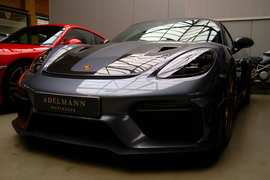
The Pantheon of the Rear-Engine Icon: Five Porsche 911s That Define Driving Excellence
For nearly half a century, the Porsche 911 has reigned supreme as the benchmark for sports cars—a vehicle that has continuously evolved while remaining true to its iconic silhouette. With a career spanning four decades behind the wheel of these legendary machines, I’ve experienced everything from the raw purity of the early 3.0-liter Carrera to the apex-devouring fury of the 992 GT3 RS. This isn’t just a list of favorite cars; it is a chronicle of Porsche’s engineering mastery and emotional resonance.
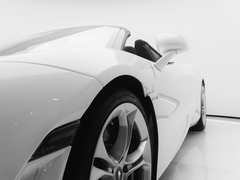
My first encounter with a Porsche 911 was a white 3.0-liter Carrera with black Fuchs alloys, a manual five-speed transmission, and no power steering. It was a car that demanded respect and understanding—a visceral machine that carved corners with precision but lacked the refined composure of its contemporized contemporaries. While it may have been technically outperformed by cars like the 944 Turbo of the same era, the 911 possessed a soul that transcended mere statistics. Its mechanical symphony and driver-centric feedback created an irresistible allure, a connection that has only deepened over time.
Since those early days, Porsche has redefined the 911 experience time and again. Barring the somewhat hesitant evolutionary steps of the 964 generation in the early 1990s, Porsche has successfully modernized this icon, ensuring its relevance and engagement for new generations of drivers. It remains one of the few new cars that I would choose to purchase with my own hard-earned money. Of all the 911 variants I’ve encountered throughout my career, these five models stand out as the most memorable, each representing a critical milestone in the evolution of the rear-engine legend.
The Founding Legend: 1975 Porsche 930 Turbo
In the 1970s, veteran road testers spoke of the original Porsche 911 Turbo in hushed tones, warning of a car that demanded absolute respect. It was a beast with a binary throttle, where the difference between sublime grip and catastrophic oversteer was a matter of millimeters and split-second decisions. They called it a widowmaker, a machine that punished mistakes ruthlessly. It took me 35 years to finally get behind the wheel of a production 930, and what I found was a car that was both terrifying and exhilarating.
My test subject was one of the first 30 Turbos ever built, a museum-quality piece from Porsche’s classic collection. Aware of its fearsome reputation, I drove it cautiously at first, trying to understand the limits of its power. The 3.0-liter flat-six was remarkably tractable at low RPMs, capable of ticking along at 45 mph in fifth gear without complaint. But once the tach needle approached 3,500 RPM, the turbocharger kicked in, delivering a surge of acceleration that was palpable, yet not the catastrophic blow I had braced for.
The secret to handling the original 930 is to keep the engine spinning above 4,000 RPM, ensuring the turbocharger stays energized. Yes, there is a noticeable turbo lag, particularly by modern standards, but it is manageable. Even after 50 years, this car is incredibly fast on the road. First gear stretches to 50 mph, second to 90 mph, and third to nearly 130 mph, allowing for blistering speed through winding roads using only two gears. And while it only produces 256 horsepower, its low curb weight of just 2,513 pounds allows it to carve through corners with startling agility. In its era, this performance was nothing short of otherworldly.
The Purist’s Choice: 993-Generation Porsche 911
For purists, the 993 is the last of the true 911s—a car that connects the driver directly to the mechanical heart of the machine. The snarling metallic clatter of the air-cooled flat-six and the raw feel of the steering wheel are palpable. Yet, when I first drove it in 1994, the 993 was the vanguard of 911 innovation, a car that pushed the boundaries of physics while retaining its signature character. While the front end still required careful loading to hit the apex, and the rear end could still dance through rough corners, the 993 exhibited a far greater harmony between front and rear. It performed the essential 911 functions, but within a much wider margin of error.
The critical innovation was a new rear suspension that replaced the outdated semi-trailing arms with a modern multilink setup. This system provided slight initial toe-out on corner entry and progressive toe-in as cornering loads increased, dramatically reducing the camber changes that had plagued 911s since 1963. This was coupled with a quicker steering ratio—2.5 turns lock-to-lock, 16 percent faster—which made the front end feel far more decisive. A new six-speed manual transmission maximized the potential of the 3.6-liter flat-six, which delivered a punchier 268 hp at 6,100 RPM thanks to lighter internals, Bosch Motronic 2.0 engine management, and a new dual-exhaust system.
Compared to its predecessor, the 964, the 993 was a revelation. Under the leadership of Ulrich Bez, later the head of Aston Martin, Porsche’s engineering advancements were remarkable. The exterior redesign, overseen by design chief Harm Lagaay, corrected the visual imbalances of the 964, which Bez felt was too tall at the front and too squat at the rear. The interior was also cleaner, with a more organized button layout. The 993 was a 911 that was faster, more forgiving, and, most importantly, more desirable than ever.
The Savior: 996-Generation Porsche 911
When Porsche decided to install a water-cooled flat-six in the 996-generation 911, it was viewed as heresy by aficionados. It was the automotive equivalent of Bob Dylan abandoning his acoustic guitar for a Fender Stratocaster at the 1965 Newport Folk Festival. But the 996, the first clean-sheet redesign of Porsche’s indefatigable sports car in 34 years, was a hero car. It was the 911 that saved Porsche from extinction.
Engineered under the direction of Porsche R&D chief Horst Marchart, the 996 was a masterpiece of intelligent design. Crucially, it shared 38 percent of its components with the new mid-engine Boxster, a vehicle designed to expand Porsche’s market share. Visionary Porsche CEO Wendelin Weideking understood the Boxster was essential for dealerships to continue selling vehicles after the aging 928 and 968 models were discontinued. Design chief Harm Lagaay commented wryly after the launch, “We built two cars for the price of one and a half.”
While the media focused on the water-cooled engine and the Boxster connection, the 996’s true significance ran deeper. In 1994, it took Porsche 130 hours to build a 993; the 996 took just 60 hours. The modern 911 had arrived: more spacious, equipped with the features expected of a late 20th-century sports car, yet undeniably Porsche. Most importantly, it still drove like a 911—only better. There was a new veneer of sophistication, but the 996 retained the exquisite tactility and urgent responsiveness that defined the 911 experience. It was the car that, along with the original Boxster, pulled Porsche back from the brink.
The Heartbeat: 991.2-Generation Porsche 911 Carrera
Among the dozens of 911s I’ve driven, a base 991.2 Carrera stands out as the most emotionally compelling. It captivated everyone who drove it. Press fleets are typically loaded with high-spec vehicles, which often mask the core appeal of a car. So, when Porsche Cars North America decided to include a base 911 Carrera in their 2017 MotorTrend Car of the Year testing, it seemed like a bold move. In reality, it was an inspired decision.
The 991.2 introduced a new 3.4-liter turbocharged engine, producing 370 hp in the base Carrera or 420 hp in the Carrera S. Even in the 370-hp configuration, it delivered a wide torque band and impressive efficiency. This Carrera demonstrated that even on the standard wheel and tire setup, the chassis was staggeringly communicative and adjustable. Visually, the 991.2 was a subtle refresh of the larger, skillfully proportioned 991.1—a superbly executed interpretation of classic 911 themes, modern yet beautiful. Inside, the new infotainment interface was visually striking and functionally effective.
Porsche’s PDK dual-clutch automatic transmission remains a benchmark for smooth, precise shifting. However, the seven-speed manual on the no-frills Carrera delighted with an oily, rifle-bolt action that reignited our passion for driving. MotorTrend’s testing director, Kim Reynolds, summed up the Carrera’s visceral appeal perfectly: “When all cars but one are autonomous, please let this be it, the last human-driven car. For posterity’s sake.” It has been nearly

 The Pantheon of the Rear-Engine Icon: Five Porsche 911s That Define Driving Excellence
For nearly half a century, the Porsche 911 has reigned supreme as the benchmark for sports cars—a vehicle that has continuously evolved while remaining true to its iconic silhouette. With a career spanning four decades behind the wheel of these legendary machines, I’ve experienced everything from the raw purity of the early 3.0-liter Carrera to the apex-devouring fury of the 992 GT3 RS. This isn’t just a list of favorite cars; it is a chronicle of Porsche’s engineering mastery and emotional resonance.
My first encounter with a Porsche 911 was a white 3.0-liter Carrera with black Fuchs alloys, a manual five-speed transmission, and no power steering. It was a car that demanded respect and understanding—a visceral machine that carved corners with precision but lacked the refined composure of its contemporized contemporaries. While it may have been technically outperformed by cars like the 944 Turbo of the same era, the 911 possessed a soul that transcended mere statistics. Its mechanical symphony and driver-centric feedback created an irresistible allure, a connection that has only deepened over time.
The Pantheon of the Rear-Engine Icon: Five Porsche 911s That Define Driving Excellence
For nearly half a century, the Porsche 911 has reigned supreme as the benchmark for sports cars—a vehicle that has continuously evolved while remaining true to its iconic silhouette. With a career spanning four decades behind the wheel of these legendary machines, I’ve experienced everything from the raw purity of the early 3.0-liter Carrera to the apex-devouring fury of the 992 GT3 RS. This isn’t just a list of favorite cars; it is a chronicle of Porsche’s engineering mastery and emotional resonance.
My first encounter with a Porsche 911 was a white 3.0-liter Carrera with black Fuchs alloys, a manual five-speed transmission, and no power steering. It was a car that demanded respect and understanding—a visceral machine that carved corners with precision but lacked the refined composure of its contemporized contemporaries. While it may have been technically outperformed by cars like the 944 Turbo of the same era, the 911 possessed a soul that transcended mere statistics. Its mechanical symphony and driver-centric feedback created an irresistible allure, a connection that has only deepened over time.