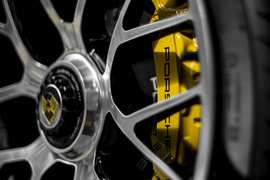
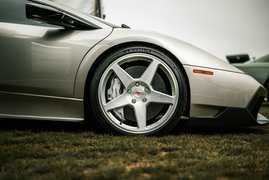
The Pantheon of Passion: My 5 Most Memorable Porsche 911 Experiences
Forty years. Forty years of sliding behind the wheel of the iconic Porsche 911, testing the limits of engineering, physics, and driver endurance. Each generation represents a unique evolutionary step in the life of this automotive legend. From the raw, untamed spirit of the 1970s to the bleeding-edge aero of the 2020s, the 911 has continually reinvented itself while staying true to its soul.
My first encounter with the 911 was a white, 3.0-liter Carrera. No rear wing, no power steering, just a tight five-speed manual. It was deceptively quick but undeniably challenging. In fact, I tested it alongside a 944 Turbo, a car that, at the time, was similarly priced in Australia. The 944 was objectively faster and more effortless, but something about the 911 captivated me.
“After two days and 600 miles,” I wrote in the review, “I’m certain. I know the 944 Turbo is the better car. But I also know that if it came to the crunch, that if it were me agonizing over how to spend my money, I’d take the 911 Carrera home.” The 911 demanded more respect. It wasn’t a car that tried to please everyone; it demanded understanding and commitment. This purity is what defines the Porsche ethos.
Over the decades, I’ve driven dozens of 911 variants. While the 964 generation in the early 90s momentarily hinted that the idea might be outdated, Porsche revitalized the lineup, keeping the 911 relevant, exciting, and utterly compelling. After four decades, it remains one of the few new cars that I would genuinely buy with my own money.
For a discerning enthusiast, the term Porsche 911 price or Porsche 911 for sale can invoke a range of emotions, from aspiration to frustration. The brand’s ability to cater to different segments, from the everyday sports car (the Carrera) to the razor-sharp track machine (the GT3 RS), is unparalleled. Understanding the Porsche 911 models and their evolution is key to appreciating the legacy.
Out of all the 911s I’ve had the privilege of driving, here are the five that stand out as the most memorable—each representing a pinnacle of its era.
The Original Firebrand: 1975 Porsche 930 Turbo
When the original Porsche 911 Turbo first hit the roads, road-test journalists spoke of it in hushed, reverent tones. It was a car that demanded the utmost respect when driven with intent. The 1975 Porsche 930, often nicknamed “The Widowmaker,” was infamous for its binary boost delivery—a light switch that could snap from benign commuter to savage weapon in milliseconds.
The 911 Turbo did not tolerate sloppiness. It required precision, quick hands, and nerves of steel. It was a car that could snap and bite if you weren’t careful. I finally got behind the wheel of an original 930 after 35 years of hearing the legends. This particular car was one of the first 30 production Turbos ever built, now a cherished piece of Porsche’s classic fleet.
aware of its terrifying reputation, I started cautiously, easing into the throttle and monitoring the boost. The 3.0-liter flat-six was remarkably tractable at low RPMs, making the car effortless in city traffic. But once the turbocharger hit 3,500 rpm, delivering 0.8 bar of boost, the surge was undeniable. I expected a sledgehammer blow, but it wasn’t quite what the legends suggested.
The trick to managing the original 930 is keeping the engine revving above 4,000 rpm to keep the turbo energized. Yes, the turbo lag is very noticeable by modern standards, but it’s manageable. Despite its age, this 911 Turbo remains incredibly fast. First gear covers 0-50 mph, second 0-90 mph, and third 0-130 mph, meaning most twisting roads can be mastered using only the middle gears.
With a modest 256 hp, the 930 weighs just 2,513 pounds, making it surprisingly agile and responsive. Fifty years ago, its performance was otherworldly. For collectors and enthusiasts, the Porsche 930 specs still command attention, and finding a pristine example is the holy grail for air-cooled Porsche aficionados.
The End of an Era: 1996 Porsche 911 (993)
For Porsche purists, the 993-generation Porsche 911 represents the end of the line. It’s the last air-cooled Porsche ever produced and often considered the last of the “real” 911s. Driving it feels like a connection to the past—your knuckles grazing the dash, the snarling, metallic clatter of the flat-six engine right behind you. But in 1994, the 993 was the 911 of the future, the first to genuinely challenge Isaac Newton’s laws of physics.
It still possessed the trademark “pat-pat-pattery” front end that required careful loading into corners, and the rear end could still get frisky on rough turns, but the dynamics had drastically improved. The 993 still did 911 things, but within a much safer and more capable margin.
The most significant change was the new rear suspension. Porsche replaced the semi-trailing arms with a multilink setup that allowed for subtle initial toe-out on corner entry and then progressive toe-in as lateral loads increased. This dramatically reduced camber change, the Achilles’ heel of 911s since 1963.
This innovation was combined with steering that was 16% quicker, reducing lock-to-lock to 2.5 turns. It made the front end feel much more decisive and responsive. The 993 also debuted a new six-speed manual transmission, maximizing the power of the 3.6-liter flat-six. Thanks to lighter internals, Bosch Motronic engine management, and a new dual exhaust, the engine revved harder and smoother, hitting its 268 hp peak at 6,100 rpm.
The 993 was a revelation compared to the 964 model it replaced. It wasn’t just the engineering upgrades under Ulrich Bez, later the head of Aston Martin. The exterior redesign, led by design chief Harm Lagaay, corrected the visual flaws of the 964, which he considered too tall at the front and too squat at the rear. The interior was cleaner, too, with better button placement.
The 993 was a faster, more forgiving 911. And, perhaps most importantly, it was even more desirable. The 993 Carrera 2 is a particularly beloved model, representing the perfect balance of classic looks and modern performance. For those seeking the best air-cooled 911, the 993 is the benchmark.
The Hero of Survival: 1996 Porsche 911 (996)
The arrival of the 996-generation Porsche 911 was heresy in the eyes of many purists. The decision to install a water-cooled flat-six engine in the tail of the 911 was akin to Bob Dylan ditching his acoustic guitar for an electric Fender at the 1965 Newport Folk Festival. Yet, the 996, Porsche’s first clean-sheet redesign in 34 years, was nothing short of a hero car to me. It was the 911 that saved Porsche from extinction.
Engineered and developed under the leadership of Porsche R&D chief Horst Marchart, the 996 was a masterpiece of clever engineering. Not only did it share 38% of its components with the new, lower-cost mid-engine roadster known as the Boxster, but it also secured the company’s future. Iconoclastic Porsche boss Wendelin Weideking recognized that the Boxster was essential to give dealers something else to sell after the aging 928 and 968 models were discontinued. “We did two cars for the price of one-and-a-half,” design boss Lagaay later remarked with a smile.
While media attention focused on its relationship with the Boxster and the switch to water-cooling, the 996’s true story ran deeper. In 1994, it took Porsche 130 hours to build a 993-series 911. By contrast, the 996 required only 60 hours to build. The modern Porsche 911 had arrived: roomier, packed with the features expected of a late-20th-century sports car, yet still unmistakably a 911.
Most importantly, it still drove like a 911. Only better. There was a new veneer of sophistication, but the 996 retained the delicious tactility and urgent response that made the 911 unique. It, along with the original Boxster, saved Porsche from financial ruin. The 9

 The Pantheon of Passion: My 5 Most Memorable Porsche 911 Experiences
Forty years. Forty years of sliding behind the wheel of the iconic Porsche 911, testing the limits of engineering, physics, and driver endurance. Each generation represents a unique evolutionary step in the life of this automotive legend. From the raw, untamed spirit of the 1970s to the bleeding-edge aero of the 2020s, the 911 has continually reinvented itself while staying true to its soul.
My first encounter with the 911 was a white, 3.0-liter Carrera. No rear wing, no power steering, just a tight five-speed manual. It was deceptively quick but undeniably challenging. In fact, I tested it alongside a 944 Turbo, a car that, at the time, was similarly priced in Australia. The 944 was objectively faster and more effortless, but something about the 911 captivated me.
“After two days and 600 miles,” I wrote in the review, “I’m certain. I know the 944 Turbo is the better car. But I also know that if it came to the crunch, that if it were me agonizing over how to spend my money, I’d take the 911 Carrera home.” The 911 demanded more respect. It wasn’t a car that tried to please everyone; it demanded understanding and commitment. This purity is what defines the Porsche ethos.
Over the decades, I’ve driven dozens of 911 variants. While the 964 generation in the early 90s momentarily hinted that the idea might be outdated, Porsche revitalized the lineup, keeping the 911 relevant, exciting, and utterly compelling. After four decades, it remains one of the few new cars that I would genuinely buy with my own money.
The Pantheon of Passion: My 5 Most Memorable Porsche 911 Experiences
Forty years. Forty years of sliding behind the wheel of the iconic Porsche 911, testing the limits of engineering, physics, and driver endurance. Each generation represents a unique evolutionary step in the life of this automotive legend. From the raw, untamed spirit of the 1970s to the bleeding-edge aero of the 2020s, the 911 has continually reinvented itself while staying true to its soul.
My first encounter with the 911 was a white, 3.0-liter Carrera. No rear wing, no power steering, just a tight five-speed manual. It was deceptively quick but undeniably challenging. In fact, I tested it alongside a 944 Turbo, a car that, at the time, was similarly priced in Australia. The 944 was objectively faster and more effortless, but something about the 911 captivated me.
“After two days and 600 miles,” I wrote in the review, “I’m certain. I know the 944 Turbo is the better car. But I also know that if it came to the crunch, that if it were me agonizing over how to spend my money, I’d take the 911 Carrera home.” The 911 demanded more respect. It wasn’t a car that tried to please everyone; it demanded understanding and commitment. This purity is what defines the Porsche ethos.
Over the decades, I’ve driven dozens of 911 variants. While the 964 generation in the early 90s momentarily hinted that the idea might be outdated, Porsche revitalized the lineup, keeping the 911 relevant, exciting, and utterly compelling. After four decades, it remains one of the few new cars that I would genuinely buy with my own money.