Here is the rewritten article, focusing on a natural, expert tone and up-to-date 2025 market context, optimized for SEO, and maintaining the original article’s core experience.
Czinger 21C VMax: The Hypercar from Another Dimension
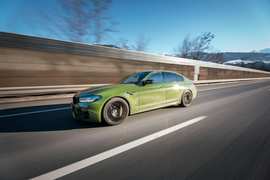
The world of hypercars is built on excess, performance, and an ever-increasing arms race of horsepower and speed. But what happens when innovation moves beyond the incremental and ventures into the truly alien? That’s the question Czinger Vehicles aims to answer with the 21C VMax. As a veteran automotive observer, I’ve spent years watching startups try to crack the code of ultimate performance. Most fail, but the $2.5 million Czinger 21C VMax feels less like a production car and more like a first-contact artifact, brought to Earth by some advanced automotive civilization.
My three-day road rally experience across the Central and Northern California wine country revealed that the 21C VMax isn’t just about raw numbers—it’s a fundamentally different way to experience hypercar engineering. Yes, we’ll explore the insane track capabilities of the 21C and its California Gold Rush records, but what truly captivated me was what this tandem two-seater is like when pushed to its limits on real-world asphalt. The results were as intoxicating as they were unsettling.
The Architecture of the Future: Entering the Divergent Foundry
Czinger is unique for one simple reason: it starts with a parent company called Divergent Technologies. This is where the real magic happens. The company employs revolutionary computational AI and large-scale additive manufacturing to design and produce hyper-light, high-strength components that redefine structural integrity. Even the entrance to this facility felt different. I needed a U.S. passport—not for an international trip, but because Divergent has defense-related contracts. One component I glimpsed, shrouded in protective wraps, bore a distinct resemblance to a rocket.
Lukas Czinger, the young CEO of both entities, walked me through the process, and it was truly mesmerizing. Seeing one of the colossal 3D printers in operation felt like peering into the future of manufacturing. Lasers fused powdered aluminum into complex automotive components that looked more like organic bone structures than metal parts. It’s a sight few in the auto industry ever get to witness.
Lukas explained that Divergent’s technology aims to achieve “Pareto optimal” status. This is the point where any alteration—adding or subtracting even a single gram—results in a net negative for the vehicle. For instance, if an engineer needs a bracket to mount a rear suspension damper reservoir, they define the space available and the structural load required. The software then iterates hundreds of thousands of designs, searching for the absolute lightest and strongest shape. It’s evolutionary engineering at warp speed.
Beyond its own hypercars, Divergent serves as a supplier to nine major automotive OEMs. Aston Martin (DBR22 Roadster), Bugatti (Tourbillon), and McLaren (W1) publicly admit to using their parts. One might suspect the control arms on the Ferrari F80 are also Divergent creations, although Ferrari is historically quiet about its component sourcing.
Two Paths, One Future: VMax vs. Track Monster
Czinger builds two distinct versions of what is essentially the same car. The 21C, named for the 21st century, is the high-downforce track weapon. Its wingless, long-tailed counterpart is the 21C VMax. While both use the same nameplate, the VMax version lacks the fixed rear wing that defines the standard 21C.
For the inaugural Velocity Tour, a 500-mile rally winding through the vineyards and backroads of Central and Northern California, I had the privilege of piloting a silver VMax. The choice of the VMax for a road rally was intentional. While there is a rich story to be told about the track-focused 21C—and believe me, it exists—I was keen to experience this alien design in real-world driving conditions. How does a seven-figure, 1,250-horsepower, 3D-printed marvel feel on a 500-mile trek that includes tight turns, casual stops, and navigating tourist traffic?
Under the Carbon Fiber: A Different Kind of Cockpit
The term “cockpit” feels more appropriate here than “cabin.” The 21C VMax is a tandem two-seater, with the driver positioned centrally, flanked by the passenger directly behind. Czinger claims the experience is akin to being in a fighter jet. I’ve never piloted a jet, but I’ve ridden shotgun in an Extra 330LT stunt plane, and the similarity is striking. You are encased in glass, with only a few inches separating your head from the exterior environment on both sides.
The visibility is exceptional, but the process of entering and exiting the car is pure theater. You sit with your legs stretched out onto the massive sill, pull your knees up toward your chest, and rotate your body before tucking your feet into the footwell. Then, you carefully slide your head under the roof line. It’s awkward, yes, but it’s also incredibly unique.
One reason the sills are so robust is that they house the batteries for the hybrid powertrain. The 21C VMax is a hybrid hypercar, with each sill containing 2.2 kWh of battery power, for a total of 4.4 kWh. This isn’t a plug-in hybrid; the batteries are charged by the mid-mounted V8 engine. These batteries feed 500 horsepower to the front axle, with one motor per wheel. The combustion engine is a Czinger-designed 2.9-liter twin-turbo V8, producing 750 horsepower on California’s 91-octane premium fuel. For those seeking maximum performance, opting for 100-octane race fuel increases output to 850 horsepower. There’s also an ethanol capability that Czinger hints will yield even more power—we estimate a 10% boost—though official figures are pending.
The gasoline engine connects to the rear wheels via an Xtrac single-clutch automated semi-sequential gearbox. This resembles the Xtrac seven-speed unit found in Pagani’s Utopia. However, Czinger not only 3D prints the gearbox casing but also utilizes small 48-volt electric motors to facilitate quicker shifts at lower speeds. This eliminates the lurching and surge that plague most automated single-clutch transmissions at low revs. The dual-barrel actuators performed admirably during my low-speed navigation, a relief I didn’t fully appreciate until the journey ended. Navigating into gas stations, restaurants, and hotel parking lots felt almost normal. For that, the Czinger team deserves applause.
The Track Experience: A Passenger in the Madness
One of the first things I learned about hypercar ownership is that even if you’re not a professional driver, you’re rarely alone when you venture onto a track. In true Bugatti and Pagani style, Czinger assigned pro driver Evan Jacobs to the car for my safety, ensuring I didn’t accidentally launch the $2.5 million machine off the track. Thankfully, later that night, Jacobs assured the Czinger team that I posed no threat to the vehicle, and I was permitted to drive solo for the remainder of the rally.
We visited Laguna Seca for some parade laps. However, non-Czinger employees are restricted from driving the VMax on the track, even at the snail’s pace the rally participants were forced to adhere to. Still, I climbed into the bizarre rear seat to experience the view.
The first thing to note about the rear seat is that if you have large calves or feet, the experience isn’t comfortable. My XXL calves were pressed against the carbon-fiber tub and seat, and my feet found the footwell cramped. However, the visibility through the side windows is simply phenomenal. Again, it reminded me of a stunt plane and was a refreshingly novel perspective for a track experience—something I’ve done over a thousand times.
The most memorable moment came when Jacobs and I convinced the Skip Barber Racing School staff to let him take the VMax out for a couple of “6/10ths” hot laps. The most impressive ride I’ve ever experienced was in the Aston Martin Valkyrie LMH race car, where I could feel the blood draining from my extremities under braking. The Czinger VMax is now a close second. And remember, Jacobs didn’t go full-tilt. Even without the aerodynamic aids of the track-only 21C, it’s easy to understand how a 21C accomplished the “California Gold Rush” record run.
The 21C set five production car track records—at Thunder Hill, Sonoma Raceway, Laguna Seca, Willow Springs, and the Thermal Club—in just five days, driving between each track. Later, Czinger returned to Laguna Seca to not only beat its own record but to reclaim the throne from the Koenigsegg Jesko Sadair’s Spear. That lap time, a ridiculous 1 minute, 22.30 seconds, is quicker than the fastest MotoAmerica Superbike lap ever recorded at Laguna, a 1:22.56.
Czinger claims a vehicle weight of approximately 3,600 pounds. For a 1,250-horsepower hybrid, that’s exceptionally light. For context, the Ferrari SF90 Stradale Assetto Fiorano—the highest-performance version of a three-motor, twin-turbo V8 PHEV with

 Here is the rewritten article, focusing on a natural, expert tone and up-to-date 2025 market context, optimized for SEO, and maintaining the original article’s core experience.
Czinger 21C VMax: The Hypercar from Another Dimension
The world of hypercars is built on excess, performance, and an ever-increasing arms race of horsepower and speed. But what happens when innovation moves beyond the incremental and ventures into the truly alien? That’s the question Czinger Vehicles aims to answer with the 21C VMax. As a veteran automotive observer, I’ve spent years watching startups try to crack the code of ultimate performance. Most fail, but the $2.5 million Czinger 21C VMax feels less like a production car and more like a first-contact artifact, brought to Earth by some advanced automotive civilization.
My three-day road rally experience across the Central and Northern California wine country revealed that the 21C VMax isn’t just about raw numbers—it’s a fundamentally different way to experience hypercar engineering. Yes, we’ll explore the insane track capabilities of the 21C and its California Gold Rush records, but what truly captivated me was what this tandem two-seater is like when pushed to its limits on real-world asphalt. The results were as intoxicating as they were unsettling.
Here is the rewritten article, focusing on a natural, expert tone and up-to-date 2025 market context, optimized for SEO, and maintaining the original article’s core experience.
Czinger 21C VMax: The Hypercar from Another Dimension
The world of hypercars is built on excess, performance, and an ever-increasing arms race of horsepower and speed. But what happens when innovation moves beyond the incremental and ventures into the truly alien? That’s the question Czinger Vehicles aims to answer with the 21C VMax. As a veteran automotive observer, I’ve spent years watching startups try to crack the code of ultimate performance. Most fail, but the $2.5 million Czinger 21C VMax feels less like a production car and more like a first-contact artifact, brought to Earth by some advanced automotive civilization.
My three-day road rally experience across the Central and Northern California wine country revealed that the 21C VMax isn’t just about raw numbers—it’s a fundamentally different way to experience hypercar engineering. Yes, we’ll explore the insane track capabilities of the 21C and its California Gold Rush records, but what truly captivated me was what this tandem two-seater is like when pushed to its limits on real-world asphalt. The results were as intoxicating as they were unsettling.