Here is the rewritten article, adapted for a U.S. audience and positioned as a firsthand expert review, approximately 2000 words long, with no explanatory text, notes, or keywords.
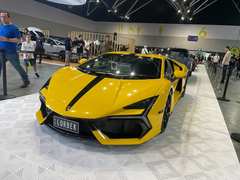
Aston Martin Valhalla: Driving the Future of Performance at $1 Million
For those of us who have been privileged enough to spend time behind the wheel of Aston Martin’s new Valhalla, the question always seems to be, “How does it actually feel?”
It’s a fair question. After all, we’ve been bombarded with tales of its 1,064 horsepower, its cutting-edge hybrid technology, and the very real fact that it’s one of the most expensive cars on the planet. But in the age of increasingly absurd automotive capabilities, these figures often blur together. When friends and colleagues asked about the Valhalla, my response was honest: it’s exactly what you expect. But for those who haven’t had the chance to experience cars at this level, that statement likely makes little sense. This isn’t just another supercar; it’s a snapshot of where performance is heading, and it’s more thrilling than you can imagine.
A Promise Decades in the Making
It’s hard to believe that it’s been over seven years since Aston Martin first unveiled this incredible machine as the AM-RB 003 at the 2019 Geneva Motor Show. Seven years feels like a lifetime, especially when you think about what’s happened since then. Back then, the name—derived from Norse mythology, where Valhalla is the glorious afterlife where heroic dead warriors go to prepare for an epic final battle—reflected the car’s partnership with the Red Bull Racing Formula 1 team.
However, in the automotive world, things change faster than a pit stop. Aston Martin’s relationship with Red Bull Racing ended after the 2020 F1 season when Aston’s then-new owner, Lawrence Stroll, rebranded the Racing Point F1 team as Aston Martin’s official Formula 1 effort. At the same time, the entire automotive industry was being reshaped by the shift toward electrification and hybridization.
Aston underwent significant internal restructuring, and the Valhalla’s powertrain also evolved. Initially envisioned as an in-house-developed, turbocharged 3.0-liter V-6 with power levels matching legendary hybrid hypercars like the LaFerrari and Porsche 918 Spyder, the plan changed. The Valhalla now proudly houses a hybrid powertrain built around a twin-turbo V-8 derived from the AMG GT Black Series. But this isn’t just a standard AMG engine. Aston engineers enlarged the turbos, fitted a new intake manifold, strengthened the pistons, and altered the camshafts. The result? A significant boost of nearly 100 horsepower and 50 lb-ft of torque, making the Valhalla the exclusive home of this specific engine configuration.
I remember sitting in a prototype of the Valhalla on the lawn at the Pebble Beach Concours in August 2022. The driving position—reclinined and with the driver’s legs elevated—is pure Formula 1, and it felt truly special. Even back then, the projected power specs had surged. The hybrid V-8 powertrain, with its electric motors, was estimated to produce a total of 1,012 horsepower and an as-yet-undisclosed torque figure. Aston made it clear that these numbers were not final, but they were more than enough to convince me to say, “Please, I want to drive it, whenever it’s ready.”
Worth the Wait…
Based on Aston Martin’s own development timeline at the time, I didn’t expect it to take another three and a half years to get behind the wheel. But the production version of the Valhalla is worth the wait. It exceeds all the expectations we set back in 2022.
Powering this beast is a dry-sump, flat-plane-crank, twin-turbo 4.0-liter V-8 that generates a staggering 817 horsepower. This is paired with three Aston-designed axial-flux permanent-magnet motors: one on the front axle and a third integrated into the new eight-speed dual-clutch gearbox. The combined output is a staggering 1,064 horsepower and 811 lb-ft of torque.
But it’s not just about raw power. The hybrid system also includes a 560-cell battery pack. Aston engineers confirmed that this is an off-the-shelf AMG battery, the only component of the hybrid system that Aston doesn’t manufacture in-house. The real genius is how they manage that energy. Chief Engineer Andrew Kay explained, “We’re able to push energy into the battery and cycle it out very quickly [meaning recharge and deployment of electrical energy]. This is very good for track use, in particular.”
Unlike the original Valhalla concept and its bigger brother, the Valkyrie, the production model is also a plug-in hybrid. This means it can drive on pure electric power alone for up to 8.7 miles, with a top speed of 80 mph in EV mode. For a deeper dive into the technical specifics, Aston Martin has provided comprehensive details for those interested in the finer points of this engineering marvel.
…but Something Else Happened Along the Way
For those who prefer precision in their terminology, you might be asking if the Valhalla is truly a “supercar.” Given its existence alongside the Valkyrie, Aston Martin has marketed the Valhalla as its first mid-engine supercar. But in the modern landscape, that term often feels restrictive. Wouldn’t it be more accurate to call it a hypercar?
If we exclude the Valkyrie, perhaps. But the Valkyrie is less a production car and more a street-legal race prototype. Its price tag—over $3 million—and production run of just 285 examples make the Valhalla’s starting MSRP of around $1.1 million and a production target of 999 units seem almost pedestrian by comparison.
In the real world, of course, that’s an absurd statement. But it speaks to a broader truth about modern high-performance automobiles, whether in terms of price, capability, or just sheer existence.
For enthusiasts in their 20s and 30s, it’s easy to grow accustomed to seeing new million-dollar cars flood social media feeds almost weekly. Each one seems to boast never-before-seen power figures, acceleration numbers that defy physics, and long lists of technology and customization options that stretch the length of the Nürburgring.
However, for those of us who are a little older but not exactly ready for retirement, it’s easy to remember the jaw-dropping impact of cars like the 627-hp McLaren F1 back in the early 1990s, or the arrival of the Bugatti Veyron mere decades ago, which is widely credited with bringing the concept of a thousand-horsepower, million-dollar hypercar to the mainstream.
But what about today? Since the day I sat in the Valhalla prototype at Pebble Beach, we’ve driven the Porsche 911 GT3 RS, which has only about half the horsepower and significantly less exotic technology, yet utilizes professional-grade aerodynamics and motorsport-derived hardware that require serious skills to maximize on a track. Its suitability for everyday roads is a debate, given its stiff suspension setup.
Stepping up in price, engineering, and technological complexity, MotorTrend has recently tested cars like the Ferrari F80, the 849 Testarossa, the Czinger 21C VMax, and even the “more mainstream but mind-bendingly fast” Porsche 911 Turbo S. We’ve even seen news about a hybrid Corvette ZR1X with 1,250 horsepower, something no one saw coming when the Valhalla was just a brilliant idea in the minds of Aston Martin and its former partner, Red Bull F1 design guru (and now Aston F1 technical partner) Adrian Newey.
Just Drive It
Given the staggering capabilities of modern performance cars, the saying “comparison is the thief of joy” has never been more relevant in the world of supercars and hypercars. It also happens to fit perfectly here because we know that orchestrating a proper comparison test with the vehicles listed above—with the possible exception of the ZR1X—is virtually impossible. This is largely due to Ferrari’s long-standing reluctance to provide publications like ours with cars for head-to-head comparisons. (Shame on you, Ferrari.)
Regardless, with the dynamic limits of these cars soaring to such incredible heights, driving something like the Valhalla on its own merits and experiencing the specific thrills it offers is a far more rewarding endeavor.
Make no mistake: the overall experience is everything in a car like this. For a long time, it simply wasn’t good enough for a car to be enjoyable and thrilling on the road while feeling like an understeering mess on the track. Or to be spectacular on the track but a chiropractor’s dream on the road. We already knew, mostly, that this Aston Martin was a winner on all fronts after MotorTrend’s Angus MacKenzie had tested a “prototype” that was essentially the finished article, save for some transmission calibration, a few months prior.
On the Road
Unlike Angus, who only drove it on the short Stowe circuit at Silverstone in the UK, Aston Martin gave us a 50-minute road loop for this review. If you look at the Valhalla’s Le Mans Hypercar-inspired design and low, wide stance, you might naturally expect it to be a compromised daily driver

 Here is the rewritten article, adapted for a U.S. audience and positioned as a firsthand expert review, approximately 2000 words long, with no explanatory text, notes, or keywords.
Aston Martin Valhalla: Driving the Future of Performance at $1 Million
For those of us who have been privileged enough to spend time behind the wheel of Aston Martin’s new Valhalla, the question always seems to be, “How does it actually feel?”
It’s a fair question. After all, we’ve been bombarded with tales of its 1,064 horsepower, its cutting-edge hybrid technology, and the very real fact that it’s one of the most expensive cars on the planet. But in the age of increasingly absurd automotive capabilities, these figures often blur together. When friends and colleagues asked about the Valhalla, my response was honest: it’s exactly what you expect. But for those who haven’t had the chance to experience cars at this level, that statement likely makes little sense. This isn’t just another supercar; it’s a snapshot of where performance is heading, and it’s more thrilling than you can imagine.
A Promise Decades in the Making
It’s hard to believe that it’s been over seven years since Aston Martin first unveiled this incredible machine as the AM-RB 003 at the 2019 Geneva Motor Show. Seven years feels like a lifetime, especially when you think about what’s happened since then. Back then, the name—derived from Norse mythology, where Valhalla is the glorious afterlife where heroic dead warriors go to prepare for an epic final battle—reflected the car’s partnership with the Red Bull Racing Formula 1 team.
Here is the rewritten article, adapted for a U.S. audience and positioned as a firsthand expert review, approximately 2000 words long, with no explanatory text, notes, or keywords.
Aston Martin Valhalla: Driving the Future of Performance at $1 Million
For those of us who have been privileged enough to spend time behind the wheel of Aston Martin’s new Valhalla, the question always seems to be, “How does it actually feel?”
It’s a fair question. After all, we’ve been bombarded with tales of its 1,064 horsepower, its cutting-edge hybrid technology, and the very real fact that it’s one of the most expensive cars on the planet. But in the age of increasingly absurd automotive capabilities, these figures often blur together. When friends and colleagues asked about the Valhalla, my response was honest: it’s exactly what you expect. But for those who haven’t had the chance to experience cars at this level, that statement likely makes little sense. This isn’t just another supercar; it’s a snapshot of where performance is heading, and it’s more thrilling than you can imagine.
A Promise Decades in the Making
It’s hard to believe that it’s been over seven years since Aston Martin first unveiled this incredible machine as the AM-RB 003 at the 2019 Geneva Motor Show. Seven years feels like a lifetime, especially when you think about what’s happened since then. Back then, the name—derived from Norse mythology, where Valhalla is the glorious afterlife where heroic dead warriors go to prepare for an epic final battle—reflected the car’s partnership with the Red Bull Racing Formula 1 team.