Hybrid Supercars: The Unexpected Evolution of Performance Machines
When many people hear the word “hybrid,” their minds immediately conjure up images of the Toyota Prius or the early Honda Insight. These cars solidified the notion that hybrid technology was reserved for eco-friendly commuters, prioritizing fuel efficiency and low emissions above all else. For years, “hybrid” was almost a taboo term among automotive enthusiasts, signifying a compromise on performance and driving excitement.
However, the automotive landscape has undergone a seismic shift in recent years. The notion that hybrid vehicles are synonymous with boring, slow cars has been thoroughly debunked. Today, hybrid technology is the driving force behind some of the most exhilarating and technologically advanced vehicles on the market. From luxury sedans to ultra-exclusive hypercars, electrification has become an essential ingredient in the pursuit of extreme performance.
This evolution is particularly relevant in 2025. As consumer interest in pure electric vehicles (EVs) cools slightly, automakers are turning to hybridization to strike a balance between performance and efficiency. This trend is proving to be a boon for performance enthusiasts, as it has led to the creation of some truly astonishing machines that prove power, speed, and electrification are not mutually exclusive.
Let’s explore the groundbreaking hybrid supercars and performance vehicles that have redefined what’s possible in the modern era.
Chevrolet Corvette ZR1X: American Muscle Reimagined
The Chevrolet Corvette has always been known for punching above its weight class, but the ZR1X takes this legacy to an entirely new level. This is not your grandfather’s Corvette; it is a technological marvel designed to shatter performance benchmarks.
Equipped with the roaring 5.5-liter twin-turbo flat-plane crank V-8 from the standard ZR1, the ZR1X adds an enhanced version of the Corvette E-Ray’s hybrid system to deliver staggering performance. The result is a combined output of 1,250 horsepower and 973 lb-ft of torque, all delivered through an all-wheel-drive system. This sheer power enables the ZR1X to sprint from 0 to 60 mph in less than 1.7 seconds, placing it among the fastest accelerating cars in the world.
Beyond its blistering straight-line speed, the ZR1X also boasts a 6:49.275 lap time at the Nürburgring in July 2025. This achievement officially makes it the fastest American production car on the legendary German racetrack, a testament to its aerodynamic prowess and sheer engineering might.
While the ZR1X comes with a premium price tag, positioning it as the most expensive production Corvette in history, its performance value is undeniable. It is capable of embarrassing exotic cars that cost several times its price, solidifying its position as a performance bargain in the hypercar space. The Corvette ZR1X represents the pinnacle of American engineering, where traditional muscle meets cutting-edge hybrid technology.
Porsche 911 GTS T-Hybrid: The Evolution of a Legend
For years, Porsche purists feared the day when the iconic 911 would embrace hybridization. However, when Porsche finally introduced the 911 GTS T-Hybrid, it turned out that all the handwringing was much ado about nothing. This car proves that hybridization can enhance, rather than detract from, the 911 driving experience.
Unlike many other hybrid models, the 911 GTS T-Hybrid offers no all-electric driving range. With a tiny 1.9-kWh battery pack, the weight penalty is virtually undetectable from the driver’s seat. What is immediately noticeable, though, is the dramatic reduction in turbo lag. Porsche ingeniously integrates an electric motor directly into the turbocharger’s design, allowing it to spin independently of exhaust gas flow. This provides near-instantaneous boost pressure, transforming the throttle response into something surgical and immediate.
The energy harvested by the eTurbo also recharges the battery, which can then assist the engine through the gearbox motor. While this system sounds complex, the results speak for themselves. The T-Hybrid system delivers a seamless power delivery that enhances performance and efficiency without compromising the pure driving feel that P-car aficionados crave.
For enthusiasts who appreciate the timeless design of the 911 but demand cutting-edge technology, the 918 Spyder represents a new era of hypercar performance when Porsche introduced it to the world back in 2013. Powered by a 4.6-liter naturally aspirated V-8 derived from the engine in Porsche’s RS Spyder LMP2 race car, the 918 Spyder got an additional dose of horsepower from two electric motors mounted at the front and rear that gave it a total output of 887 hp and 944 lb-ft. A 6.8-kWh liquid-cooled lithium-ion battery offered about 12 miles of all-electric range, but much like the P1, the hybrid system’s primary mission was to enhance performance. With power sent to all four wheels, the 918 hit 60 mph from rest in 2.4 seconds on its way to a 211-mph top speed, but it was far from a one-trick pony. In fact, the 918 Spyder managed to take the top spot in our figure-eight testing in 2015, and we also discovered that it’s actually a pretty comfortable cruiser despite its track-focused tuning. GTS T-Hybrid is the perfect choice. It delivers the raw emotion of the 911 with a technological edge that feels intuitive and exciting.
Lamborghini Revuelto: V12 Power Meets Electrification
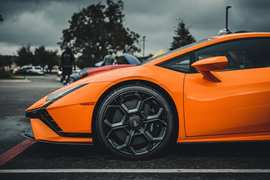
Lamborghini has always pushed the boundaries of automotive design and performance, and the Revuelto is no exception. This successor to the Aventador manages to join the exclusive 1,000-horsepower club without ditching the heart of a Lamborghini: the naturally aspirated V-12 engine.
The Revuelto’s plug-in hybrid system plays a crucial role in its staggering performance. Two electric motors drive the front wheels, while another is integrated into the flagship’s eight-speed dual-clutch transmission. This auxiliary power boosts the 6.5-liter V-12, which revs to nearly 10,000 rpm, while also helping to keep the 3.8-kWh lithium-ion battery pack topped off.
Beyond its breathtaking performance, the Revuelto is a significant departure from its predecessor in terms of usability. While the Aventador’s automated single-clutch transmission was often unrefined during everyday driving, the Revuelto is an entirely different story. Much of this improvement can be attributed to the new dual-clutch gearbox, but the hybrid system also deserves credit for the nearly seamless power delivery.
Combined with vastly improved ergonomics and the unmistakable Lamborghini flair, the Revuelto is a seriously compelling Italian hybrid that requires very little compromise—provided your pockets are deep enough. It is a true supercar experience that proves the roaring V-12 still has a place in the electric age.
Aston Martin Valkyrie: A Roadgoing Formula 1 Car
The Aston Martin Valkyrie looks less like a road car and more like something that belongs at the 24 Hours of Le Mans. This jaw-dropping halo car is Aston Martin’s interpretation of a street-legal hypercar, designed to blur the line between motorsport and road-going performance.
Outfitted with a 6.5-liter naturally aspirated V-12 that generates 1,001 horsepower on its own and revs to a searing 11,000 rpm, the Valkyrie’s monster mill is supplemented by a KERS-style hybrid system. This system adds another 141 hp and 207 lb-ft of torque, resulting in a total system output of 1,139 horsepower and 682 lb-ft of torque.
All this power is sent to the rear wheels in a car with a curb weight of less than 3,000 pounds. The Valkyrie’s aerodynamic figures are equally staggering: 2,425 pounds of downforce from 137 to 220 mph, which is nearly half a ton more than a Formula 1 car. It is an extreme machine by any measure, and it quickly earned its place as one of the most exciting and exclusive hypercars ever built.
Mercedes-AMG S63 E Performance: Luxury Meets Brutal Power
We tend to associate the Mercedes S-Class with plush amenities and futuristic technology, but the story changes drastically when the AMG division gets involved. While its handsome exterior and opulent cabin create the expectation of “adequate” performance, the devastating thrust that the S63 E Performance delivers when you drop the hammer is guaranteed to catch the uninitiated completely off guard.
Equipped with a 4.0-liter twin-turbo V-8 and a hybrid system that generates 201 hp and 236 lb-ft on its own, the S63 E Performance offers staggering output figures of 791 hp and 1,025 lb-ft of torque. This prodigious grunt is sent to all four wheels, enabling this large luxury sedan to give a supercar like the Lamborghini Huracán LP 640-2 Tecnica a run for its money in the sprint from 0 to 60 mph.
Despite a curb weight of nearly 6,000 pounds, the big Benz maintains its composure when the going gets twisty, and it manages to do so without resorting to an overly abusive suspension tune. The S63 E Performance proves that hybrid technology can enhance performance even in the largest and most luxurious

 Hybrid Supercars: The Unexpected Evolution of Performance Machines
When many people hear the word “hybrid,” their minds immediately conjure up images of the Toyota Prius or the early Honda Insight. These cars solidified the notion that hybrid technology was reserved for eco-friendly commuters, prioritizing fuel efficiency and low emissions above all else. For years, “hybrid” was almost a taboo term among automotive enthusiasts, signifying a compromise on performance and driving excitement.
However, the automotive landscape has undergone a seismic shift in recent years. The notion that hybrid vehicles are synonymous with boring, slow cars has been thoroughly debunked. Today, hybrid technology is the driving force behind some of the most exhilarating and technologically advanced vehicles on the market. From luxury sedans to ultra-exclusive hypercars, electrification has become an essential ingredient in the pursuit of extreme performance.
This evolution is particularly relevant in 2025. As consumer interest in pure electric vehicles (EVs) cools slightly, automakers are turning to hybridization to strike a balance between performance and efficiency. This trend is proving to be a boon for performance enthusiasts, as it has led to the creation of some truly astonishing machines that prove power, speed, and electrification are not mutually exclusive.
Let’s explore the groundbreaking hybrid supercars and performance vehicles that have redefined what’s possible in the modern era.
Chevrolet Corvette ZR1X: American Muscle Reimagined
Hybrid Supercars: The Unexpected Evolution of Performance Machines
When many people hear the word “hybrid,” their minds immediately conjure up images of the Toyota Prius or the early Honda Insight. These cars solidified the notion that hybrid technology was reserved for eco-friendly commuters, prioritizing fuel efficiency and low emissions above all else. For years, “hybrid” was almost a taboo term among automotive enthusiasts, signifying a compromise on performance and driving excitement.
However, the automotive landscape has undergone a seismic shift in recent years. The notion that hybrid vehicles are synonymous with boring, slow cars has been thoroughly debunked. Today, hybrid technology is the driving force behind some of the most exhilarating and technologically advanced vehicles on the market. From luxury sedans to ultra-exclusive hypercars, electrification has become an essential ingredient in the pursuit of extreme performance.
This evolution is particularly relevant in 2025. As consumer interest in pure electric vehicles (EVs) cools slightly, automakers are turning to hybridization to strike a balance between performance and efficiency. This trend is proving to be a boon for performance enthusiasts, as it has led to the creation of some truly astonishing machines that prove power, speed, and electrification are not mutually exclusive.
Let’s explore the groundbreaking hybrid supercars and performance vehicles that have redefined what’s possible in the modern era.
Chevrolet Corvette ZR1X: American Muscle Reimagined