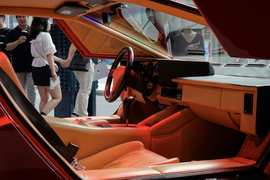
The article is about the debate between traditional physical controls (buttons and knobs) and modern touchscreens in car interiors, highlighting the pros, cons, and hybrid solutions as technology evolves.
Main keyword: touchscreen controls
Secondary keywords: physical controls, car interior design, user interface, voice assistant technology, automotive industry evolution
High-CPC keywords: best car infotainment system, modern car interior, car controls comparison, automotive tech trends 2026
The Future of Car Cockpits: Tactile Knobs vs. Digital Screens in 2026
Over the last decade, the automotive industry has undergone a paradigm shift, transitioning from traditional, tangible controls to sophisticated digital interfaces. This evolution mirrors the way our personal electronics—from smartphones to smart home devices—have converged into seamless touch-based experiences. As we navigate the complex landscape of modern car interiors in 2026, the question looms large: are touchscreen controls truly superior to physical knobs and buttons? This is not merely an aesthetic debate; it cuts to the core of driver experience, safety, and the seamless integration of ever-evolving technology.
For decades, the car interior design was defined by tactile certainty. Drivers became accustomed to the reassuring click of a knob and the defined travel of a physical button. This reliance on muscle memory allowed operators to adjust critical functions—such as climate control or radio volume—without ever diverting their gaze from the road. This consistency provides a sense of confidence and predictability in the often high-stakes environment of driving.
Yet, the allure of technology has increasingly pushed manufacturers toward minimalism. As vehicular systems grow more complex, the sheer number of functions threatens to overwhelm the cockpit, creating what engineers call the “button avalanche.” The drive for cleaner lines and premium aesthetics has led automakers to embed more features within the central display, forcing drivers to hunt through menus for basic functionalities.
This article delves into the ongoing car controls comparison, examining the benefits and drawbacks of both physical and digital interfaces in the context of 2026 technology and market expectations.
The Enduring Appeal of Physical Controls
For veteran drivers and automotive enthusiasts, the argument for physical controls remains compelling. The inherent advantage lies in the tactile feedback they provide. Unlike a cold slab of glass, a knob or button offers resistance and texture, allowing drivers to differentiate between settings by feel alone. This tactile distinction is crucial for developing muscle memory, a learned instinct that allows operators to perform adjustments subconsciously.
In 2026, many luxury and performance brands continue to champion this approach as a differentiator. Audi, for instance, has built a reputation for its meticulously engineered interior switches, noted for their satisfying ‘click’ response. Similarly, Bentley offers its exclusive ‘Diamond Knurling’ specification, adding a layer of artisanal craftsmanship to the dashboard that simply cannot be replicated by a touchscreen. These automakers understand that for some consumers, premium quality is synonymous with tactile precision.
However, the dominance of physical controls is increasingly challenged by sheer volume. As connectivity, driver-assistance systems, and cabin comfort features proliferate, manufacturers struggle to house all the necessary buttons without creating a cluttered, confusing cockpit. This phenomenon was evident in models like the previous generation Porsche Macan and Panamera, which featured an array of switches that sometimes felt overwhelming.
Expert Insight: Why Muscle Memory Matters
“As a technician with over ten years in the industry, I’ve witnessed this shift firsthand,” says Michael Chen, a senior automotive engineer. “There’s a safety implication here that we can’t ignore. A driver shouldn’t need to glance away from the road to lower the air conditioning. Muscle memory allows for continuous focus on the driving task. While touchscreens are certainly impressive, the learning curve often requires drivers to take their eyes off the road until they achieve proficiency—and that’s a critical moment of vulnerability.”
Michael’s perspective highlights that the debate isn’t about whether one is ‘better’ in a vacuum, but which aligns better with the primary goal of a vehicle: safe and efficient transportation.
The Case for Touchscreen Controls
On the flip side, touchscreen controls have rapidly become a staple of modern design, appealing to tech-savvy consumers and those seeking minimalist aesthetics. By consolidating disparate functions into a single centralized display, designers can create remarkably clean, uncluttered interiors. The Volkswagen Golf Mk8 remains one of the most cited examples of how touch controls can revolutionize interior design, creating a sleek, futuristic look that resembles a high-end tablet.
Beyond aesthetics, touchscreens enable sophisticated digital functionalities that traditional controls cannot offer. The ‘smart’ climate control features found in many new VW models—offering presets like ‘warm feet’ and ‘clear windows’—demonstrate this innovation. These features, which adapt to specific user needs, are difficult, if not impossible, to implement using physical buttons.
The Friction of Usability
The primary drawback of touchscreen controls is the inherent lack of a physical reference point. This issue is often exacerbated by poor user interface (UI) design or sluggish system response times, which can severely divert driver attention from the road.
Tesla has arguably been the most successful player in this space, demonstrating that touchscreens can deliver an excellent user experience when implemented thoughtfully. By pairing a high-speed processor with an intuitive, uncluttered interface that keeps key controls in fixed positions for easy access, Tesla has managed to reconcile digital control with driver safety. However, many manufacturers continue to struggle with this balance. Critics often point to the complex menus and multi-layer interfaces in some luxury sedans as examples where the drive for sleekness has compromised functionality.
Cost Impact: Does a Premium Screen Drive Up the Price?
The integration of advanced touchscreen controls is a significant cost driver in modern vehicle manufacturing. The display itself—often requiring high resolution, touch sensitivity, and anti-glare coatings—can cost hundreds of dollars. Furthermore, the software infrastructure to support these interfaces, including processor power and system integration, adds substantial R&D investment.
For consumers looking at modern car interiors, this cost is often passed on. Entry-level models may feature smaller, less responsive screens, while luxury vehicles offer massive, curved displays with haptic feedback. This creates a stark division in car infotainment system capabilities across different trim levels and brands.
The Middle Ground: Combining Physical and Touch Controls
Recognizing the strengths and weaknesses of both approaches, many automakers have adopted a hybrid strategy. This approach seeks to balance the precision of physical controls with the flexibility of digital interfaces.
Volkswagen’s facelifted models exemplify this compromise, incorporating a ‘touch slider’ concept for climate controls alongside dedicated physical buttons for essential functions. Similarly, Volvo integrates climate controls within a touchscreen while retaining a tactile knob for volume, recognizing that music control is a frequent, low-attention task. Mercedes-Benz’s latest models also adopt this strategy, embedding key controls within a large touchscreen but ensuring they remain accessible and intuitive.
The Safety Trade-off
This hybrid approach is often seen as the best car infotainment system configuration because it caters to different driver needs. Drivers who prefer the familiarity of buttons can rely on them for common functions, while those who want the modern look of a touchscreen can use it for advanced settings and connectivity.
From a car interior design perspective, the challenge is integration. Automakers must ensure the physical controls don’t look like an afterthought. They must be thoughtfully placed, aesthetically pleasing, and functionally superior to the screen-based alternatives they complement. Finding this balance is a key differentiator among luxury manufacturers.
The Future of Car Controls: Voice Assistant Technology
As voice assistant technology advances, the debate between physical and touchscreen controls may become obsolete. In-built systems like Google Assistant in Polestar models and the pervasive integration of Siri and Google Assistant via Apple CarPlay and Android Auto are indicative of this trend.
Voice assistants promise the ultimate hands-free experience, allowing drivers to operate car controls through natural language commands. This represents the pinnacle of user-friendly design, as it requires no learning curve and keeps drivers’ eyes fixed on the road. As AI improves, we can expect voice assistants to handle increasingly complex requests, from navigation and entertainment to climate adjustments and vehicle diagnostics.
What This Means for You
For consumers making a purchasing decision in 2026, the choice between physical controls, touchscreen controls, and voice assistants boils down to personal preference, driving habits, and comfort level with technology.
If you prioritize tactile certainty and ease of use, look for models with hybrid controls and robust physical feedback mechanisms. If you are tech-savvy and value minimalist aesthetics, modern touchscreen controls with intuitive interfaces will appeal to you. However, always test them thoroughly to ensure they meet your usability standards.
Should You Buy, Wait, or Rent/Invest?
Given the rapid pace of technological change, should you buy now, wait for newer automotive tech trends 2026, or consider alternatives?
Buy Now: If you find a model with physical controls or touchscreen controls that you are comfortable with, and you need a car soon, there’s no reason to wait. Prices remain relatively stable in 2026, though interest mortgage rates and home loans continue to fluctuate, impacting overall purchasing power.
Wait: If you are focused on cutting-edge tech, waiting a year or two will likely bring improved voice assistant capabilities and potentially lower prices as technology matures.
Rent/Invest: For those considering real estate investment or mortgage rates rent/invest options, 2026 presents opportunities for first-time buyers seeking affordable entry points. However, understanding the cost implications is crucial before

 The article is about the debate between traditional physical controls (buttons and knobs) and modern touchscreens in car interiors, highlighting the pros, cons, and hybrid solutions as technology evolves.
Main keyword: touchscreen controls
Secondary keywords: physical controls, car interior design, user interface, voice assistant technology, automotive industry evolution
High-CPC keywords: best car infotainment system, modern car interior, car controls comparison, automotive tech trends 2026
The Future of Car Cockpits: Tactile Knobs vs. Digital Screens in 2026
Over the last decade, the automotive industry has undergone a paradigm shift, transitioning from traditional, tangible controls to sophisticated digital interfaces. This evolution mirrors the way our personal electronics—from smartphones to smart home devices—have converged into seamless touch-based experiences. As we navigate the complex landscape of modern car interiors in 2026, the question looms large: are touchscreen controls truly superior to physical knobs and buttons? This is not merely an aesthetic debate; it cuts to the core of driver experience, safety, and the seamless integration of ever-evolving technology.
For decades, the car interior design was defined by tactile certainty. Drivers became accustomed to the reassuring click of a knob and the defined travel of a physical button. This reliance on muscle memory allowed operators to adjust critical functions—such as climate control or radio volume—without ever diverting their gaze from the road. This consistency provides a sense of confidence and predictability in the often high-stakes environment of driving.
Yet, the allure of technology has increasingly pushed manufacturers toward minimalism. As vehicular systems grow more complex, the sheer number of functions threatens to overwhelm the cockpit, creating what engineers call the “button avalanche.” The drive for cleaner lines and premium aesthetics has led automakers to embed more features within the central display, forcing drivers to hunt through menus for basic functionalities.
This article delves into the ongoing car controls comparison, examining the benefits and drawbacks of both physical and digital interfaces in the context of 2026 technology and market expectations.
The Enduring Appeal of Physical Controls
For veteran drivers and automotive enthusiasts, the argument for physical controls remains compelling. The inherent advantage lies in the tactile feedback they provide. Unlike a cold slab of glass, a knob or button offers resistance and texture, allowing drivers to differentiate between settings by feel alone. This tactile distinction is crucial for developing muscle memory, a learned instinct that allows operators to perform adjustments subconsciously.
In 2026, many luxury and performance brands continue to champion this approach as a differentiator. Audi, for instance, has built a reputation for its meticulously engineered interior switches, noted for their satisfying ‘click’ response. Similarly, Bentley offers its exclusive ‘Diamond Knurling’ specification, adding a layer of artisanal craftsmanship to the dashboard that simply cannot be replicated by a touchscreen. These automakers understand that for some consumers, premium quality is synonymous with tactile precision.
However, the dominance of physical controls is increasingly challenged by sheer volume. As connectivity, driver-assistance systems, and cabin comfort features proliferate, manufacturers struggle to house all the necessary buttons without creating a cluttered, confusing cockpit. This phenomenon was evident in models like the previous generation Porsche Macan and Panamera, which featured an array of switches that sometimes felt overwhelming.
Expert Insight: Why Muscle Memory Matters