🔻 WATCH THE VIDEO BELOW 🔻

Mercedes A-Class Saloon Review: The Modern Executive Sedan Decision Guide
In today’s rapidly evolving automotive landscape, the concept of “value” has become increasingly subjective, particularly within the competitive executive car segment. As discerning buyers navigate a market saturated with electrification, hybrid powertrains, and advanced technology, the traditional hierarchies of luxury, performance, and practicality are being constantly reshaped. This detailed analysis dissects the Mercedes A-Class Saloon—a model that embodies the modern dilemma between premium aspirational identity and hard financial sensibility.
For more than a decade, the automotive industry has witnessed a seismic shift in consumer behavior. The SUV craze successfully displaced the sedan’s dominance in mainstream segments. However, the executive car segment has experienced a remarkable resurgence, driven by pragmatic considerations rather than just style. High-income professionals, corporate fleet managers, and financially conscious executives are actively seeking alternatives that offer the comfort and prestige of larger vehicles without the associated tax burdens, depreciation costs, and fuel expenditures. This market correction has transformed the executive car into the new battlefield for premium manufacturers.
The Mercedes A-Class Saloon, positioned as an accessible entry point into the three-pointed star’s prestigious lineup, directly addresses this demographic. It challenges established rivals like the Audi A3 Saloon and the sleek Mercedes CLA, while also forcing buyers to confront the cost-effectiveness of more affordable alternatives such as the Hyundai i30 Fastback or the slightly pricier Mazda 3 Saloon. Moreover, it raises the critical question: why buy a compact executive car when a larger Skoda Superb offers superior space and utility for a similar price?
This article provides a comprehensive, data-driven evaluation of the Mercedes A-Class Saloon, updated for 2026. It moves beyond mere specifications to offer actionable financial insights, addressing the core question: Is this aspirational compact sedan the right 2026 financial decision for you? We will analyze performance, interior quality, practicality, and, most importantly, the cost and ownership pricing implications that determine the true best options in the modern executive car market.
Performance and Driving Dynamics
When evaluating executive car models, performance is a critical differentiator. While many buyers prioritize comfort and technology, the 2026 market demands vehicles that remain engaging and responsive even in urban environments. The Mercedes A-Class Saloon offers a diverse powertrain lineup, each with specific implications for cost, efficiency, and pricing.
Engine Configurations and Performance Profiles
Most buyers will gravitate toward the diesel-powered A180d, which offers a smooth, progressive power delivery that avoids the jarring surges found in some competitors. While not a speed demon, its performance aligns well with the Audi A3 Saloon 1.6 TDI, offering a dependable and economical driving experience. For buyers seeking more potency, larger 2.0-liter diesels are available, though these often shift the executive car further up the pricing ladder.
If the budget allows, the A250 stands out as the most compelling petrol option outside the high-performance AMG range. Utilizing a 2.0-liter engine producing 221 bhp, it closely matches the VW Golf GTI in acceleration. Even when not pushed to its limits, the A250 provides a responsive driving experience thanks to ample low-end torque. This performance profile makes it an appealing choice for buyers who value spirited driving without the prohibitive cost of a dedicated AMG model.
The entry-level 1.3-liter options, the A180 and A200, are less inspiring. The A180 requires significant exertion to maintain highway speeds, making it a poor choice for the average professional driver. The A200, while slightly punchier, lacks the enthusiasm to be genuinely engaging, which can dampen driving pleasure over time.

The Plug-in Hybrid Advantage
The A250e plug-in hybrid (PHEV) represents Mercedes’ strategic answer to the 2026 demand for electric mobility. Using a 1.3-liter engine amplified by an electric motor, the A250e delivers impressive acceleration, approaching the performance of the larger 2.0-liter petrol model. The official electric-only range of up to 44 miles makes it a compelling option for company car drivers navigating UK policies, where low CO2 emissions translate to significant tax savings. However, the electric range diminishes rapidly above 50 mph, a factor that may limit the actual utility for long-distance commuters.
Suspension and Ride Comfort
A primary consideration in the executive car class is ride comfort. Unlike the sportier handling of the Mercedes CLA, the A-Class Saloon is tuned for relaxed driving, but this balance comes with trade-offs.
Suspension Dynamics
The previous generation of the A-Class was often criticized for its unforgiving ride. The 2026 A-Class Saloon addresses this with a noticeably softer suspension setup than its hatchback counterpart, offering a more serene driving experience on the motorway. It also handles undulating roads well, though potholes and rough asphalt can generate noticeable thuds.
Compared to the Audi A3 Saloon, the A-Class Saloon maintains at least equivalent comfort, even on larger wheels. However, as a premium executive car, it is crucial to acknowledge that even an Audi A4 equipped with small wheels and standard suspension offers superior ride quality. Resisting the temptation to upgrade to large wheels is advisable if comfort is the top priority. On the other hand, the sportier A220 and A250 models remain remarkably comfortable, thanks to their more sophisticated rear suspension geometry.
Comparative Ride Comfort: A Real-World Scenario
Consider two hypothetical drivers: Sarah, a financial consultant in New York who commutes 40 miles daily, and Tom, a recent graduate moving to Los Angeles looking for his first premium executive car.
Sarah (Corporate Buyer): Sarah is highly sensitive to ride comfort due to her long daily commute. She prioritizes a smooth ride that masks poor road surfaces, even if it means sacrificing some sportiness. When comparing the Mercedes A-Class Saloon with the Audi A4, Sarah finds that while the A4 offers a marginally better ride, the A250e plug-in hybrid option for the A-Class provides substantial fuel savings and reduces her tax burden, making the overall cost of ownership lower despite a slightly less refined ride. Her best option is to choose the A250e and opt for smaller 17-inch wheels to maximize comfort.
Tom (First-Time Buyer): Tom is drawn to the sporty Mercedes CLA for its style and engagement. He lives in an area with smooth asphalt but appreciates a connected driving experience. He finds the A250 a good compromise, offering more power and better handling than the Audi A3 Saloon, but he must budget for higher insurance premiums and fuel costs. He carefully reviews monthly payment scenarios to ensure the Mercedes fits his budget, recognizing the potential trade-off in long-term pricing stability compared to the Audi.
Handling and Road Feedback
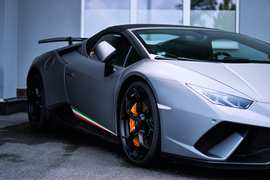
The driving experience of an executive car hinges on its handling characteristics. The A-Class Saloon handles capably, but it prioritizes ride comfort over dynamic agility.
Cornering and Stability
While the A-Class Saloon exhibits more body lean in corners than its hatchback sibling, the movement is progressive and never feels unstable during rapid direction changes. The steering system impresses with its natural weight build-up, providing accurate placement and ensuring that town driving remains effortless.
However, it struggles to match the front-end grip and sharper handling of rivals like the Audi A3 Saloon and the Mercedes CLA. For drivers who prioritize an engaging driving experience, the BMW 3 Series remains the benchmark.
Noise and Vibration
Refinement is a hallmark of premium executive cars, and the Mercedes A-Class Saloon falls short in this regard, particularly in its base models.
Engine Refinement
The A180 and A200 petrol engines are boomy and uncouth, especially under load. This noise profile is also noticeable in the A250e; while the extra power reduces the need for high revs, hard acceleration produces significant engine noise. The A220 and A250 petrol engines are more cultured, combining smooth low-speed performance with a sporty rasp when pushed.
Gearbox and Hybrid Feedback
The six-speed manual gearbox (standard on the A200) feels slightly notchy. The automatic gearbox generally shifts smoothly and promptly, but it may hold gears longer than necessary. The A250e exhibits noticeable transition between electric and petrol power, and the regenerative braking system can be unpredictable, requiring more pedal pressure than expected to achieve full stopping power.
Road Noise and Aerodynamics

Despite the car’s excellent aerodynamics, wind noise is minimal. Some rustling from the panoramic roof is noticeable, and road noise at speed is significant—no quieter than the Audi A3 Saloon. This is exacerbated on 18-inch alloy wheels, though 17-inch wheels still produce some background drone. For ultimate refinement, the Audi A4 remains the top choice in the executive car class.