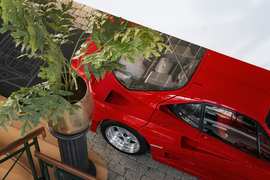
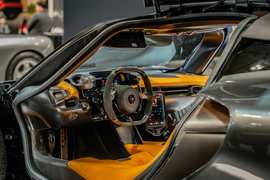
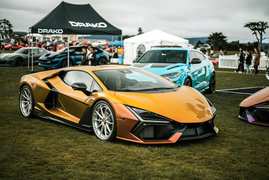
The Pantheon of the Rear-Engine: Five Porsche 911s That Define a Legend
For four decades, I have had the privilege of steering the evolution of the Porsche 911—a car that has defied time, technology, and convention. Every iteration, save perhaps the brief misstep of the 964 in the early 1990s, has been a masterclass in refinement, keeping the 911 relevant, thrilling, and utterly addictive. Decades into my journey with this icon, it remains one of the few new cars I would still purchase with my own money. Reflecting on the history of this extraordinary machine, five specific models stand out in my memory, each representing a critical milestone in the 911’s enduring legacy.
The Apex Predator: The 1975 Porsche 930 Turbo
When I first experienced the original 911 Turbo—the 930—veteran automotive journalists still spoke of it in near-religious tones. They warned of a car that demanded absolute respect, where the infamous binary boost of the turbocharger transformed the razor-thin margin between corner-entry understeer and corner-exit oversteer into a high-stakes game of nerve and precision. The 930 did not forgive carelessness; it was, by all accounts, a widowmaker. It took me nearly 35 years to finally get behind the wheel of a first-generation 911 Turbo and understand the truth of these legends.
The car I drove was among the very first 30 production models ever built, now a treasured part of Porsche’s legendary classic fleet. Naturally, given its fearsome reputation, I approached it with extreme caution, playing with the throttle, monitoring the boost gauge, and trying to map the power curve in my mind. The engine proved surprisingly tractable at low RPMs; it chugged along happily at 2,000 rpm in top gear, barely nudging 45 mph. However, once the engine hit the 3,500 rpm mark, the turbocharger unleashed 0.8 bar of boost, delivering a palpable surge in acceleration. But the sledgehammer blow I had braced myself for simply didn’t materialize.
I discovered the secret to navigating the original 930 Turbo was to keep the 3.0-liter flat-six spinning above 4,000 rpm to keep the turbocharger primed. Yes, there is turbo lag—a very significant lag by modern standards—but it is entirely manageable. Even after half a century, this 911 remains an impressively fast machine on public roads. First gear reaches 50 mph, second 90 mph, and third clears 130 mph, meaning most winding two-lane roads can be devoured using just second and third gear. And although it boasts a modest 256 horsepower, its curb weight of just 2,513 pounds allows it to carve through corners with remarkable agility. In its era, this performance would have been nothing short of otherworldly.
The Architectural Masterpiece: The 993-Generation Porsche 911
For purists, the 993 represents the last of the true 911s—the final chapter of the air-cooled era. This is the Porsche that demands your focus, where the rhythmic, metallic clatter of the air-cooled flat-six becomes the soundtrack to your drive. Yet, when I first experienced the 993 back in 1994, it felt like the 911 of the future. It was the first model to challenge Isaac Newton’s laws of physics. While the 993 retained the signature nose-heavy balance that required precise loading on corner entry, and the rear end still communicated its presence on rougher surfaces, the connection between front and rear was dramatically improved. The 993 still embodied the 911 spirit, but within a vastly superior safety margin.
The key to this evolution was a revolutionary rear suspension. Porsche replaced the aging semi-trailing arms with a new multi-link setup that allowed for subtle initial toe-out on corner entry and then progressive toe-in as lateral loads increased, all while drastically reducing the camber change that had plagued 911s since 1963. This breakthrough was complemented by a new six-speed manual transmission with a quicker steering ratio—2.5 turns lock-to-lock, a 16% improvement over its predecessor—making the front end feel far more decisive. The updated 3.6-liter flat-six, enhanced with lighter internals, the Bosch Motronic 2.0 engine management system, and a new dual-exhaust system, delivered its 268 horsepower with exhilarating fervor at 6,100 rpm.
Compared to the 964 it replaced, the 993 was a revelation. This wasn’t merely a technical upgrade, orchestrated under the leadership of Ulrich Bez (who later became CEO of Aston Martin); the exterior redesign, directed by Harm Lagaay, corrected the visual imbalances of the 964, which he felt was too tall at the front and visually unbalanced at the rear. The interior was also cleaner, with a more logical layout of controls. The 993 was a 911 that was faster, more forgiving, and, perhaps most importantly, far more desirable. It represented the pinnacle of Porsche’s traditional engineering, executed with stunning precision.
The Savior of the Breed: The 996-Generation Porsche 911
At the time of its launch, the 996 represented sheer heresy. Porsche’s decision to equip the 996-series 911 with a water-cooled flat-six was, to the faithful, akin to Bob Dylan abandoning his acoustic guitar for a Fender Stratocaster at the 1965 Newport Folk Festival. However, the 996—the first clean-sheet redesign of Porsche’s enduring sports car in 34 years—was nothing short of a hero. It was the 911 that saved Porsche.
Engineered and developed under the direction of Porsche R&D chief Horst Marchart, the 996 was a masterpiece of ingenuity. It shared 38 percent of its components with an entirely new, less expensive mid-engine roadster known as the Boxster. Iconoclastic Porsche CEO Wendelin Weideking understood the critical need for the Boxster to provide dealers with an additional revenue stream once the aging 928 and 968 models were phased out. “We built two cars for the price of one-and-a-half,” design chief Harm Lagaay said with a wry smile after the company unveiled the 996.
But while much of the media attention focused on its kinship with the Boxster and the adoption of water cooling, the 996’s true significance ran much deeper. In 1994, Porsche required 130 hours to assemble a 993-series 911; the 996 was produced in just 60 hours. The modern 911 had arrived: more spacious, equipped with the amenities expected of a late 20th-century sports car, yet instantly recognizable as the iconic 911. Crucially, it still drove like a 911. Only better. While it possessed a new veneer of sophistication, the 996 retained the delicious tactility and urgent responsiveness that set the 911 apart. Along with the original Boxster, it single-handedly pulled Porsche back from the brink of extinction.
The Driver’s Delight: The 991.2-Generation Porsche 911 Carrera
Among all the 911s I have driven, it was a base 991.2 Carrera that truly captured my heart. And judging by the feedback I received from colleagues at the time, it stole theirs too. Typically, press fleets are stocked with hyper-spec vehicles loaded with options, presumably because automotive PR teams believe we are impressed by such displays. Therefore, Porsche Cars North America’s decision to include a base 911 Carrera in the launch fleet of the new 991.2 models for our 2017 MotorTrend Car of the Year testing seemed daring. In reality, however, it was an inspired masterstroke.
The 991.2 introduced a new 3.0-liter turbocharged engine, offering 370 hp in the base Carrera and 420 hp in the Carrera S. Even in the 370-hp configuration, it delivered a broad torque curve and remarkable fuel efficiency. This Carrera also proved that even on the standard wheel and tire package, the chassis was staggeringly communicative and adjustable. Visually, the 991.2 was a subtle refinement of the larger, skillfully proportioned 991.1, representing a superb execution of classic 911 themes that blended tradition with modern beauty. The interior featured a new infotainment system that was both aesthetically pleasing and highly functional.
Porsche’s PDK dual-clutch automatic transmission remains a benchmark for smooth, precise shifts. However, the seven-speed manual transmission on the no-frills Carrera was delightful, offering a mechanical, rifle-bolt action that reignited our passion for driving. MotorTrend’s testing director at the time, Kim Reynolds, perfectly captured the Carrera’s visceral appeal: “When all cars but one are autonomous, please let this be it, the last human-driven car. For posterity’s sake.” It has been nearly a decade since I drove it, yet I remember

 The Pantheon of the Rear-Engine: Five Porsche 911s That Define a Legend
For four decades, I have had the privilege of steering the evolution of the Porsche 911—a car that has defied time, technology, and convention. Every iteration, save perhaps the brief misstep of the 964 in the early 1990s, has been a masterclass in refinement, keeping the 911 relevant, thrilling, and utterly addictive. Decades into my journey with this icon, it remains one of the few new cars I would still purchase with my own money. Reflecting on the history of this extraordinary machine, five specific models stand out in my memory, each representing a critical milestone in the 911’s enduring legacy.
The Pantheon of the Rear-Engine: Five Porsche 911s That Define a Legend
For four decades, I have had the privilege of steering the evolution of the Porsche 911—a car that has defied time, technology, and convention. Every iteration, save perhaps the brief misstep of the 964 in the early 1990s, has been a masterclass in refinement, keeping the 911 relevant, thrilling, and utterly addictive. Decades into my journey with this icon, it remains one of the few new cars I would still purchase with my own money. Reflecting on the history of this extraordinary machine, five specific models stand out in my memory, each representing a critical milestone in the 911’s enduring legacy.