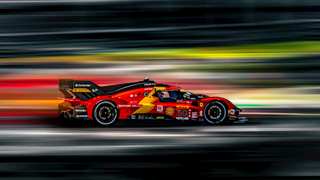
Czinger 21C VMax: An Extreme Hypercar Experience
The automotive world is constantly evolving, with manufacturers pushing the boundaries of what is technologically possible. Among the most daring innovators is Czinger, a Southern California-based company that has taken the world by storm with its avant-garde approach to hypercar engineering. The Czinger 21C VMax represents the pinnacle of this innovation, blending cutting-edge technology with raw performance to create a machine that is both awe-inspiring and utterly audacious.
The Future of Performance: Additive Manufacturing and AI-Driven Design
At the core of Czinger’s philosophy is the revolutionary use of additive manufacturing, more commonly known as 3D printing. This technology allows the company to create complex, lightweight, and strong components that would be impossible to produce using traditional manufacturing methods. Czinger’s parent company, Divergent Technologies, has been at the forefront of this technology for years, even supplying parts to the Department of Defense.
The design process itself is a marvel of modern engineering. Czinger uses iterative artificial intelligence to design its components, creating shapes that are “Pareto optimal.” This means that every gram of material is used efficiently, resulting in a lightweight yet incredibly strong structure. The software iterates through hundreds of thousands of designs to find the perfect balance of strength and weight, much like evolution sped up to warp speed.
This cutting-edge technology has caught the attention of other automotive giants. Several OEMs, including Aston Martin, Bugatti, and McLaren, are already using Divergent’s 3D-printed parts. While Czinger remains tight-lipped about some of its clients, the Ferrari F80’s control arms are strong indicators of the company’s growing influence in the supercar world.
The 21C VMax: A Bold Departure from Automotive Norms
Czinger offers two versions of the 21C: the track-focused 21C and the road-friendly VMax. The VMax, the model I had the pleasure of testing, is a wingless, long-tailed version of the 21C. The name 21C VMax is used interchangeably, as the “21C” appears nowhere on the car itself. For the inaugural Velocity Tour, a 500-mile road rally through Northern California’s wine country, I found myself piloting a silver VMax.
One of the most striking features of the 21C VMax is its center-steer, tandem two-seater configuration. Unlike traditional sports cars with side-by-side seating, the 21C VMax places the driver in the center, with a passenger seated directly behind them. This design choice creates a unique, jet-fighter-like cabin experience, with glass surrounding you from nearly every angle. The visibility is exceptional, and the seating arrangement provides a truly novel perspective on the road.
Getting into and out of the car is an adventure in itself. The massive sills are packed with batteries, housing 2.2 kWh of power each for a total of 4.4 kWh. The 21C VMax is a plug-in hybrid, meaning the V8 engine keeps the batteries charged. These batteries power the front wheels through individual motors, providing a massive 500 horsepower to the front axle.
A Powertrain Engineered for Extremes
The heart of the Czinger 21C VMax is a custom-designed 2.9-liter twin-turbo V-8 engine. This powerhouse produces a staggering 750 horsepower on 91-octane premium unleaded gasoline. For those seeking even more performance, the engine can run on 100-octane race fuel, bumping the horsepower to a jaw-dropping 850 hp. Czinger has also experimented with ethanol-based fuels, which are rumored to produce even more power, though the exact figures have not been released.
The gas engine sends power to the rear wheels through an Xtrac single-clutch automated semi-sequential gearbox. This transmission is similar to the one found in the Pagani Utopia, but Czinger has taken it a step further. Not only is the transmission case 3D-printed using Divergent’s technology, but it also features small 48-volt electric motors that facilitate faster shifts at lower speeds. This innovative design eliminates the drunken, surging feeling that plagues other automated single-clutch transmissions at low speeds. The twin-barrel actuators work as advertised, making the Czinger 21C VMax surprisingly easy to maneuver through tight city streets, parking lots, and gas stations.
Track-Ready Performance: Pushing the Limits
As a professional automotive journalist, I’ve had the opportunity to drive some of the world’s most extreme hypercars. However, the Czinger 21C VMax stands out as a truly unique experience. Due to the car’s rarity and high value, Czinger assigned a professional driver (Evan Jacobs) to ride along during my test. Jacobs was there to ensure I didn’t drive the $2.5 million machine off a cliff. Thankfully, he eventually gave me the thumbs-up to drive solo.
We made a stop at Laguna Seca for some parade laps, but non-Czinger employees are not allowed to drive the VMax on racetracks, even at the slow pace required for the rally. However, I had the opportunity to ride shotgun with Jacobs, and it was an experience I won’t soon forget.
The rear seat of the 21C VMax is surprisingly cramped, especially for those with large calves or feet. My XXL calves were literally wedged between the carbon fiber tub and the carbon fiber seat, and my feet didn’t fit well, either. However, the visibility from the rear seat is incredible, reminiscent of a stunt plane. It’s a novel way to experience a track, especially for someone who has done it hundreds of times.
Jacobs and I convinced the Skip Barber Racing School staff to let him take the VMax for a couple of “6/10ths” hot laps. The most impressive hot lap I’ve ever experienced was riding shotgun in an Aston Martin Valkyrie LMH race car, where I could feel the blood pooling in my extremities during braking. The Czinger 21C VMax is now second on that list, and remember, Jacobs didn’t even push the car to its limits. Even at less than full tilt and without the rear wing, it was easy to understand how the Czinger 21C achieved its incredible track times.
The brand proudly calls the 21C the “California Gold Rush,” and for good reason. The car set five production car track records in five days, at Thunder Hill, Sonoma Raceway, Laguna Seca, Willow Springs, and the Thermal Club. Czinger later returned to Laguna Seca to beat its own record and reclaim the throne from a track-special Koenigsegg Jesko Sadair’s Spear. The lap time, a ridiculous 1 minute, 22.30 seconds, is faster than the fastest MotoAmerica Superbike lap ever recorded at Laguna.
Czinger claims a vehicle weight of approximately 3,600 pounds, which is light for a 1,250-horsepower hybrid vehicle. For comparison, the Ferrari SF90 Stradale Asseto Fiorano, the highest-performance version of a three-motor twin-turbo V-8 PHEV with 986 hp, weighs 3,839 pounds. The new Lamborghini Temerario, another three-motor, twin-turbo V-8 with less power than the Czinger, weighs a chunky 4,185 pounds.
The Ferrari SF90 and Temerario are the two quickest gasoline-powered cars MotorTrend has ever tested, with the Ferrari taking the 0-60 mph record and the Lamborghini taking the quarter-mile. If Czinger’s weight claim proves true, the unorthodox Southern California startup has managed to beat two Italian legends at their own game. This is remarkable on its own, but even more so considering that Los Angeles is not exactly Modena.
On the Road: A Surprisingly Pleasant Experience
The route for the rally consisted mostly of true back roads. The pavement was tight, winding, and worn – not the type of asphalt that hypercar dream trips are made of. I also spent a significant amount of time following the pack, navigating to lunch and coffee stops, and hanging with the camera car. While I was slightly disappointed at the time, I now realize that this experience is similar to what most owners will experience while living with a Czinger.
To my surprise, the VMax was mostly like driving any other hyper-exotic. You need to take everything out of your pockets as the seats are tight, drink your water before you get in as there are no cupholders, and prepare for the attention you’ll receive. Nearly everyone on the road, especially males between the ages of 16 and 24, will be looking at you, following you, waving at you, and revving at you, all while (probably) screaming friendly obscenities.
Regardless, the Czinger rides much better than I expected. The team deserves applause for not making it overly stiff, and even the air conditioning works well. If I have any complaint about the “just driving around” aspect of the VMax, it’s the cabin noise. I’m not talking about the unique sound of the V-8, but rather the complete lack of sound deadening. While this is fine for a dedicated track car, it’s an annoying oversight on a road car. This becomes especially apparent when you’re inside the car for hours at a time. I understand that weight is the enemy of performance, but how much does

 Czinger 21C VMax: An Extreme Hypercar Experience
The automotive world is constantly evolving, with manufacturers pushing the boundaries of what is technologically possible. Among the most daring innovators is Czinger, a Southern California-based company that has taken the world by storm with its avant-garde approach to hypercar engineering. The Czinger 21C VMax represents the pinnacle of this innovation, blending cutting-edge technology with raw performance to create a machine that is both awe-inspiring and utterly audacious.
The Future of Performance: Additive Manufacturing and AI-Driven Design
At the core of Czinger’s philosophy is the revolutionary use of additive manufacturing, more commonly known as 3D printing. This technology allows the company to create complex, lightweight, and strong components that would be impossible to produce using traditional manufacturing methods. Czinger’s parent company, Divergent Technologies, has been at the forefront of this technology for years, even supplying parts to the Department of Defense.
The design process itself is a marvel of modern engineering. Czinger uses iterative artificial intelligence to design its components, creating shapes that are “Pareto optimal.” This means that every gram of material is used efficiently, resulting in a lightweight yet incredibly strong structure. The software iterates through hundreds of thousands of designs to find the perfect balance of strength and weight, much like evolution sped up to warp speed.
Czinger 21C VMax: An Extreme Hypercar Experience
The automotive world is constantly evolving, with manufacturers pushing the boundaries of what is technologically possible. Among the most daring innovators is Czinger, a Southern California-based company that has taken the world by storm with its avant-garde approach to hypercar engineering. The Czinger 21C VMax represents the pinnacle of this innovation, blending cutting-edge technology with raw performance to create a machine that is both awe-inspiring and utterly audacious.
The Future of Performance: Additive Manufacturing and AI-Driven Design
At the core of Czinger’s philosophy is the revolutionary use of additive manufacturing, more commonly known as 3D printing. This technology allows the company to create complex, lightweight, and strong components that would be impossible to produce using traditional manufacturing methods. Czinger’s parent company, Divergent Technologies, has been at the forefront of this technology for years, even supplying parts to the Department of Defense.
The design process itself is a marvel of modern engineering. Czinger uses iterative artificial intelligence to design its components, creating shapes that are “Pareto optimal.” This means that every gram of material is used efficiently, resulting in a lightweight yet incredibly strong structure. The software iterates through hundreds of thousands of designs to find the perfect balance of strength and weight, much like evolution sped up to warp speed.