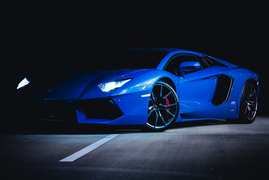
Czinger 21C VMax: A 1,250-HP Digital Ghost on California Roads
In the rarefied air of the hypercar world, the Czinger 21C VMax exists as a defiant anomaly. It is not merely a car; it is a manifestation of computational extremes, a physical rebuttal to automotive tradition built not on legacy, but on algorithms and additive manufacturing. My three-day encounter with this $2.5 million vision of the future was less a test drive and more a confrontation with engineering at its most radical.
The company, an extension of Divergent Technologies, operates in a domain where the lines blur between aerospace, defense, and luxury automotive. It’s a place where 3D-printed components, forged by iterative AI design, can render structural solutions so optimized they appear alien. This is not the domain of traditional engineering; this is the convergence of hardware and software in its most extreme application.
The driving experience, as I would discover, is equally extreme. It is a journey from an impossibly intricate and confined cockpit to the brutal, raw, visceral performance that few machines can approach. To pilot the Czinger 21C VMax on public roads is to navigate a space where the laws of physics feel optional, and the relationship between car, driver, and environment is redefined by digital precision.
The Architecture of the Avant-Garde: Diving into Divergent
Getting into the Divergent Technologies facility is an experience in itself. My U.S. passport was required, not because this is a secret operation, but because the parent company, Divergent, provides critical components to the U.S. Department of Defense. While no military secrets were revealed, the sheer scale of the operation was staggering. Lukas Czinger, the young CEO of both companies, guided me through the cavernous production floor.
Standing beside a massive 3D printer, I watched as more than a dozen lasers pulsed with focused energy, fusing powdered aluminum into structural components that looked more like organic bone than machined metal. This process is the heart of the Czinger philosophy, one that seeks what Lukas describes as “Pareto optimal”—the point where further refinement of a component provides diminishing returns.
In traditional engineering, this requires a brutal trial-and-error process. The designer defines a target—a specific load capacity, a defined space—and then creates a design that works. With Divergent’s technology, the software generates hundreds of thousands of iterations, exploring a design space that no human could conceive of, let alone optimize. It is like evolution on fast-forward, creating a shape that is strong and light in ways that traditional manufacturing cannot replicate.
This technology extends beyond the automotive world. Automotive OEMs such as Aston Martin (DBR22 Roadster), Bugatti (Tourbillon), and McLaren (W1) utilize Divergent’s expertise, and while rumors persist about the Ferrari F80, Czinger remains tight-lipped. The aerospace and defense applications, however, are undeniable, and they underscore the seriousness of the engineering happening in this Southern California facility.
The Czinger 21C: Two Worlds, One Vision
The Czinger 21C is a hybrid hypercar that exists in two distinct forms: the high-downforce, track-focused 21C and the wingless, long-tailed VMax. While the VMax is technically the 21C VMax, the VMax designation replaces the core model name on the bodywork. This specific VMax was prepared for the inaugural Velocity Tour, a five-day, 500-mile road rally through Northern California wine country.
The cabin of the Czinger is often compared to a jet fighter, and the description is apt. It is a snug, focused environment where the pilot is enveloped by the carbon fiber tub. The visibility is expansive, not in the traditional sense of a large greenhouse, but through a canopy that seems to wrap around the occupants. Getting in and out is an event in itself, requiring a precise contortionist’s sequence of moving legs over the massive sill, tucking knees into the bodywork, and sliding into the carbon fiber seat.
The sills are massive for a reason: they house a high-performance hybrid system. Each sill contains 2.2 kWh of battery storage, totaling 4.4 kWh. This isn’t a plug-in hybrid; instead, a motor powered by the mid-mounted V8 keeps the battery topped up. This battery system is capable of delivering 500 horsepower to the front axle, which utilizes dual motors, one per wheel.
The heart of the 21C VMax is a Czinger-designed 2.9-liter twin-turbo V8 engine, rated at 750 horsepower on California’s 91-octane premium fuel. Pour in 100-octane race fuel, and the output increases to 850 hp. While the engine can also run on ethanol, Czinger has not released those figures.
Power is delivered to the rear wheels through an Xtrac single-clutch automated semi-sequential gearbox. This is similar to the Xtrac unit found in the Pagani Utopia, but Czinger adds a twist. Not only is the transmission housing 3D printed, but small 48-volt electric motors are used to facilitate shifts at lower speeds, eliminating the hesitation and lurching typical of automated single-clutch boxes. In low-speed situations, such as pulling into gas stations, restaurants, or hotel parking lots, the system performs admirably, making the car feel more compliant than its aggressive aesthetics suggest.
The Track’s Harsh Judgment
The Velocity Tour included several stops at racing circuits, including the legendary Laguna Seca. While non-Czinger employees are generally restricted from driving the 21C VMax, I was granted access, albeit under the careful guidance of professional driver Evan Jacobs, who was positioned in the rear seat to ensure I didn’t turn the $2.5 million machine into a very expensive carbon fiber sculpture.
Jacobs, a calm and knowledgeable presence, confirmed that I was no threat to the car and that I would be allowed to drive solo for the remainder of the rally. However, even at the brutally slow pace mandated for parade laps, there was a strict prohibition against non-Czinger employees driving on track.
Nevertheless, I was able to experience the back seat, and it is a unique perspective. The visibility is spectacular, truly feeling like a canopy. My size proved to be a challenge, however. My large calves wedged tightly between the carbon fiber tub and the seat, and my feet had limited space in the footwell. But the view was stunning, a novel way to experience a track that I have driven countless times.
Later, Jacobs was permitted a couple of “6/10ths” hot laps. While riding shotgun in the Aston Martin Valkyrie LMH race car remains the most extreme braking experience I’ve ever had, the Czinger 21C VMax is a close second, even at significantly lower speeds and without the high-downforce rear wing. It is easy to understand how the production-spec Czinger 21C achieved what the company calls the “California Gold Rush”—setting five production car track records in five days and driving the distance between each circuit.
The company claims a vehicle weight of approximately 3,600 pounds, which is remarkably light for a 1,250-hp hybrid. For context, the Ferrari SF90 Stradale Asseto Fiorano, a three-motor, twin-turbo V8 PHEV making 986 hp, weighs 3,839 pounds. The new Lamborghini Temerario, another three-motor V8 (albeit with less power than the Czinger), tips the scales at 4,185 pounds. If Czinger’s weight claim holds true, the company has managed to out-engineer two of the most powerful hypercars on the market, a remarkable feat considering the comparative lack of supercar-building infrastructure in Southern California compared to Modena.
The Road Less Traveled: Finding Balance
The route chosen for the Velocity Tour was anything but conventional. It consisted of winding, narrow back roads with broken pavement—hardly the ideal terrain for a hypercar. I also spent a significant amount of time in traffic, following other participants, navigating to lunch spots, and hanging with the camera car.
In retrospect, I value what I experienced. It provided a realistic glimpse into how owners will likely use the 21C VMax on a daily basis. Getting into the Czinger requires preparation. Remove everything from your pockets, as the seats are tight. Drink water before entering, as there are no cupholders. Be prepared for the attention: expect stares, waves, and friendly obscenities from other drivers, particularly the 16-24 demographic.
Despite its extreme appearance, the Czinger rides much better than anticipated. The engineers deserve praise for not over-stiffening the suspension. The air conditioning works well. However, there is a significant lack of sound deadening in the cabin. While the V8 engine note is spectacular, the ambient noise from the road surface and the car’s internal mechanisms is intrusive after several hours. While this might be acceptable in a dedicated track car, it is a clear oversight in a road-focused machine. While 10–50 pounds of sound deadening might seem like a performance sacrifice, it would vastly improve the passenger experience.
The Point of Maximum Excursion
Once we reached some proper California canyon roads, I finally had the opportunity to fully explore the 21C VMax. The acceleration is staggering. Every time I applied the throttle, the braking zone appeared almost instantly. It feels like the car

 Czinger 21C VMax: A 1,250-HP Digital Ghost on California Roads
In the rarefied air of the hypercar world, the Czinger 21C VMax exists as a defiant anomaly. It is not merely a car; it is a manifestation of computational extremes, a physical rebuttal to automotive tradition built not on legacy, but on algorithms and additive manufacturing. My three-day encounter with this $2.5 million vision of the future was less a test drive and more a confrontation with engineering at its most radical.
The company, an extension of Divergent Technologies, operates in a domain where the lines blur between aerospace, defense, and luxury automotive. It’s a place where 3D-printed components, forged by iterative AI design, can render structural solutions so optimized they appear alien. This is not the domain of traditional engineering; this is the convergence of hardware and software in its most extreme application.
The driving experience, as I would discover, is equally extreme. It is a journey from an impossibly intricate and confined cockpit to the brutal, raw, visceral performance that few machines can approach. To pilot the Czinger 21C VMax on public roads is to navigate a space where the laws of physics feel optional, and the relationship between car, driver, and environment is redefined by digital precision.
The Architecture of the Avant-Garde: Diving into Divergent
Czinger 21C VMax: A 1,250-HP Digital Ghost on California Roads
In the rarefied air of the hypercar world, the Czinger 21C VMax exists as a defiant anomaly. It is not merely a car; it is a manifestation of computational extremes, a physical rebuttal to automotive tradition built not on legacy, but on algorithms and additive manufacturing. My three-day encounter with this $2.5 million vision of the future was less a test drive and more a confrontation with engineering at its most radical.
The company, an extension of Divergent Technologies, operates in a domain where the lines blur between aerospace, defense, and luxury automotive. It’s a place where 3D-printed components, forged by iterative AI design, can render structural solutions so optimized they appear alien. This is not the domain of traditional engineering; this is the convergence of hardware and software in its most extreme application.
The driving experience, as I would discover, is equally extreme. It is a journey from an impossibly intricate and confined cockpit to the brutal, raw, visceral performance that few machines can approach. To pilot the Czinger 21C VMax on public roads is to navigate a space where the laws of physics feel optional, and the relationship between car, driver, and environment is redefined by digital precision.
The Architecture of the Avant-Garde: Diving into Divergent