Czinger 21C VMax: Is This the Most Extreme Hypercar on the Planet?
For the last decade, the automotive world has been waiting for an American hypercar that could truly go toe-to-toe with the Italian, German, and Swedish titans. In the spring of 2026, we got more than we asked for. The Czinger 21C VMax isn’t just an extreme car; it’s a glimpse into a future where artificial intelligence meets the road in a way that feels like pure, unadulterated madness.
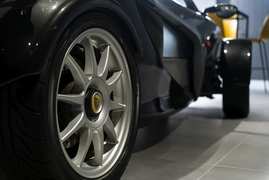
From the very first glance, you know this is something different. The 21C VMax is a center-steer, tandem two-seater that looks like it was designed for a movie, not a public road. But the real shock came when we put it through its paces. After a three-day road rally through Northern California’s wine country, I emerged in a daze, trying to process what I had just experienced.
This isn’t your typical supercar story. This is about a company built on the premise that the laws of physics and engineering as we know them are just suggestions. It’s about a seven-figure hybrid hypercar that blends the impossible with the inevitable.
Factory Fresh: A Peek Inside Divergent Technologies
To understand the Czinger 21C VMax, you first need to understand the company behind it: Divergent Technologies. And honestly, getting a tour of their facility felt less like visiting a car factory and more like infiltrating a secret government lab. I actually needed a U.S. passport to get in, which immediately told me something was off. Divergent supplies parts to the Department of Defense, and while they couldn’t show me everything, what I saw was nothing short of mind-blowing.
The heart of Divergent’s operation is its massive 3D printers. Imagine standing next to a machine that fires lasers at powdered aluminum, creating automotive components that look like something out of an advanced biology textbook. The CEO, Lukas Czinger, explained that they are seeking what he calls “Pareto optimality,” the point where adding or subtracting even a gram of weight has a negative impact. They use artificial intelligence to iterate hundreds of thousands of designs for a single part, creating the strongest, lightest shapes possible. It’s like evolution happening at 100 times the speed.
It’s not just military hardware, though. Nine automotive OEMs are currently using Divergent’s 3D-printed technology. Aston Martin, Bugatti, and McLaren have openly admitted to using their parts, and while it’s been denied, rumors suggest even Ferrari has been leaning on their expertise. It’s clear that Divergent is changing the game, whether the traditional automotive giants want to admit it or not.
Under the Carbon Fiber: The Anatomy of the Beast
Czinger builds two versions of the 21C. The first is the high-downforce track version with a massive wing, and the second is the 21C VMax, which is essentially the same car but without the wing and with a sleeker, longer tail. The VMax is designed for road use, and for the inaugural Velocity Tour, I had the silver model.
Stepping into the 21C VMax feels less like getting into a car and more like climbing into a fighter jet. The cabin is a canopy of glass, and the seats are so low and tight that you feel like you’re wearing the car rather than sitting in it. Getting in and out is a ridiculous maneuver: you plant your legs on the massive sill, pull your knees up, spin your body, and tuck your feet into the footwell, all while keeping your head under the roofline. It’s not easy, but the view is incredible.
The reason the sills are so massive is that they are packed with batteries. The 21C VMax is a hybrid, with 2.2 kWh of battery power in each sill, for a total of 4.4 kWh. The car isn’t a plug-in hybrid, so the engine powers the battery and the front wheels. The mid-mounted V-8 engine produces 750 hp on 91-octane fuel, but if you use 100-octane race fuel, that number jumps to 850 hp. The engine also runs on ethanol, which would likely push the power even higher, though Czinger hasn’t released those figures yet.
The gas engine sends power to the rear wheels through an Xtrac single-clutch automated transmission. This is similar to the Pagani Utopia’s transmission, but Czinger 3D prints the casing and uses small 48-volt electric motors to help execute low-speed shifts. This completely eliminates the lurching that other automated single-clutch transmissions suffer from. The transmission’s performance at low speeds is impressive, and I was thankful to discover that navigating gas stations, restaurants, and hotel parking lots felt almost normal. Bravo, Czinger.
Track Time: Battling the California Gold Rush
On the first day of the Velocity Tour, I wasn’t allowed to drive. I had to ride shotgun with a professional driver, Evan Jacobs, who was there to make sure I didn’t accidentally drive the $2.5 million machine off a cliff. It turns out Jacobs was impressed enough with my abilities (or at least my ability to follow directions) that I was able to drive solo for the rest of the rally.
We stopped by Laguna Seca for some parade laps, but non-Czinger employees aren’t allowed to drive the VMax on the track, even at the slow speeds we were limited to. However, I did get to ride in the back seat, and as I quickly learned, if you have big calves or feet, it’s not a comfortable experience. My XXL calves were literally squeezed between the carbon fiber tub and the seat, and my feet didn’t fit well. But the visibility through the side glass was incredible, and it was a novel way to experience a track I’ve driven on hundreds of times.
Jacobs convinced the Skip Barber Racing School staff to let him take the VMax for a couple of hot laps. The most impressive lap I’ve ever experienced was riding shotgun in an Aston Martin Valkyrie LMH, where I could feel the blood pooling in my extremities under heavy braking. The Czinger VMax is now a very close second, and remember, Jacobs wasn’t pushing it to the limit.
Even without the big rear wing, it was easy to understand how the regular 21C earned the name “California Gold Rush.” That’s when Czinger set five production car track records at five different tracks—Thunder Hill, Sonoma Raceway, Laguna Seca, Willow Springs, and The Thermal Club—all in the span of five days, driving from one track to the next. Later, Czinger returned to Laguna Seca to not only beat its own record but to reclaim the record from the Koenigsegg Jesko Sadair’s Spear. The lap time, a ridiculous 1 minute 22.30 seconds, is quicker than the fastest MotoAmerica Superbike lap ever recorded at Laguna, a 1:22.56.
Czinger claims the car weighs about 3,600 pounds, which is pretty light for a 1,250-hp hybrid. To put that in perspective, the Ferrari SF90 Stradale Asseto Fiorano, the most powerful version of Ferrari’s three-motor, twin-turbo V-8 PHEV, weighs 3,839 pounds. The new Lamborghini Temerario, another three-motor, twin-turbo V-8 that makes less power but is a fair comparison, comes in at 4,185 pounds.
Now’s a good time to mention that the SF90 and the Temerario are the two fastest gasoline-powered cars MotorTrend has ever tested. If Czinger’s weight claim holds up, they’ve managed to beat two Italian legends with their first production car. That’s impressive on its own, but even more so considering that Southern California isn’t exactly known for its supercar manufacturing expertise. Los Angeles isn’t Modena.
On the Road: What It’s Like to Actually Live With a Czinger
The route for the Velocity Tour consisted mostly of actual back roads. Tight, winding, poorly maintained pavement—not exactly the stuff dream supercar road trips are made of. Plus, I was often following the pack, navigating to lunch stops, and hanging with the camera car. At the time, I was a bit disappointed, but in retrospect, what I experienced is probably what most owners will experience while living with a Czinger.
To my surprise, the VMax was mostly like driving any other hyper-exotic. You have to empty your pockets because the seats are tight, you need to drink your water before you get in because there are no cupholders, and you have to accept that almost everyone you pass, especially young men, will be staring at you, following you, waving at you, and revving at you, likely yelling friendly obscenities along the way.
But the Czinger rides much better than I expected. The team deserves applause for not making it overly stiff, and the air conditioning works surprisingly well. My only real complaint about driving the VMax under normal circumstances is how loud the cabin is. I’m not talking about the unique sound of the V-8—that’s incredible. I’m talking about the lack of sound deadening. That’s great for a track-only car like the standard 21C, but it’s an annoying oversight on a road car like the V

 Czinger 21C VMax: Is This the Most Extreme Hypercar on the Planet?
For the last decade, the automotive world has been waiting for an American hypercar that could truly go toe-to-toe with the Italian, German, and Swedish titans. In the spring of 2026, we got more than we asked for. The Czinger 21C VMax isn’t just an extreme car; it’s a glimpse into a future where artificial intelligence meets the road in a way that feels like pure, unadulterated madness.
From the very first glance, you know this is something different. The 21C VMax is a center-steer, tandem two-seater that looks like it was designed for a movie, not a public road. But the real shock came when we put it through its paces. After a three-day road rally through Northern California’s wine country, I emerged in a daze, trying to process what I had just experienced.
This isn’t your typical supercar story. This is about a company built on the premise that the laws of physics and engineering as we know them are just suggestions. It’s about a seven-figure hybrid hypercar that blends the impossible with the inevitable.
Czinger 21C VMax: Is This the Most Extreme Hypercar on the Planet?
For the last decade, the automotive world has been waiting for an American hypercar that could truly go toe-to-toe with the Italian, German, and Swedish titans. In the spring of 2026, we got more than we asked for. The Czinger 21C VMax isn’t just an extreme car; it’s a glimpse into a future where artificial intelligence meets the road in a way that feels like pure, unadulterated madness.
From the very first glance, you know this is something different. The 21C VMax is a center-steer, tandem two-seater that looks like it was designed for a movie, not a public road. But the real shock came when we put it through its paces. After a three-day road rally through Northern California’s wine country, I emerged in a daze, trying to process what I had just experienced.
This isn’t your typical supercar story. This is about a company built on the premise that the laws of physics and engineering as we know them are just suggestions. It’s about a seven-figure hybrid hypercar that blends the impossible with the inevitable.