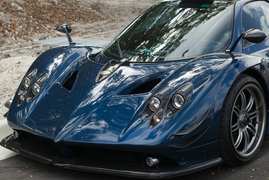
Czinger 21C VMax: The Hypercar That Defies Reality
The automotive world has been abuzz for years about Czinger, the Southern California company with a vision so audacious it sounds like science fiction. We finally had the chance to drive their magnum opus, the 21C VMax, and to say it was transformative is an understatement. This isn’t just a car; it’s a paradigm shift, a peek into the future of performance engineering wrapped in alien technology.
Our journey began with an invitation to explore Divergent Technologies, the parent company behind Czinger. The tour, led by CEO Lukas Czinger, was unlike any other. Walking into a facility where 3D printed hypercars are manufactured, you feel less like a journalist and more like a time traveler. The air hums with the energy of innovation, as lasers dance across powdered aluminum, forging parts that look less like metal and more like intricate bone structures. This isn’t just manufacturing; it’s evolution accelerated.
Divergent’s philosophy is rooted in the “Pareto optimal,” a point where any deviation, adding or subtracting a single gram, becomes detrimental. Imagine a scenario where a team needs to design a bracket to hold a remote suspension reservoir. They have defined constraints: a specific volume to fill and a required load-bearing capacity. Using artificial intelligence (AI) and iterative software, the system generates hundreds of thousands of potential designs, each a unique organic shape, until it finds the perfect marriage of strength and lightness. It’s as if evolution has been put on hyper-speed. This proprietary 3D printing technology is not just for Czinger; nine other automotive OEMs utilize Divergent’s 3D printed components, with Aston Martin, Bugatti, and McLaren publicly acknowledging their partnerships, though whispers suggest even Ferrari may have a hand in things.
The Anatomy of a Legend
The Czinger 21C is available in two breathtaking forms: the track-focused 21C, designed for maximum downforce, and the aerodynamic, spoiler-free 21C VMax. Our test drive took place during the inaugural Velocity Tour, a 500-mile road rally through the rolling vineyards and winding passes of Northern California, piloting a sleek silver VMax.
The moment you approach the car, it feels less like a vehicle and more like a fighter jet. The center-steer configuration is a nod to aviation heritage, with the driver positioned directly in the center, flanked by two passenger seats in a tandem layout. Stepping inside is an experience in itself. The carbon fiber sills are massive, necessity for housing the hybrid hypercar battery packs. To enter, you must first swing your legs out, then pull your knees up, spin on your backside, and tuck your feet into the snug footwell, all while maneuvering your head under the sleek canopy. It’s an intimate, physical interaction with the machine.
But it’s this intimacy that defines the experience. The cabin is essentially a glasshouse, offering unparalleled visibility that reminded me of riding shotgun in an Extra 330LT stunt plane. Every angle is framed with stunning clarity, even when the car is in motion.
Powering the Future
Under the carbon fiber hood lies a beast unlike any other. The 21C VMax is a hybrid hypercar, utilizing two 100kW electric motors, one for each front wheel, powered by 2.2 kWh battery packs located in the side sills. Together, they deliver a staggering 500 horsepower to the front axle, effectively creating an electric all-wheel-drive system.
The combustion engine is a Czinger-designed 2.9-liter twin-turbo V-8, a marvel of modern engineering. On regular 91-octane fuel, it produces a brutal 750 horsepower. Unleash the 100-octane race fuel, and you unleash the full fury, pushing output to 850 horsepower. Czinger also hints at the possibility of running on ethanol, which promises even greater power figures, though specifics remain under wraps for now.
Power is delivered to the rear wheels through a specialized Xtrac single-clutch automated semi-sequential gearbox. It is similar to the seven-speed transmission found in the Pagani Utopia, but Czinger enhances the experience by 3D printing the transmission case and incorporating 48-volt electric motors to smooth out shifts at low speeds. This effectively eliminates the sluggish, surging feeling that plagues most automated single-clutch transmissions, making low-speed driving—like navigating gas stations and parking lots—surprisingly civilized.
Track Ready, Race Proven
For the Velocity Tour, we were joined by professional driver Evan Jacobs, who accompanied me for the first leg to ensure the safe handling of the $2.5 million machine. While the 21C is built for track domination, Czinger limits track access to their own personnel, even during events. However, the experience didn’t disappoint.
For the track portion, I moved to the rear seat, a position that, while snug, offers an incredible vantage point. It’s a novelty that makes even familiar circuits feel fresh. Jacobs’ driving was sensational, demonstrating the car’s raw capability. While he didn’t push the VMax to its absolute limits, the feeling of speed was palpable. Even without the massive rear wing of the standard 21C, the car’s aerodynamic prowess is evident.
The Czinger 21C holds the record for the California Gold Rush, a feat where the car set five production car track records across five tracks—Thunder Hill, Sonoma Raceway, Laguna Seca, Willow Springs, and the Thermal Club—in just five days. Czinger later returned to Laguna Seca to beat their own record, reclaiming the throne from the Koenigsegg Jesko Sadair’s Spear. Their time of 1:22.30 is faster than the fastest MotoAmerica Superbike lap ever recorded at Laguna, a 1:22.56.
Czinger claims a weight of approximately 3,600 pounds, which is astonishing for a 1,250-horsepower hybrid hypercar. Compare that to the Ferrari SF90 Stradale Asseto Fiorano—the most powerful version of a three-motor twin-turbo V-8 hybrid producing 986 hp—which weighs 3,839 pounds. The new Lamborghini Temerario, another three-motor, twin-turbo V-8 (though with less power than the Czinger), weighs in at 4,185 pounds.
These rivals are renowned for their mind-bending acceleration. The SF90 holds the MotorTrend 0–60 mph record, and the Temerario holds the quarter-mile record. If Czinger’s weight claim is accurate, they have outdone two Italian legends with their first production vehicle. It’s a remarkable achievement, especially considering that Los Angeles isn’t exactly the cradle of hypercar manufacturing in the same way Modena is for Ferrari.
The Road Less Traveled
The chosen route for the rally focused on back roads, tight corners, and imperfect asphalt—not the typical highway cruising that most owners will likely experience. However, this gave me a genuine understanding of daily life with a Czinger.
Surprising for a hyper-exotic, the Czinger VMax handles daily driving with relative ease. Remove anything valuable from your pockets, drink your water before you get in (there are no cupholders), and accept that everyone on the road will be watching you. The car rides far better than expected, the team deserves applause for not making it overly stiff. The air conditioning works surprisingly well, but the cabin lacks sound deadening, which is annoying on a road car. While great for a track machine, it becomes tedious over hours of driving. Weight is the enemy of performance, but how much does sound-deadening foam weigh? Twenty pounds? Twenty-five?
When Enough Is Too Much
Finally, we hit some proper California canyon roads. It was here that I finally unleashed the Czinger 21C VMax. With my right foot firmly planted, the braking zone appeared as if by magic. I’ve driven EVs with this level of power, but there’s just so much more weight. I’ve driven the Ferrari F80, which makes similar power but relies more on the gas engine. The Czinger is a different breed of accelerative animal.
For the first time in my career, I must admit that this car might be too much for public roads. It feels like the car bends the road rather than rolling over it. It’s a hard thing to say, but the Czinger VMax on 91-octane gas is simply too extreme for public use. The acceleration is relentless, leaving you constantly reacting to the road ahead. It corners beautifully and has immense grip, but the Southern California canyons are larger and faster than those we drove. I’d love to experience the car on something like Angeles Crest or Highway 33—perhaps “too much” isn’t enough. But for everyday driving, it’s more than ample and then some.
Who Is This Car For?
If you are in the market for a $2.5 million tandem-seat hypercar, chances are you already have a collection of exotic machines. You might think they are all fundamentally the same. However, Czinger has created something truly different. With only 80 units being produced, it’s far rarer than the 10 times more Ferrari F80s.

 Czinger 21C VMax: The Hypercar That Defies Reality
The automotive world has been abuzz for years about Czinger, the Southern California company with a vision so audacious it sounds like science fiction. We finally had the chance to drive their magnum opus, the 21C VMax, and to say it was transformative is an understatement. This isn’t just a car; it’s a paradigm shift, a peek into the future of performance engineering wrapped in alien technology.
Our journey began with an invitation to explore Divergent Technologies, the parent company behind Czinger. The tour, led by CEO Lukas Czinger, was unlike any other. Walking into a facility where 3D printed hypercars are manufactured, you feel less like a journalist and more like a time traveler. The air hums with the energy of innovation, as lasers dance across powdered aluminum, forging parts that look less like metal and more like intricate bone structures. This isn’t just manufacturing; it’s evolution accelerated.
Divergent’s philosophy is rooted in the “Pareto optimal,” a point where any deviation, adding or subtracting a single gram, becomes detrimental. Imagine a scenario where a team needs to design a bracket to hold a remote suspension reservoir. They have defined constraints: a specific volume to fill and a required load-bearing capacity. Using artificial intelligence (AI) and iterative software, the system generates hundreds of thousands of potential designs, each a unique organic shape, until it finds the perfect marriage of strength and lightness. It’s as if evolution has been put on hyper-speed. This proprietary 3D printing technology is not just for Czinger; nine other automotive OEMs utilize Divergent’s 3D printed components, with Aston Martin, Bugatti, and McLaren publicly acknowledging their partnerships, though whispers suggest even Ferrari may have a hand in things.
The Anatomy of a Legend
Czinger 21C VMax: The Hypercar That Defies Reality
The automotive world has been abuzz for years about Czinger, the Southern California company with a vision so audacious it sounds like science fiction. We finally had the chance to drive their magnum opus, the 21C VMax, and to say it was transformative is an understatement. This isn’t just a car; it’s a paradigm shift, a peek into the future of performance engineering wrapped in alien technology.
Our journey began with an invitation to explore Divergent Technologies, the parent company behind Czinger. The tour, led by CEO Lukas Czinger, was unlike any other. Walking into a facility where 3D printed hypercars are manufactured, you feel less like a journalist and more like a time traveler. The air hums with the energy of innovation, as lasers dance across powdered aluminum, forging parts that look less like metal and more like intricate bone structures. This isn’t just manufacturing; it’s evolution accelerated.
Divergent’s philosophy is rooted in the “Pareto optimal,” a point where any deviation, adding or subtracting a single gram, becomes detrimental. Imagine a scenario where a team needs to design a bracket to hold a remote suspension reservoir. They have defined constraints: a specific volume to fill and a required load-bearing capacity. Using artificial intelligence (AI) and iterative software, the system generates hundreds of thousands of potential designs, each a unique organic shape, until it finds the perfect marriage of strength and lightness. It’s as if evolution has been put on hyper-speed. This proprietary 3D printing technology is not just for Czinger; nine other automotive OEMs utilize Divergent’s 3D printed components, with Aston Martin, Bugatti, and McLaren publicly acknowledging their partnerships, though whispers suggest even Ferrari may have a hand in things.
The Anatomy of a Legend