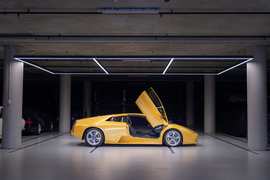
The Aston Martin Valhalla: When Performance Becomes the New Normal
An In-Depth Look at the $1 Million, 1,064-HP Hybrid Supercar That Challenges Reality
The question echoes every time I mention my recent drive: “So, how was it?”
In the decade-long tradition of reviewing supercars—an endeavor that has grown increasingly surreal over the years—the arrival of the 2026 Aston Martin Valhalla prompts an almost existential query. This isn’t just another hypercar; it is a poster child for the modern era of performance madness, a $1.1 million rocket ship that forces you to question everything you thought you knew about speed.
For veteran enthusiasts, answering that question is becoming harder. The lines between supercar and hypercar have blurred, and the benchmark for excellence has been rewritten so frequently that novelty has become the new standard. When four different friends asked about the Valhalla, I paused. How do you describe a car that exists in a realm once thought impossible? The only honest answer, I realized, is one that acknowledges the astonishing trajectory of automotive technology.
A Long-Awaited Debut
Seven years feels like a lifetime in the fast lane of automotive engineering, a sentiment amplified by the disorienting effects of the pandemic years. It was at the 2019 Geneva Motor Show that Aston Martin first unveiled the concept then known as the AM-RB 003.
That initial moniker, a reflection of Aston’s early sponsorship ties with the Red Bull Racing Formula 1 team, has since been superseded by a name derived from Norse mythology—Valhalla, the hallowed hall where heroic warriors feast before Ragnarök. The switch was more than just a cosmetic rebranding; it marked a significant pivot in both the automotive landscape and Aston Martin’s own strategic direction.
Aston and Red Bull ultimately severed ties after the 2020 F1 season, when the latter’s then-new chairman, Lawrence Stroll, rebranded Racing Point as the iconic British marque. More importantly, the Valhalla project itself underwent a radical evolution. The powertrain, initially conceived as an in-house-designed turbocharged 3.0-liter V-6 destined to rival competitors like the LaFerrari and Porsche 918 Spyder, was transformed. It became a hybridized Mercedes-AMG GT Black Series-derived twin-turbo V-8.
This decision was born of necessity and ambition. Compared to the standard GT Black Series, Aston boosted the engine’s output by nearly 100 horsepower and 50 lb-ft of torque through the implementation of larger turbos, a new intake manifold, stronger pistons, and modified camshafts. The Valhalla remains the exclusive home for this bespoke powertrain configuration.
When I first sat in a mockup of the car at the Pebble Beach Concours in August 2022, I was captivated by the Valhalla’s F1-inspired reclined seating position. At that time, the projected specs had jumped to 1,012 hp and an undisclosed torque figure, but Aston assured us that nothing was finalized. Even then, I knew this car was special enough to demand the longest possible waiting period.
The Transformation of a Concept
The development cycle, it turned out, would be a marathon. More than three and a half years after that initial glimpse, the production version has arrived, its hardware exceeding even those lofty early expectations.
The core of the Valhalla’s heart is a dry-sump, flat-plane-crank, twin-turbo 4.0-liter V-8 producing a staggering 817 horsepower. This is complemented by a sophisticated hybrid system featuring three Aston-designed radial-flux permanent-magnet motors. Two motors are mounted on the front axle, and a third resides within the new eight-speed dual-clutch gearbox (a first for Aston Martin). The combined output is an earth-shattering 1,064 horsepower and 811 lb-ft of torque.
This powerful hybrid setup is supported by a 560-cell battery pack. While Aston engineers utilize an off-the-shelf AMG battery, this is the only component of the hybrid system that the automaker does not manufacture in-house. Chief engineer Andrew Kay explained the system’s unique advantage: “We’re able to push energy into the battery and cycle it out very quickly. This is very good for track use, in particular.”
Unlike its progenitor and its Valkyrie elder sibling, the production Valhalla is also a plug-in hybrid. It can drive in EV-only mode for up to 8.7 miles, reaching speeds of 80 mph. This ability to function as a pure electric vehicle sets it apart in the hypercar segment, offering a level of usability that many of its competitors lack.
The Supercar vs. Hypercar Paradox
For the purists among us, the designation of the Valhalla as a “supercar” rather than a “hypercar” might seem pedantic. After all, Aston Martin itself claims it is the company’s first true mid-engine supercar.
But in the modern landscape, the distinction is driven by marketing. The existence of the Valkyrie, a near-mythical hypercar priced at over $3 million, has relegated the Valhalla to the “super” category in Aston’s lexicon. Compared to the Valkyrie’s output of 1,160 hp and production run of just 285 units, the Valhalla’s price tag of over $1 million and inventory of 999 units seem almost pedestrian.
This statement, while absurd in absolute terms, speaks to a broader evolution in the world of high-performance automobiles.
For those who grew up in the era of the Bugatti Veyron, which popularized the 1,000-hp, million-dollar hypercar, the current flood of extraordinary vehicles feels almost commonplace. Since the Valhalla prototype was unveiled in 2022, we have driven the Porsche 911 GT3 RS, a vehicle with half the horsepower but an extreme level of racing-derived aerodynamics and hardware that demands pro-racer skills. We have sampled the Ferrari F80, the 849 Testarossa, the Czinger 21C VMax, and even the mind-bendingly fast Porsche 911 Turbo S. And, perhaps most shockingly, we are about to witness the arrival of the hybrid Corvette ZR1X, promising a staggering 1,250 hp—a feat no one could have imagined back when the Valhalla was but a concept shared between Aston and the legendary Adrian Newey.
The Evolution of Driving Dynamics
In the face of such relentless progress, the adage “comparison is the thief of joy” has never been more relevant. Orchestrating a comparison test with these vehicles is nearly impossible, thanks to the historical reluctance of manufacturers like Ferrari to provide cars for head-to-head showdowns.
However, the primary reason we don’t compare the Valhalla to its competitors is the sheer magnitude of its capabilities. Driving such cars requires appreciating them on their own merits, for the unique experience they provide.
The overall driving experience has become paramount. It is no longer sufficient for a car to be fast on the track but a pig on the road, or vice versa. Aston Martin has long understood this balance, and the Valhalla delivers on all fronts, as Angus MacKenzie noted after his initial preview drive.
On the Open Road
While Angus focused on the circuit, Aston gave me a 50-minute road loop in Spain to start. Given the Valhalla’s hypercar appearance and low stance, one might expect a compromised daily driver. But that is not the case—except for the lack of luggage space. The door cards offer small cubbies, but the front trunk is occupied by three high-temperature radiators and the electric motors. Furthermore, the F1-style seating position, which is bolted low in the carbon-fiber tub, necessitated a specialized, pushrod-actuated horizontally mounted inboard suspension layout, leaving no room for a traditional frunk.
The Valhalla’s driving position, while low, is not as extreme as it appears. There is no backrest angle adjustment, so drivers must adapt to the fixed position. Instead of a power slider, adjustments are made manually using a leather strap between the legs. Once accustomed, the 25.8-inch seat height becomes comfortable, and the Aston-specific Bilstein DTX active dampers provide a smooth ride. The Spanish roads were not perfectly smooth, but the suspension’s Sport and Sport+ modes offered a usable range, with the latter providing a firmer ride that is livable even on well-maintained highways.
The square steering wheel feels solid, though the molded vertical crease on the back—designed to improve grip—might not suit every driver. The steering feel is intuitive, maintaining a perfect balance of weight and precision across drive modes.
On a long, open road, I launched the Valhalla. The car squirmed slightly at first, but then surged forward with brutal, linear acceleration. Aston claims 0–62 mph in 2.5 seconds, meaning the 0–60 mph sprint is likely 2.3 or 2.4 seconds. The speed itself is thrilling but not entirely shocking in today’s market. What truly sets the Valhalla apart is its impressively flat torque curve, with 90% of its 811 lb-ft of torque available from 2,500 rpm to 6,700 rpm.
If there is a point of contention for supercar enthusiasts, it is the powertrain’s redline set to 7,000 rpm. The V-8’s sound

 The Aston Martin Valhalla: When Performance Becomes the New Normal
An In-Depth Look at the $1 Million, 1,064-HP Hybrid Supercar That Challenges Reality
The question echoes every time I mention my recent drive: “So, how was it?”
In the decade-long tradition of reviewing supercars—an endeavor that has grown increasingly surreal over the years—the arrival of the 2026 Aston Martin Valhalla prompts an almost existential query. This isn’t just another hypercar; it is a poster child for the modern era of performance madness, a $1.1 million rocket ship that forces you to question everything you thought you knew about speed.
For veteran enthusiasts, answering that question is becoming harder. The lines between supercar and hypercar have blurred, and the benchmark for excellence has been rewritten so frequently that novelty has become the new standard. When four different friends asked about the Valhalla, I paused. How do you describe a car that exists in a realm once thought impossible? The only honest answer, I realized, is one that acknowledges the astonishing trajectory of automotive technology.
A Long-Awaited Debut
Seven years feels like a lifetime in the fast lane of automotive engineering, a sentiment amplified by the disorienting effects of the pandemic years. It was at the 2019 Geneva Motor Show that Aston Martin first unveiled the concept then known as the AM-RB 003.
The Aston Martin Valhalla: When Performance Becomes the New Normal
An In-Depth Look at the $1 Million, 1,064-HP Hybrid Supercar That Challenges Reality
The question echoes every time I mention my recent drive: “So, how was it?”
In the decade-long tradition of reviewing supercars—an endeavor that has grown increasingly surreal over the years—the arrival of the 2026 Aston Martin Valhalla prompts an almost existential query. This isn’t just another hypercar; it is a poster child for the modern era of performance madness, a $1.1 million rocket ship that forces you to question everything you thought you knew about speed.
For veteran enthusiasts, answering that question is becoming harder. The lines between supercar and hypercar have blurred, and the benchmark for excellence has been rewritten so frequently that novelty has become the new standard. When four different friends asked about the Valhalla, I paused. How do you describe a car that exists in a realm once thought impossible? The only honest answer, I realized, is one that acknowledges the astonishing trajectory of automotive technology.
A Long-Awaited Debut
Seven years feels like a lifetime in the fast lane of automotive engineering, a sentiment amplified by the disorienting effects of the pandemic years. It was at the 2019 Geneva Motor Show that Aston Martin first unveiled the concept then known as the AM-RB 003.