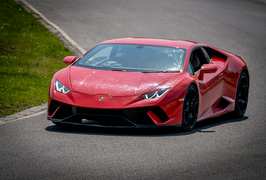
The Apex Predator: Decoding the Elite World of Supercars and Hypercars in 2025
The line distinguishing a supercar from a hypercar in 2025 has become increasingly blurry. Forget strict thresholds—for the purposes of this discussion, we are considering automotive icons defined by their jaw-dropping performance figures and intoxicating aesthetics. These aren’t just cars; they are technological masterpieces engineered to push the boundaries of physics while captivating the eye. Join us on a deep dive into the most exclusive and sought-after machines currently dominating the automotive landscape.
Bugatti Chiron: The King of Refined Velocity
Bugatti continues to reign supreme in the supercar hierarchy, and the Bugatti Chiron stands as a testament to their engineering prowess. As the spiritual successor to the legendary Veyron, the Chiron carves its own niche in the pantheon of automotive royalty.
The brilliance of the Chiron lies in its flawless execution. A featherweight yet immensely powerful W16 engine, supercharged to deliver a staggering 1,500 horsepower at 6,000 RPM, propels this machine to a mind-bending top speed of 443 km/h (275 mph). With a 0 to 60 mph sprint time of approximately 2.5 seconds, the Chiron doesn’t just accelerate; it warps time and space around it.
Aesthetically, the Chiron is a masterpiece of functional sculpture. Its design exudes a refined elegance that is both captivating and aerodynamic. Conciseness meets a breathtakingly sculpted form, ensuring that every curve serves a purpose in slicing through the air. Bugatti plans a limited production run of 500 units, with the base model starting at around $2.5 million, although customer customization can significantly inflate this price tag.
Bugatti Bolide: The Track-Focused Juggernaut
Enter the Bugatti Bolide, the Chiron’s radical counterpart that trades luxury for pure, unadulterated speed. Visually distinct and relentlessly focused on performance, the Bolide is a track weapon disguised as a hypercar.
Powered by a W16 engine optimized for racing fuel, the Bolide churns out a monumental 1,850 horsepower. While Bugatti claims a theoretical top speed of 499 km/h (310 mph), real-world testing has shown slightly lower figures. However, consistently exceeding 400 km/h (249 mph) solidifies the Bolide’s status as one of the most extreme automotive engineering feats of our time.
The design deviates sharply from the Chiron’s classic elegance. Featuring a lightweight carbon fiber body adorned with advanced aerodynamic elements, the Bolide looks less like a road car and more like a machine plucked from the future of motorsport. It pushes the boundaries of what we believe is possible on four wheels.
Production is strictly limited to just 40 units, which, combined with its revolutionary technology, commands a minimum price of $4.7 million. This is automotive art at its most primal and exclusive.
McLaren Speedtail: The Supersonic Streamliner
McLaren’s Speedtail is an embodiment of pure performance wrapped in a design that defies convention. Nicknamed the “Hyper-GT,” this machine combines breathtaking speed with a level of comfort rarely found in the hypercar segment, making it one of the most desirable cars in the world.
The Speedtail’s signature feature is its unique seating configuration: the driver occupies a central position, with two passenger seats subtly tucked behind, reminiscent of the McLaren F1’s iconic layout. This driver-centric approach ensures total focus and unparalleled control.
As a hybrid masterpiece, the Speedtail merges a powerful V8 twin-turbo engine with a cutting-edge electric motor. This symbiotic relationship generates a combined output of 1,050 horsepower, enabling the supercar to reach an exhilarating top speed of 403 km/h (250 mph) and accelerate from 0 to 60 mph in just 2.9 seconds.
Exclusivity is paramount. McLaren has limited the Speedtail to only 106 units, a number chosen to honor the original F1’s production run. The price reflects this scarcity, starting at over €2 million, and varies significantly based on the bespoke specifications chosen by each owner.
Aston Martin Valkyrie: Racing Technology for the Road
The Aston Martin Valkyrie represents a true marriage of Formula 1 technology and road-legal engineering. Developed in collaboration with Red Bull Racing, this hypercar is a testament to extreme lightweighting and aerodynamic efficiency.
For a machine capable of such blistering speed, the Valkyrie is shockingly light, weighing only around 1,030 kg (2,271 lbs). This astonishingly low mass, combined with a high-revving hybrid engine producing 1,176 horsepower, allows the Valkyrie to achieve a 0 to 60 mph sprint in a mere 2.5 seconds. The carbon fiber body, sculpted by the wind, channels air through and around the car to generate massive downforce without compromising its sleek profile.
The cabin is an intimate, two-seat environment where upward-opening doors enhance the drama of entry. While Aston Martin has already sold all 175 planned units, the starting price of $3.2 million ensured that only a select few would ever have the privilege of owning this automotive icon.
Koenigsegg: The Swedish Masters of Speed
Swedish automaker Koenigsegg has carved out a legendary reputation for building some of the fastest and most innovative hypercars on the planet. Their philosophy centers on raw power, cutting-edge technology, and unwavering attention to detail.
Koenigsegg One:1: The Power-to-Weight Ratio Benchmark
The Koenigsegg One:1 derives its name from a bold engineering philosophy: a 1:1 ratio of horsepower to kilogram. According to the designers, each kilogram of the car should be matched by one horsepower. This seemingly radical concept ensures maximum acceleration and performance.
The One:1 accelerates to 60 mph in 2.6 seconds and boasts a claimed top speed of 430 km/h (267 mph). The engine output and vehicle weight are nearly identical, totaling 1,360 hp and 1,360 kg, respectively. This precise balance of power and lightness delivers a truly visceral driving experience.
Distinctively, the One:1 features a large rear wing—a rarity among modern hypercars—emphasizing its pure performance pedigree. Production was extremely limited, with only 7 units ever built, each costing more than $2 million.
Koenigsegg Jesko Absolute: The Speed Record Seeker
The Koenigsegg Jesko Absolute represents the pinnacle of Koenigsegg’s quest for ultimate velocity. This “younger brother” to the One:1 has surpassed its predecessor’s speed records, setting a new standard for hypercar performance.
Equipped with a 5.0-liter twin-turbocharged V8 engine, the Jesko Absolute produces 1,622 horsepower on racing fuel, allowing it to reach speeds of 483 km/h (300 mph). The manufacturer boldly claims that under ideal conditions, the Jesko Absolute can shatter the 530 km/h (329 mph) barrier, although this record is yet to be officially verified.
Koenigsegg has also managed to achieve an astonishingly low curb weight of 1,290 kg (2,844 lbs), further enhancing its acceleration and stability at high speeds. The streamlined, aerodynamic body reflects the car’s status and capabilities.
With a total production run of 125 units, the starting price is set at approximately $3 million. As of 2025, more than three-quarters of these exclusive machines have already been sold.
Hennessey Venom GT: The American Muscle Machine
The Hennessey Venom GT remains a regular fixture in supercar rankings due to its exceptional technical specifications, premium finish, and inherent exclusivity. The Venom GT represents the pinnacle of American automotive engineering.
The Venom GT is powered by a V8 engine delivering a colossal 1,842 horsepower. It rockets from 0 to 60 mph in 2.4 seconds and reaches 300 km/h (186 mph) in 13.63 seconds. Remarkably, the Venom GT is one of the lightest hypercars in existence, weighing just one ton.
The production series is incredibly exclusive, with only 24 units ever produced. Despite the extremely high starting price of $2.1 million, all cars have been sold out, making the Venom GT a highly coveted collector’s item.
SSC Tuatara: Speed Defined by Technology
The SSC Tuatara is another regular in high-performance rankings, representing the zenith of speed, luxury, and automotive innovation. Developed by Shelby SuperCars (SSC), the Tuatara has become synonymous with what it means to be a luxury supercar.
The V8 twin-turbocharged engine powers the SSC Tuatara to a breathtaking top speed of 455 km/h (283 mph). The car accelerates from 0 to 60 mph in a mere 2.5 seconds. The seven-speed automatic transmission ensures that this exhilarating speed is delivered with smooth, effortless control, making the Tuatara a master of both acceleration and high-speed cruising.
The SSC Tuatara has a strictly limited production run of 100 units. The starting price for this remarkable supercar begins at $2 million, positioning it among the elite tier of automotive engineering.

 The Apex Predator: Decoding the Elite World of Supercars and Hypercars in 2025
The line distinguishing a supercar from a hypercar in 2025 has become increasingly blurry. Forget strict thresholds—for the purposes of this discussion, we are considering automotive icons defined by their jaw-dropping performance figures and intoxicating aesthetics. These aren’t just cars; they are technological masterpieces engineered to push the boundaries of physics while captivating the eye. Join us on a deep dive into the most exclusive and sought-after machines currently dominating the automotive landscape.
Bugatti Chiron: The King of Refined Velocity
Bugatti continues to reign supreme in the supercar hierarchy, and the Bugatti Chiron stands as a testament to their engineering prowess. As the spiritual successor to the legendary Veyron, the Chiron carves its own niche in the pantheon of automotive royalty.
The brilliance of the Chiron lies in its flawless execution. A featherweight yet immensely powerful W16 engine, supercharged to deliver a staggering 1,500 horsepower at 6,000 RPM, propels this machine to a mind-bending top speed of 443 km/h (275 mph). With a 0 to 60 mph sprint time of approximately 2.5 seconds, the Chiron doesn’t just accelerate; it warps time and space around it.
Aesthetically, the Chiron is a masterpiece of functional sculpture. Its design exudes a refined elegance that is both captivating and aerodynamic. Conciseness meets a breathtakingly sculpted form, ensuring that every curve serves a purpose in slicing through the air. Bugatti plans a limited production run of 500 units, with the base model starting at around $2.5 million, although customer customization can significantly inflate this price tag.
Bugatti Bolide: The Track-Focused Juggernaut
Enter the Bugatti Bolide, the Chiron’s radical counterpart that trades luxury for pure, unadulterated speed. Visually distinct and relentlessly focused on performance, the Bolide is a track weapon disguised as a hypercar.
Powered by a W16 engine optimized for racing fuel, the Bolide churns out a monumental 1,850 horsepower. While Bugatti claims a theoretical top speed of 499 km/h (310 mph), real-world testing has shown slightly lower figures. However, consistently exceeding 400 km/h (249 mph) solidifies the Bolide’s status as one of the most extreme automotive engineering feats of our time.
The design deviates sharply from the Chiron’s classic elegance. Featuring a lightweight carbon fiber body adorned with advanced aerodynamic elements, the Bolide looks less like a road car and more like a machine plucked from the future of motorsport. It pushes the boundaries of what we believe is possible on four wheels.
The Apex Predator: Decoding the Elite World of Supercars and Hypercars in 2025
The line distinguishing a supercar from a hypercar in 2025 has become increasingly blurry. Forget strict thresholds—for the purposes of this discussion, we are considering automotive icons defined by their jaw-dropping performance figures and intoxicating aesthetics. These aren’t just cars; they are technological masterpieces engineered to push the boundaries of physics while captivating the eye. Join us on a deep dive into the most exclusive and sought-after machines currently dominating the automotive landscape.
Bugatti Chiron: The King of Refined Velocity
Bugatti continues to reign supreme in the supercar hierarchy, and the Bugatti Chiron stands as a testament to their engineering prowess. As the spiritual successor to the legendary Veyron, the Chiron carves its own niche in the pantheon of automotive royalty.
The brilliance of the Chiron lies in its flawless execution. A featherweight yet immensely powerful W16 engine, supercharged to deliver a staggering 1,500 horsepower at 6,000 RPM, propels this machine to a mind-bending top speed of 443 km/h (275 mph). With a 0 to 60 mph sprint time of approximately 2.5 seconds, the Chiron doesn’t just accelerate; it warps time and space around it.
Aesthetically, the Chiron is a masterpiece of functional sculpture. Its design exudes a refined elegance that is both captivating and aerodynamic. Conciseness meets a breathtakingly sculpted form, ensuring that every curve serves a purpose in slicing through the air. Bugatti plans a limited production run of 500 units, with the base model starting at around $2.5 million, although customer customization can significantly inflate this price tag.
Bugatti Bolide: The Track-Focused Juggernaut
Enter the Bugatti Bolide, the Chiron’s radical counterpart that trades luxury for pure, unadulterated speed. Visually distinct and relentlessly focused on performance, the Bolide is a track weapon disguised as a hypercar.
Powered by a W16 engine optimized for racing fuel, the Bolide churns out a monumental 1,850 horsepower. While Bugatti claims a theoretical top speed of 499 km/h (310 mph), real-world testing has shown slightly lower figures. However, consistently exceeding 400 km/h (249 mph) solidifies the Bolide’s status as one of the most extreme automotive engineering feats of our time.
The design deviates sharply from the Chiron’s classic elegance. Featuring a lightweight carbon fiber body adorned with advanced aerodynamic elements, the Bolide looks less like a road car and more like a machine plucked from the future of motorsport. It pushes the boundaries of what we believe is possible on four wheels.