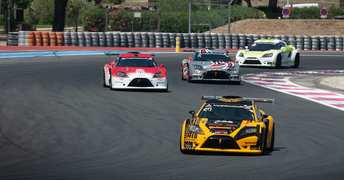
Toyota’s Sports Car Offensive: GR GT, GT3, and the Return of the Lexus LFA
Toyota recently pulled the covers off a trio of high-performance machines—the Lexus LFA Concept, the GR GT road car, and the GR GT3 race car—signaling a major shakeup in their performance portfolio. For enthusiasts, this rollout is less about the debut of three vehicles and more about a radical shift in Toyota’s strategic DNA. While many automakers are hedging their bets on EVs or leaning into the nostalgia of hybrid power, Toyota is diving headfirst into performance, not as a side project, but as a core pillar of its future.
After a preview event and detailed discussions with program managers and engineering teams, we’ve pieced together a clearer picture of Toyota’s “Holy Trinity” of performance. This isn’t just about releasing new cars; it’s about preserving automotive heritage while embracing cutting-edge technology, spearheaded by Akio Toyoda, the grandson of the founder and the visionary behind Gazoo Racing.
The Toyota GR GT: Pricing, Performance, and the Nürburgring
The GR GT is slated to hit the streets around 2027, likely arriving as a 2028 model. Serving as the production version of the GR GT3 race car, the road-legal model will need to meet strict homologation standards, which could also mean the race car will appear shortly before the consumer version—a strategy seen with other vehicles like the Ford GT.
What Does It Cost?
When asked about pricing for the GR GT, chief program manager Takashi Doi suggested we look at the competition. With a targeted 641 horsepower and a curb weight of 3,858 pounds, the GR GT boasts a weight-to-power ratio of 6.0 lb/hp.
Here’s where the GR GT stacks up against other high-performance GT cars:
| Vehicle | Curb Weight | Horsepower | Weight/Power Ratio | Base Price |
| :— | :— | :— | :— | :— |
| 2028 Toyota GR GT | 3,858 lb | 641 hp | 6.0 lb/hp | N/A |
| 2026 Porsche 911 GT3 | 3,278 lb | 502 hp | 6.2 lb/hp | $235,500 |
| 2026 Porsche 911 Turbo S | 3,859 lb | 701 hp | 5.5 lb/hp | $275,650 |
| 2026 AMG GT Pro 4Matic | 4,299 lb | 603 hp | 7.1 lb/hp | $202,200 |
| 2026 Aston Martin Vantage S | 3,847 lb | 671 hp | 5.7 lb/hp | $235,000 |
Note: Prices include mandatory destination charges. The 911 Turbo S and AMG GT Pro 4Matic have different body styles, but share similar high-performance metrics.
Based on this competitive set, it is highly probable that the 2028 Toyota GR GT will be priced north of $200,000. Toyota isn’t trying to be an entry-level performance brand; they are positioning the GR GT as a true competitor to established German and British GTs.
Performance and Engineering
The GR GT features a complex mechanical limited-slip differential (LSD) and a sophisticated hybrid powertrain. While Toyota engineers confirmed they are developing various driving modes, they declined to specify their names. However, the steering wheel offered some clues: a “Sport Boost” button on the right side and a “TRC/VSC Off” button on the left.
When pressed, Doi-san confirmed that drivers will have the ability to turn traction and stability control completely off—a critical feature for enthusiasts who value control and the thrill of rear-wheel drive.
Looking ahead, we inquired about higher-performance variants. Will we see a Nürburgring Edition or a GRMN (Master of Nürburgring) version? Doi’s response was candid: “Obviously we can’t talk about future product, but variations and improvements is something we’re always looking for. And that’s crucial, very important for a sports car.”
This commitment to evolution suggests Toyota intends to keep the GR GT line fresh and competitive for years to come.
The “Humiliation” of Nürburgring
The launch of the GR GT was framed by Akio Toyoda’s personal experience with the Nürburgring Nordschleife. He spoke at length about a few years ago, when Toyota sports cars—including the fourth-generation Supra—were being “eaten alive” by faster, better-handling competitors, mostly German.
This raw experience of humiliation drove the development of both the GR GT and the GR GT3.
When asked about the importance of the Nürburgring lap time, specifically targeting a sub-7-minute time like the Mustang GTD or Corvette ZR1, Doi remained coy but stressed the importance of the ’Ring to Toyota. He reiterated Toyoda’s stance: the GR GT will not be the car getting passed on the Green Hell.
Considering the history of Japanese engineering humility, this is essentially a declaration that the GR GT will break the 7-minute barrier, especially given that Porsche 911 GT3 and AMG GT models have already achieved this feat. Toyota is setting a high bar for itself.
The Return of the Lexus LFA
The return of the Lexus LFA remains one of the most anticipated developments in Toyota’s performance lineup. However, enthusiasts who are ready to pre-order should be prepared for a longer wait. When asked about availability and pricing, Toyota representatives stated “several years.”
How Much Will It Cost?
The original LFA debuted in 2010 at $375,000 and exited the market with a Nürburgring Edition at $445,000. Doi-san acknowledged that the automotive landscape has shifted significantly since then.
The new LFA is expected to be a solid-state battery (SSB) electric sports car. The world has changed since the LFA’s debut, and a comeback at the original price point would no longer be competitive.
The Price of Innovation
The luxury sports coupe market is notoriously small, and there are virtually no electric sports coupes priced over $200,000. While the Lucid Air Sapphire, Rolls-Royce Spectre, and Cadillac Celestiq hover above this threshold, none fit the Lexus LFA’s profile. The Rimac Nevera and Lotus Evija reside in the $2.3 to $2.4 million range, which is distinctly outside of Lexus’ target market.
The only vehicle that comes close to Lexus’ ambitions is the second-generation Tesla Roadster, rumored to be in the $200,000 to $250,000 range. If that materialize, the new LFA will need to compete directly within this bracket.
Solid-State Batteries: Game-Changer?
One factor that could significantly impact the LFA’s pricing is its solid-state battery technology. While no one at the event would confirm this, Toyota has been investing heavily in SSB since 2020 through their joint venture with Panasonic, Prime Planet Energy & Solutions, Inc.
In 2024, Toyota updated its battery roadmap, with SSB expected to arrive between 2027 and 2028, offering a 621-mile (1,000 km) range and 10-minute recharge times. This level of performance would represent a massive technological leap and could be exactly what Lexus needs to justify its flagship positioning.
The Packaging Problem
The current best practice for electric vehicle (EV) manufacturing is to place heavy battery packs as low as possible in the floor, creating a skateboard chassis. This ensures a low center of gravity for optimal handling. However, this presents a major packaging challenge for the LFA.
The LFA shares an all-aluminum spaceframe chassis with the GR GT and GR GT3. This design lacks a traditional floorpan; instead, it has thick structural members. The available floor space within the cabin is minimal, ending at the rear bulkhead before the transmission.
Could traditional battery packs be squeezed ahead of the firewall or under the cabin? Perhaps the LFA could utilize the space normally occupied by the GR GT’s V-8 engine and hybrid system? Aftermarket EV tuners often use “T-shaped” battery packs to navigate such constraints, and while this is speculative, solid-state batteries are a strong candidate for this application. They offer higher energy density and a lighter weight, which could solve the packaging dilemma without compromising performance or handling.
For packaging, performance, and marketing reasons, debuting groundbreaking solid-state batteries in the Lexus LFA makes perfect sense. This could also explain the significant gap between the LFA Concept and the production debut.
The Complexity of the GR GT Powertrain
The engineering behind the GR GT is a testament to Toyota’s commitment to performance, even in the age of EV simplification. A cutaway of the powertrain reveals a fiendishly

 Toyota’s Sports Car Offensive: GR GT, GT3, and the Return of the Lexus LFA
Toyota recently pulled the covers off a trio of high-performance machines—the Lexus LFA Concept, the GR GT road car, and the GR GT3 race car—signaling a major shakeup in their performance portfolio. For enthusiasts, this rollout is less about the debut of three vehicles and more about a radical shift in Toyota’s strategic DNA. While many automakers are hedging their bets on EVs or leaning into the nostalgia of hybrid power, Toyota is diving headfirst into performance, not as a side project, but as a core pillar of its future.
After a preview event and detailed discussions with program managers and engineering teams, we’ve pieced together a clearer picture of Toyota’s “Holy Trinity” of performance. This isn’t just about releasing new cars; it’s about preserving automotive heritage while embracing cutting-edge technology, spearheaded by Akio Toyoda, the grandson of the founder and the visionary behind Gazoo Racing.
The Toyota GR GT: Pricing, Performance, and the Nürburgring
The GR GT is slated to hit the streets around 2027, likely arriving as a 2028 model. Serving as the production version of the GR GT3 race car, the road-legal model will need to meet strict homologation standards, which could also mean the race car will appear shortly before the consumer version—a strategy seen with other vehicles like the Ford GT.
What Does It Cost?
When asked about pricing for the GR GT, chief program manager Takashi Doi suggested we look at the competition. With a targeted 641 horsepower and a curb weight of 3,858 pounds, the GR GT boasts a weight-to-power ratio of 6.0 lb/hp.
Here’s where the GR GT stacks up against other high-performance GT cars:
| Vehicle | Curb Weight | Horsepower | Weight/Power Ratio | Base Price |
| :— | :— | :— | :— | :— |
| 2028 Toyota GR GT | 3,858 lb | 641 hp | 6.0 lb/hp | N/A |
| 2026 Porsche 911 GT3 | 3,278 lb | 502 hp | 6.2 lb/hp | $235,500 |
Toyota’s Sports Car Offensive: GR GT, GT3, and the Return of the Lexus LFA
Toyota recently pulled the covers off a trio of high-performance machines—the Lexus LFA Concept, the GR GT road car, and the GR GT3 race car—signaling a major shakeup in their performance portfolio. For enthusiasts, this rollout is less about the debut of three vehicles and more about a radical shift in Toyota’s strategic DNA. While many automakers are hedging their bets on EVs or leaning into the nostalgia of hybrid power, Toyota is diving headfirst into performance, not as a side project, but as a core pillar of its future.
After a preview event and detailed discussions with program managers and engineering teams, we’ve pieced together a clearer picture of Toyota’s “Holy Trinity” of performance. This isn’t just about releasing new cars; it’s about preserving automotive heritage while embracing cutting-edge technology, spearheaded by Akio Toyoda, the grandson of the founder and the visionary behind Gazoo Racing.
The Toyota GR GT: Pricing, Performance, and the Nürburgring
The GR GT is slated to hit the streets around 2027, likely arriving as a 2028 model. Serving as the production version of the GR GT3 race car, the road-legal model will need to meet strict homologation standards, which could also mean the race car will appear shortly before the consumer version—a strategy seen with other vehicles like the Ford GT.
What Does It Cost?
When asked about pricing for the GR GT, chief program manager Takashi Doi suggested we look at the competition. With a targeted 641 horsepower and a curb weight of 3,858 pounds, the GR GT boasts a weight-to-power ratio of 6.0 lb/hp.
Here’s where the GR GT stacks up against other high-performance GT cars:
| Vehicle | Curb Weight | Horsepower | Weight/Power Ratio | Base Price |
| :— | :— | :— | :— | :— |
| 2028 Toyota GR GT | 3,858 lb | 641 hp | 6.0 lb/hp | N/A |
| 2026 Porsche 911 GT3 | 3,278 lb | 502 hp | 6.2 lb/hp | $235,500 |