From the Driving Seat: 40 Years Behind the Wheel of the Iconic Porsche 911
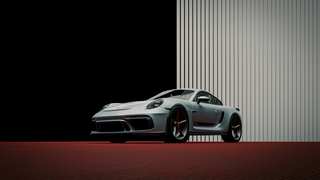
For more than four decades, I’ve had the privilege of testing Porsche 911 models, and the experience has been nothing short of a masterclass in automotive evolution. When I first slid behind the wheel of a 3.0-liter Carrera with its Fuchs alloys and narrow body, I was immediately struck by a duality that defines the 911: raw talent mixed with an intriguing imperfection. This was a car that demanded respect—not just a car you merely drove. In 2025, as Porsche continues to refine its legendary icon, the 911 remains a benchmark for performance, design, and pure driving engagement. It’s a vehicle that has consistently managed to feel both classic and cutting-edge, maintaining its allure through constant innovation.
Thinking back to that first test, I vividly recall comparing the Carrera to a 944 Turbo. Back then, in my home country of Australia, both cars were priced nearly identically. The 944 was undeniably quicker and more powerful on the road, offering effortless performance. However, the 911 had something else—an ineffable charisma that captured the imagination. It was an emotional connection that transcended raw numbers. I eventually wrote that even though the 944 Turbo was objectively the better car, if I were making the decision, I would choose the 911 Carrera. The 944 was so competent it could make even a novice driver feel like a pro, with a chassis offering astounding capabilities. But the 911 demanded more—it was a car for a different era, one that required understanding and commitment. That, in essence, is the magic of the 911.
Over the years, I’ve driven countless iterations of this masterpiece, and with only one exception—the 964, which in the early 1990s seemed to suggest the 911 concept was becoming outdated—I have been consistently impressed by how Porsche has polished its icon. In 2025, the 911 is still one of the few cars on the market where I would happily spend my own money. Of all the models I’ve driven, a select few stand out as the most memorable. They represent different eras, technological leaps, and the enduring spirit of a car that has defined generations of driving enthusiasts. Here are five of the most significant Porsche 911s I’ve ever had the pleasure of driving.
The Original 911 Turbo: A Masterclass in Binary Power
Long before I ever got behind the wheel of the original 911 Turbo, road-test journalists spoke of it in hushed, reverent tones. It was widely regarded as a car that demanded the utmost respect when driven with intent. The original Turbo was known for its binary boost behavior, a characteristic that made the traditional 911 tightrope between corner-entry understeer and corner-exit oversteer a nerve-wracking experience. It was a car that offered no mercy for mistakes or sloppiness. In the automotive lore of the era, it was often called a widowmaker. For many years, I had only heard these stories, and it took me 35 years to finally experience it for myself.
I eventually got the opportunity to drive one of the first 30 production Turbos ever built, which is now part of Porsche’s highly coveted classic fleet. Aware of its fearsome reputation, I approached the drive cautiously at first. I carefully modulated the throttle, feeling the boost build and watching the tachometer, trying to construct a mental map of the power and torque curves. Surprisingly, the engine was incredibly tractable. It happily hummed along at 2,000 rpm in top gear, keeping the car creeping at 45 mph. But once the engine hit 3,500 rpm, a noticeable acceleration surge kicked in as the turbocharger injected 0.8 bar of pressure into the intake system.
What surprised me most was the absence of the sledgehammer blow between the shoulder blades I had been warned about. The secret to smooth and rapid progress in the original 911 Turbo, I discovered, was keeping the 3.0-liter flat-six spinning at 4,000 rpm or more to keep the turbocharger energized. Yes, there is turbo lag—very noticeable by modern standards—but it’s manageable. Even though it’s more than 50 years old, this 911 remains an impressively fast car. First gear effortlessly reaches 50 mph, second gear tops out at 90 mph, and third gear allows you to approach 130 mph. This means you can effectively cover most winding roads using only second and third gear.
Although it produces a relatively modest 256 hp, its weight of just 2,513 pounds allows it to accelerate into and out of corners with surprising agility. Half a century ago, its performance would have seemed otherworldly. The 911 Turbo, often called the 930 Turbo, represented a seismic shift in performance capabilities for a production car. It established the turbocharged 911 template that would evolve over decades, yet its raw, untamed nature remains distinct even when compared to modern high-performance machines. Today, the early 930 Turbo is a collector’s dream, a raw artifact of an era when boosting engines was a less precise science, and every surge of power felt like a declaration of mechanical intent.
The 993-Generation: The Zenith of Air-Cooled Engineering
For Porsche purists, the 993-generation 911 represents the last of the true, unadulterated 911s. It’s the car you drive with your knuckles grazing the dashboard, listening to the raw, metallic clatter of an air-cooled flat-six behind you. But back in 1994, when I first drove it, the 993 was the 911 of the future. It was the first model in the lineup that dared to challenge the established laws of physics. While the front end still demanded the precise loading required to hit the apex, and the rear end still communicated its every movement through the rougher turns, the 993 exhibited a much greater sense of synergy between the front and rear. The 993 still embodied the essential 911 character, but within a much more refined framework.
The cornerstone of this revolution was a new rear suspension system that replaced the aging semi-trailing arms with a new multilink setup. This innovation allowed for a very slight initial toe-out on corner entry, which then transitioned to a progressive toe-in as lateral loads increased, all while significantly reducing the camber change that had long been the Achilles’ heel of 911s since 1963. This mechanical advancement was paired with a redesigned steering system that, at 2.5 turns lock-to-lock, was 16 percent quicker, making the front end feel far more decisive. Additionally, the car featured a new six-speed manual transmission that made the most of the 3.6-liter flat-six engine. Thanks to lighter internals, a Bosch Motronic 2.0 engine management system, and a new dual exhaust, the engine revved more enthusiastically to its 268-hp power peak at 6,100 rpm.
Compared to the 964 model it replaced, the 993 was nothing short of a revelation. It wasn’t just the engineering upgrades, executed under the leadership of Ulrich Bez, who would later head Aston Martin: The exterior redesign, directed by design chief Harm Lagaay, corrected visual imbalances in the 964, a car he felt was too tall at the front and too low at the rear. The interior was also cleaner, featuring fewer buttons scattered in random locations. The 993 Carrera was a 911 that was faster, more forgiving, and, most importantly, more desirable than ever before.
This 993 generation Porsche 911 marks a critical transition point. It is often seen as the pinnacle of air-cooled 911 engineering, representing the final iteration of a classic recipe before the shift to water cooling. In 2025, the 993 values have skyrocketed, positioning it as one of the most sought-after air-cooled Porsches for collectors. The combination of timeless design and advanced suspension engineering ensures its legacy as a benchmark for driving enthusiasts worldwide. The 993 RS models, in particular, are highly coveted for their track-focused performance and rarity, cementing the 993’s place in 911 history.
The 996-Generation: The Water-Cooled Revolution That Saved Porsche
At the time of its introduction, the decision to install a water-cooled flat-six in the tail of the 996-series 911 was considered heresy by Porsche purists. To aficionados, it was the automotive equivalent of Bob Dylan ditching his acoustic guitar for an electric Fender Stratocaster at the 1965 Newport Folk Festival. However, the 996, which was the first clean-sheet redesign of Porsche’s enduring sports car in 34 years, was a hero car for me. It was the 911 that saved Porsche.
Engineered and developed under the direction of Porsche R&D chief Horst Marchart, the 996 was a

 From the Driving Seat: 40 Years Behind the Wheel of the Iconic Porsche 911
For more than four decades, I’ve had the privilege of testing Porsche 911 models, and the experience has been nothing short of a masterclass in automotive evolution. When I first slid behind the wheel of a 3.0-liter Carrera with its Fuchs alloys and narrow body, I was immediately struck by a duality that defines the 911: raw talent mixed with an intriguing imperfection. This was a car that demanded respect—not just a car you merely drove. In 2025, as Porsche continues to refine its legendary icon, the 911 remains a benchmark for performance, design, and pure driving engagement. It’s a vehicle that has consistently managed to feel both classic and cutting-edge, maintaining its allure through constant innovation.
From the Driving Seat: 40 Years Behind the Wheel of the Iconic Porsche 911
For more than four decades, I’ve had the privilege of testing Porsche 911 models, and the experience has been nothing short of a masterclass in automotive evolution. When I first slid behind the wheel of a 3.0-liter Carrera with its Fuchs alloys and narrow body, I was immediately struck by a duality that defines the 911: raw talent mixed with an intriguing imperfection. This was a car that demanded respect—not just a car you merely drove. In 2025, as Porsche continues to refine its legendary icon, the 911 remains a benchmark for performance, design, and pure driving engagement. It’s a vehicle that has consistently managed to feel both classic and cutting-edge, maintaining its allure through constant innovation.