Forty Years of Fire: The Top 5 Porsche 911s That Define an Icon
After four decades spent in the driver’s seat, testing and wrangling the legendary Porsche 911, a clear picture emerges. Not just the fastest cars, or the most expensive, but the 911s that have truly imprinted themselves on the automotive soul. The modern era, with its seamless integration of cutting-edge technology and raw performance, has produced some astonishing machinery, yet the purity of the early icons and the revolutionary shifts in the 90s still hold a powerful allure. This isn’t about horsepower rankings; it’s about the magic that happens when the engineers in Zuffenhausen get it absolutely right.
Consider the journey that began over 40 years ago. That first encounter with a 911—a white 3.0-liter Carrera with black Fuchs alloys, no rear wing, and no power steering—was a stark lesson in automotive evolution. It was fast, yes, but it demanded respect. Compared to the 944 Turbo of the same era, a car that cost virtually the same in Australia at the time, the 911 felt like a different breed entirely. The 944 Turbo was competent, effortless, and deceptively quick. “The 944 Turbo is the better car,” was the honest assessment, but the visceral connection to the 911 was undeniable. “It wasn’t a conclusion I came to readily,” the notes read, “the 944 Turbo is so competent, it can make a bad driver look good… its soaring, searing performance is superbly counterbalanced by a chassis of astounding ability.” But the 911 tugged at the emotions. “The gloriously imperfect 911 Carrera is a sports car of a different age and reflects different values. It’s not tailored to meet the needs of most drivers. It demands understanding and respect. That’s why I’d take it home.” This duality is the essence of the 911 story.
For 40 years, Porsche has polished this icon, keeping it relevant and exciting, even through periods where the 911 seemed to lose its way (the 964 era still raises eyebrows for some purists). But for the connoisseur, the 911 remains one of the few new cars on which one would happily spend hard-earned money. From the primal roar of the air-cooled engines to the surgical precision of modern racing tech, these are the five 911 models that have truly stood the test of time.
The Pantheon: 5 Porsche 911s That Define the Icon
In the 60 years since it debuted, the Porsche 911 has evolved from a raw, analog marvel to a digital supercar. But through it all, Zuffenhausen has never lost sight of the core ingredients: the iconic silhouette, the rear-engine layout, and the unique challenge of managing rear-end power. Over four decades of driving these machines, a specific pantheon emerges—cars that define the breed, offering a glimpse into the lineage of what has become the world’s most enduring sports car.
Since the first teardrop-shaped silhouette rolled off the production line in 1963, the 911 has been a rolling masterclass in engineering evolution. Every generation has brought improvements, refinements, and, occasionally, necessary compromises. Yet, certain models stand out not just for their performance metrics, but for the indelible mark they left on the driver, the brand, and the automotive landscape.
The Apex Predators: Modern Track Machines
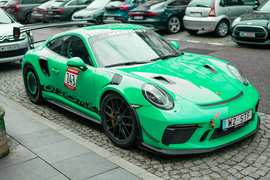
In 2025, the benchmark for what a road-legal 911 can do has been reset by the 992 GT3 RS. This machine is not just a fast track car; it is a race car with number plates. The initials “RS” have always designated the most focused Porsches, tracing their lineage back to the legendary 1973 Carrera RS 2.7. But the 992 RS takes this philosophy to an extreme level of intensity.
992.1 GT3 RS: The Aerodynamic Weapon
The 992 GT3 RS is a visceral experience that demands a mindset shift from drivers accustomed to traditional rear-engine handling. A few laps at a circuit like Silverstone prove its credentials instantly. The speed through high-speed corners and the brutal stopping power under braking are matched only by cars like the McLaren Senna. The key differentiator, however, is the aerodynamic grip.
When attacking high-speed corners, the GT3 RS rewards trust in the downforce. Even when drivers feel they are pushing the limits of adhesion, the car is still finding more grip. What is most remarkable is that this aerodynamic confidence does not smother chassis sensitivity. Even mere mortals can feel the subtle nuances of the contact patches, both front and rear. The GT3 RS telegraphs its intentions with clarity and precision, meaning it doesn’t require the reflexes of a Formula 1 driver to handle effectively.
The GT3 RS embodies the ultimate track-day philosophy: drive to the circuit, hammer around at maximum pace all day, and drive back home again. It’s a machine that makes the driver feel like a driving god. For enthusiasts seeking the peak of 911 performance, this is the ultimate weapon.
The Benchmarks: Modern Engineering Marvels
Beyond the extreme specialization of the GT3 RS, the modern 911 range offers sophisticated machines that balance everyday usability with world-class performance. For years, the 911 has faced criticism regarding complexity and the erosion of the driver’s connection to the road. However, the 991.2 Carrera proved that a standard model can still be emotionally captivating.
991.2-Generation Porsche 911 Carrera: The Heart of the Icon
Of all the 911s driven, it was the base 991.2 Carrera that truly stole the show. While press fleets are typically loaded with high-spec models, Porsche’s decision to include a base model in their 2017 MotorTrend Car of the Year testing was inspired.
The 991.2 introduced a new 3.4-liter turbocharged engine, offering 370 hp in the standard Carrera or 420 hp in the Carrera S. Even in the 370-hp trim, the engine delivered a broad torque curve and impressive efficiency. The chassis demonstrated that even on the standard wheel and tire combination, it was staggeringly communicative and adjustable. Visually, the 991.2 was a subtle refinement of the larger, skillfully reproportioned 991.1, a superb interpretation of classic 911 themes that was both modern and beautiful. Inside, the new infotainment interface was sleek and intuitive.
Porsche’s PDK dual-clutch automatic transmission remains a benchmark in smooth, precise shifting. But the seven-speed manual transmission offered in the no-frills Carrera was exceptional, featuring an oily, rifle-bolt action that reignited the joy of driving. MotorTrend’s testing director at the time, Kim Reynolds, captured the essence of the Carrera’s appeal perfectly: “When all cars but one are autonomous, please let this be it, the last human-driven car. For posterity’s sake.” Even after a decade, the memory of that Guards Red with black interior, featuring just one option—red seat belts—persists.
The Revolutionaries: Pivotal Moments in 911 History
The 911’s journey has been defined by bold leaps forward, often met with skepticism before winning over the masses. The decision to switch to water-cooling in the 996-series was heresy to some purists, but it was also the move that saved the company.
996-Generation Porsche 911: The Savior of Zuffenhausen
Porsche’s decision to install a water-cooled flat-six in the tail of the 996-series 911 was, to aficionados, the automotive equivalent of Bob Dylan ditching his acoustic guitar for a Fender Stratocaster at the 1965 Newport Folk Festival. However, the 996, the first clean-sheet redesign of Porsche’s indefatigable sports car in 34 years, was a hero car to many.
Engineered and developed under the direction of Porsche R&D chief Horst Marchart, the 996 was a clever design, not least because it shared 38 percent of its parts with the new mid-engine roadster that would become the Boxster. Iconoclastic Porsche boss Wendelin Weideking recognized the need for the Boxster to give dealers something to sell when the aging 928 and 968 models went out of production. “We did two cars for the price of one-and-a-half,” design boss Harm Lagaay later recalled with a smile after the company unveiled the 996.
While media attention focused on the Boxster relationship and the water-cooled engine, the 996’s real significance was deeper. In 1994, it took Porsche 130 hours to build a 993-series 911; the 996 took just 60 hours to build. The modern 911 had arrived: roomier, equipped with the features expected of a late 20th-century sports car, but still recognizably a 911. Most importantly, it still drove like a 91

 Forty Years of Fire: The Top 5 Porsche 911s That Define an Icon
After four decades spent in the driver’s seat, testing and wrangling the legendary Porsche 911, a clear picture emerges. Not just the fastest cars, or the most expensive, but the 911s that have truly imprinted themselves on the automotive soul. The modern era, with its seamless integration of cutting-edge technology and raw performance, has produced some astonishing machinery, yet the purity of the early icons and the revolutionary shifts in the 90s still hold a powerful allure. This isn’t about horsepower rankings; it’s about the magic that happens when the engineers in Zuffenhausen get it absolutely right.
Consider the journey that began over 40 years ago. That first encounter with a 911—a white 3.0-liter Carrera with black Fuchs alloys, no rear wing, and no power steering—was a stark lesson in automotive evolution. It was fast, yes, but it demanded respect. Compared to the 944 Turbo of the same era, a car that cost virtually the same in Australia at the time, the 911 felt like a different breed entirely. The 944 Turbo was competent, effortless, and deceptively quick. “The 944 Turbo is the better car,” was the honest assessment, but the visceral connection to the 911 was undeniable. “It wasn’t a conclusion I came to readily,” the notes read, “the 944 Turbo is so competent, it can make a bad driver look good… its soaring, searing performance is superbly counterbalanced by a chassis of astounding ability.” But the 911 tugged at the emotions. “The gloriously imperfect 911 Carrera is a sports car of a different age and reflects different values. It’s not tailored to meet the needs of most drivers. It demands understanding and respect. That’s why I’d take it home.” This duality is the essence of the 911 story.
For 40 years, Porsche has polished this icon, keeping it relevant and exciting, even through periods where the 911 seemed to lose its way (the 964 era still raises eyebrows for some purists). But for the connoisseur, the 911 remains one of the few new cars on which one would happily spend hard-earned money. From the primal roar of the air-cooled engines to the surgical precision of modern racing tech, these are the five 911 models that have truly stood the test of time.
The Pantheon: 5 Porsche 911s That Define the Icon
Forty Years of Fire: The Top 5 Porsche 911s That Define an Icon
After four decades spent in the driver’s seat, testing and wrangling the legendary Porsche 911, a clear picture emerges. Not just the fastest cars, or the most expensive, but the 911s that have truly imprinted themselves on the automotive soul. The modern era, with its seamless integration of cutting-edge technology and raw performance, has produced some astonishing machinery, yet the purity of the early icons and the revolutionary shifts in the 90s still hold a powerful allure. This isn’t about horsepower rankings; it’s about the magic that happens when the engineers in Zuffenhausen get it absolutely right.
Consider the journey that began over 40 years ago. That first encounter with a 911—a white 3.0-liter Carrera with black Fuchs alloys, no rear wing, and no power steering—was a stark lesson in automotive evolution. It was fast, yes, but it demanded respect. Compared to the 944 Turbo of the same era, a car that cost virtually the same in Australia at the time, the 911 felt like a different breed entirely. The 944 Turbo was competent, effortless, and deceptively quick. “The 944 Turbo is the better car,” was the honest assessment, but the visceral connection to the 911 was undeniable. “It wasn’t a conclusion I came to readily,” the notes read, “the 944 Turbo is so competent, it can make a bad driver look good… its soaring, searing performance is superbly counterbalanced by a chassis of astounding ability.” But the 911 tugged at the emotions. “The gloriously imperfect 911 Carrera is a sports car of a different age and reflects different values. It’s not tailored to meet the needs of most drivers. It demands understanding and respect. That’s why I’d take it home.” This duality is the essence of the 911 story.
For 40 years, Porsche has polished this icon, keeping it relevant and exciting, even through periods where the 911 seemed to lose its way (the 964 era still raises eyebrows for some purists). But for the connoisseur, the 911 remains one of the few new cars on which one would happily spend hard-earned money. From the primal roar of the air-cooled engines to the surgical precision of modern racing tech, these are the five 911 models that have truly stood the test of time.
The Pantheon: 5 Porsche 911s That Define the Icon