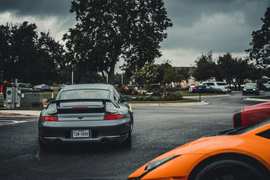
The Ascent of a Legend: Five Porsche 911s That Define an Era
After four decades of driving every iteration of the Porsche 911, the number 911 remains not just an icon of automotive engineering but a living testament to the pursuit of perfection. It is rare for a car to span four generations of automotive development unchanged in its fundamental purpose, yet remain at the forefront of technological advancement. From the raw, mechanical symphony of the original Turbo to the uncompromising track prowess of the modern GT3 RS, the 911 has evolved not by abandoning its roots, but by sharpening them with precision engineering.
My first encounter with the legendary lineage traces back to the 1970s. A white 3.0-liter Carrera, a purist’s dream with its narrow body, rear wingless silhouette, and unassisted steering, landed in my hands. It was a visceral experience that immediately defined the Porsche brand—a mechanical dialogue that demanded respect, even when tested alongside the contemporary 944 Turbo, a car that offered more horsepower and torque with less effort. Yet, as I penned at the time, the 911 Carrera was an emotional choice. Its imperfection spoke of a different era of driving, a demand for engagement that resonated deeply. While the 944 Turbo was a testament to technological competence, the 911 Carrera embodied the soul of a driver’s car.
Since that first test, I have evaluated dozens of 911 models. The 964 generation, in the early 1990s, was a brief pause that suggested the original concept might have run its course. But the subsequent generations—from the 993’s engineering refinement to the 996’s financial necessity and the 991’s modern grace—have proven that the 911 idea is immortal. Every iteration has been a step towards perfection, a constant refinement of the original formula. Forty years later, the 911 remains one of the few new cars that I would consider spending my own hard-earned money on. These five examples represent the pinnacle of that journey.
The Original 911 Turbo: A Widowmaker or Masterpiece?
Veteran road-test journalists spoke of the first Porsche 911 Turbo in hushed, awe-filled tones. It was characterized as a car that demanded the utmost respect, where the razor-thin line between corner-entry understeer and corner-exit oversteer required quick hands and unwavering nerve. In the lexicon of early motoring enthusiasts, the 911 Turbo was often called a “widowmaker.” It was a car that did not forgive mistakes and demanded precision. For over three decades, I wondered if the legend was truth or hyperbole.
That revelation came with one of the first 30 production 911 Turbos ever built, now part of Porsche’s esteemed classic fleet. Aware of its formidable reputation, I started cautiously, gradually probing the throttle and observing the tachometer. The 3.0-liter flat-six was remarkably tractable at low revs, allowing the 911 Turbo to cruise at 45 mph in top gear with ease. However, the character of the car changed dramatically above 3,500 rpm. The turbocharger, spooling to 0.8 bar, delivered a surge of power that felt immense, yet I found that the dramatic “sledgehammer blow” I expected was absent.
The secret to smooth and effective driving in the original 911 Turbo is to keep the 3.0-liter flat-six spinning at or above 4,000 rpm. This maintains a consistent turbocharger charge, mitigating the notable turbo lag that characterizes this era. Even today, this 911 is an impressively fast road car. First gear reaches 50 mph, second gear 90 mph, and third gear nearly 130 mph, allowing drivers to destroy winding two-lane roads using only the second and third gears. With a mere 256 horsepower, the car weighs only 2,513 pounds, which allows it to navigate corners with confidence. Fifty years ago, these performance metrics were considered nothing short of otherworldly. The 911 Turbo was, and remains, a marvel of engineering that pushed the boundaries of what a rear-engine sports car could achieve.
The 993: The Last of the Air-Cooled Era
For Porsche purists, the 993 represents the apex of the air-cooled era—the last of the “real” 911s. This is the car that engages the driver at a visceral level, where the snarling mechanical clatter of the air-cooled flat-six resonates directly behind the driver’s head. But back in 1994, when I first drove it, the 993 was the embodiment of Porsche’s engineering vision. It was the first model in the lineage to significantly challenge the established laws of physics, offering a level of refinement that had previously been unimaginable.
While the 993 retained the tactile engagement characteristic of the 911, its chassis balance was dramatically improved. The traditional rear-end sway under hard cornering was tamed, and the front end felt more decisive. This was achieved through a revolutionary rear suspension that replaced the aging semi-trailing arms with a new multi-link setup. This design allowed for a subtle initial toe-out during corner entry, which then progressively corrected to toe-in as lateral loads increased. Furthermore, the engineers managed to reduce the camber change that had been the Achilles’ heel of 911s since the model’s introduction in 1963.
Combined with a new six-speed manual transmission and a more reactive steering system that now offered 2.5 turns lock-to-lock (16 percent quicker than its predecessor), the 993 became a force to be reckoned with. The 3.6-liter flat-six, updated with lighter internals, Bosch Motronic 2.0 engine management, and a new dual exhaust system, delivered a spirited 268 horsepower at 6,100 rpm. Compared to the 964, which it replaced, the 993 was nothing short of a revelation. Not only did Ulrich Bez, later the head of Aston Martin, engineer the 993 with superior technology, but Harm Lagaay, the design chief, also refined the exterior styling to correct the perceived visual imbalances of the 964. The 993 was a faster, more predictable, and ultimately more desirable 911 that brought the iconic design into the modern age without sacrificing its core identity.
The 996: A Heretical Revolution That Saved Porsche
The introduction of the 996-series 911 marked a seismic shift for Porsche. It was the first time the company had re-engineered the 911 from the ground up in 34 years, and its decision to install a water-cooled flat-six was, to the purists, an act of heresy. It was the automotive equivalent of Bob Dylan ditching his acoustic guitar for a Fender Stratocaster at the 1965 Newport Folk Festival—a radical departure that threatened the very soul of the brand. Yet, the 996 became the car that saved Porsche.
Engineered under the direction of Porsche R&D chief Horst Marchart, the 996 was a masterclass in cost-effective innovation. It shared 38 percent of its parts with the all-new, mid-engine Boxster, a car designed to introduce new customers to the brand and provide dealers with additional inventory once the aging 928 and 968 models were retired. Porsche boss Wendelin Weideking understood the strategic necessity of the Boxster. As design chief Lagaay wryly noted after the unveiling, “We did two cars for the price of one-and-a-half.”
However, the media’s focus on the water-cooled engine and the Boxster obscured the 996’s true significance. In 1994, a 993-series 911 took 130 hours to build. The 996, by contrast, required just 60 hours. The modern 911 had arrived: more spacious, equipped with the advanced features expected of a late-20th-century sports car, and yet instantly recognizable as a 911. Crucially, it still drove like a 911, only better. While it gained a veneer of sophistication in its operation, the 996 retained the tactile response and engaging character that had always defined the 911. Along with the original Boxster, it pulled Porsche back from the brink of financial collapse, proving that modernization does not require the sacrifice of heritage.
The 991.2 Carrera: A Human Connection
Of all the 911 models I have driven, it was the base 991.2 Carrera that truly captured my heart. It captured the hearts of my colleagues as well, judging by the overwhelming feedback I received during the 2017 MotorTrend Car of the Year testing. Automotive PR departments often assume that automotive journalists are impressed by high-spec models equipped with every available option. Porsche’s decision to include a base 911 Carrera among the new 991.2 press fleet was, therefore, a brave move, but in truth, it was inspired.
The 991.2 introduced a new 3.4-liter turbocharged engine, offering 370 hp in the base model or 420 hp

 The Ascent of a Legend: Five Porsche 911s That Define an Era
After four decades of driving every iteration of the Porsche 911, the number 911 remains not just an icon of automotive engineering but a living testament to the pursuit of perfection. It is rare for a car to span four generations of automotive development unchanged in its fundamental purpose, yet remain at the forefront of technological advancement. From the raw, mechanical symphony of the original Turbo to the uncompromising track prowess of the modern GT3 RS, the 911 has evolved not by abandoning its roots, but by sharpening them with precision engineering.
My first encounter with the legendary lineage traces back to the 1970s. A white 3.0-liter Carrera, a purist’s dream with its narrow body, rear wingless silhouette, and unassisted steering, landed in my hands. It was a visceral experience that immediately defined the Porsche brand—a mechanical dialogue that demanded respect, even when tested alongside the contemporary 944 Turbo, a car that offered more horsepower and torque with less effort. Yet, as I penned at the time, the 911 Carrera was an emotional choice. Its imperfection spoke of a different era of driving, a demand for engagement that resonated deeply. While the 944 Turbo was a testament to technological competence, the 911 Carrera embodied the soul of a driver’s car.
The Ascent of a Legend: Five Porsche 911s That Define an Era
After four decades of driving every iteration of the Porsche 911, the number 911 remains not just an icon of automotive engineering but a living testament to the pursuit of perfection. It is rare for a car to span four generations of automotive development unchanged in its fundamental purpose, yet remain at the forefront of technological advancement. From the raw, mechanical symphony of the original Turbo to the uncompromising track prowess of the modern GT3 RS, the 911 has evolved not by abandoning its roots, but by sharpening them with precision engineering.
My first encounter with the legendary lineage traces back to the 1970s. A white 3.0-liter Carrera, a purist’s dream with its narrow body, rear wingless silhouette, and unassisted steering, landed in my hands. It was a visceral experience that immediately defined the Porsche brand—a mechanical dialogue that demanded respect, even when tested alongside the contemporary 944 Turbo, a car that offered more horsepower and torque with less effort. Yet, as I penned at the time, the 911 Carrera was an emotional choice. Its imperfection spoke of a different era of driving, a demand for engagement that resonated deeply. While the 944 Turbo was a testament to technological competence, the 911 Carrera embodied the soul of a driver’s car.