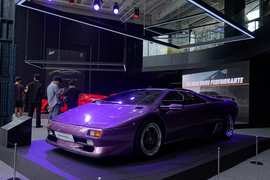
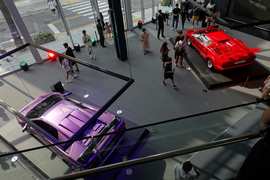
Here is a completely rewritten article about the most memorable Porsche 911s, updated for 2025, written from the perspective of a seasoned automotive expert with decades of experience, formatted for web publishing:
The Icons: Five Porsche 911s That Redefined Driving Mastery
After four decades of intimate acquaintance with the pinnacle of Porsche engineering, some machines transcend mere transport. They become benchmarks. They etch themselves into the very fabric of a driver’s memory. While the 911 saga is studded with legendary variants, a handful emerge from the rearview mirror with a clarity that remains unmatched, even in 2025.
Since that initial encounter with a raw, analog 3.0-liter Carrera that dared to challenge a 944 Turbo in an era where pure performance was everything, I’ve followed the evolution of this automotive icon. Through turbocharging revolutions, the pivot to water cooling, and the relentless pursuit of aerodynamic perfection, Porsche has navigated the narrow tightrope of automotive conservatism and radical innovation with breathtaking skill. The result is a lineage of sports cars that, generation after generation, has redefined what is possible on the road and the track.
Even today, amidst a sea of electric hypercars and autonomous futures, the Porsche 911 remains a potent symbol of the analog driving experience—a car that demands attention, rewards skill, and rewards you with visceral feedback. It’s the definitive driver’s car. But which specific models have transcended the noise to become the true titans of this storied lineage?
For the discerning enthusiast, the criteria for greatness go beyond horsepower figures and lap times. It’s about the feeling, the connection, the moment where engineering transforms into emotion. From the brutal honesty of the early Turbos to the hyper-focused precision of modern RS models, here are the five Porsche 911s that, in my extensive experience, have truly defined the essence of the marque.
The Ground Zero: 1975 Porsche 930 Turbo
Before the 930, road-test veterans spoke of the original 911 Turbo with hushed, almost fearful tones. It was described as a beast—a car that demanded absolute concentration, where the difference between a heroic corner exit and a catastrophic snap-oversteer could be measured in millimeters and milliseconds. It was rumored to be forgiving of nothing, intolerant of sloppiness. In short, they called it a widowmaker.
It took me 35 years to earn my stripes behind the wheel of a first-generation 930, and by then, Porsche’s classic division had secured this specific example. Stepping into that cabin, aware of its formidable reputation, was an exercise in controlled aggression. I drove cautiously at first, building a mental map of the torque curve, feathering the throttle, and listening to the mechanical heartbeat of that turbocharged flat-six.
To my surprise, the 3.0-liter engine was remarkably flexible for its era. Cruising at 2,000 rpm in top gear, the 930 settled into a relaxed hum, easily managing 45 mph. The legendary turbo lag was present, certainly—a palpable surge of induction pressure that arrived around 3,500 rpm—but it didn’t punish. The sledgehammer blow I expected was diluted by 50 years of refinement.
The secret to managing the 930, I discovered, was to keep the revs above 4,000 rpm. By maintaining that rpm, the turbocharger remained energized, delivering a linear, brutal thrust that redefined performance in the 1970s. Even by today’s standards, this car is astonishingly fast. First gear chirps to 50 mph, second to 90 mph, and third pushes past 130 mph. This means you can destroy any challenging back road using only the second and third gears. While it boasts a mere 256 hp, the 2,513-pound curb weight translates into a car that plunges into corners and exits them with predatory grace. For its time, it was supernatural performance, a pure expression of raw power and demanding engineering.
The Last of the Legends: 1996 Porsche 911 993
For the purists among us, the 993-generation 911 isn’t just a model; it’s the final chapter of the air-cooled era. It’s the 911 you drive with the visceral satisfaction of the clutch pedal engaging, the metallic snarl of the air-cooled flat-six reverberating behind your head. But back in 1994, when I first drove it, the 993 was the 911 of the future—a revolutionary machine that challenged the fundamental laws of physics established by its 1963 ancestor.
Sure, the 993 still possessed that distinctly 911 pat-pat-patter front end that demanded commitment on corner entry. The rear end still danced a playful tango when encountering bumps. But within the 993’s chassis, there was a newfound synergy. It still felt like a 911, but within boundaries that were far more forgiving and manageable.
The key to this transformation was the radical redesign of the rear suspension. Replacing the aging semi-trailing arms was a sophisticated new multilink setup. This innovation allowed for a minimal initial toe-out on turn-in, which then progressively stiffened into toe-in as lateral forces increased. Critically, it drastically reduced the negative camber changes that had been the Achilles’ heel of the 911 since 1963.
This engineering marvel was complemented by steering that was significantly quicker—2.5 turns lock-to-lock, a 16 percent improvement—making the front end feel far more decisive and eager. The new six-speed manual transmission was a triumph of engineering precision, perfectly mated to the 3.6-liter flat-six. By incorporating lighter internal components, a Bosch Motronic 2.0 engine management system, and a revised dual-exhaust setup, Porsche unlocked a zippier power delivery that peaked at 268 hp at 6,100 rpm.
Compared to its predecessor, the 964, the 993 was a revelation. It wasn’t just the engineering upgrades, implemented under the shrewd leadership of Ulrich Bez (later the CEO of Aston Martin). The exterior redesign, executed under the watchful eye of design chief Harm Lagaay, corrected the visual imbalances of the 964—a car Bez himself criticized for being too tall at the front and too visually squat at the rear. The interior was a study in Teutonic minimalism, shedding the random button clutter of the 964 for a cleaner, more ergonomic layout. The 993 was faster, more forgiving, and, perhaps most importantly, significantly more desirable than ever before.
The Savior: 1999 Porsche 911 996
When Porsche announced the transition to a water-cooled flat-six for the 996-generation 911, the automotive world reacted with shock, if not outright horror. For aficionados, this was heresy. It was the equivalent of Bob Dylan trading his acoustic six-string for a Stratocaster at the 1965 Newport Folk Festival. But for me, the 996—the first clean-sheet redesign of Porsche’s indefatigable sports car in 34 years—was nothing short of a hero. It was the 911 that saved Porsche.
Engineered and developed under the strict direction of Porsche R&D chief Horst Marchart, the 996 was a masterpiece of clever engineering. Its brilliance stemmed, in part, from the strategic decision to share 38 percent of its components with an entirely new, more affordable mid-engine roadster that the world would soon recognize as the Boxster.
Iconoclastic Porsche CEO Wendelin Weideking understood the necessity of the Boxster. It was the linchpin product needed to keep Porsche’s dealerships stocked and humming as the aging 928 and 968 models faded from production. Design boss Lagaay captured the genius of this strategy with a wry smile after the unveiling: “We built two cars for the price of one-and-a-half.”
However, while the media was fixated on the Boxster relationship and the controversial water-cooled engine, the 996’s true legacy ran far deeper. In 1994, it took 130 hours to assemble a 993-series 911. By 1999, the 996 required only 60 hours to build. The modern 911 had arrived. It was more spacious, equipped with the cutting-edge features expected of a late 20th-century sports car, and yet—crucially—it remained undeniably recognizable as a Porsche 911.
Most importantly, it still drove like a 911. Only better. There was a new veneer of sophistication in how it conducted its business, but the 996 retained the addictive tactility and urgent response that had defined the 911 as a sports car unlike any other. Along with the original Boxster, this model ensured Porsche’s survival in a fiercely competitive automotive landscape. It was a calculated risk that paid off, securing the future of the icon for generations to come.
The Underdog Champion: 2017 Porsche 911 Carrera (991.2)

 Here is a completely rewritten article about the most memorable Porsche 911s, updated for 2025, written from the perspective of a seasoned automotive expert with decades of experience, formatted for web publishing:
The Icons: Five Porsche 911s That Redefined Driving Mastery
After four decades of intimate acquaintance with the pinnacle of Porsche engineering, some machines transcend mere transport. They become benchmarks. They etch themselves into the very fabric of a driver’s memory. While the 911 saga is studded with legendary variants, a handful emerge from the rearview mirror with a clarity that remains unmatched, even in 2025.
Since that initial encounter with a raw, analog 3.0-liter Carrera that dared to challenge a 944 Turbo in an era where pure performance was everything, I’ve followed the evolution of this automotive icon. Through turbocharging revolutions, the pivot to water cooling, and the relentless pursuit of aerodynamic perfection, Porsche has navigated the narrow tightrope of automotive conservatism and radical innovation with breathtaking skill. The result is a lineage of sports cars that, generation after generation, has redefined what is possible on the road and the track.
Even today, amidst a sea of electric hypercars and autonomous futures, the Porsche 911 remains a potent symbol of the analog driving experience—a car that demands attention, rewards skill, and rewards you with visceral feedback. It’s the definitive driver’s car. But which specific models have transcended the noise to become the true titans of this storied lineage?
Here is a completely rewritten article about the most memorable Porsche 911s, updated for 2025, written from the perspective of a seasoned automotive expert with decades of experience, formatted for web publishing:
The Icons: Five Porsche 911s That Redefined Driving Mastery
After four decades of intimate acquaintance with the pinnacle of Porsche engineering, some machines transcend mere transport. They become benchmarks. They etch themselves into the very fabric of a driver’s memory. While the 911 saga is studded with legendary variants, a handful emerge from the rearview mirror with a clarity that remains unmatched, even in 2025.
Since that initial encounter with a raw, analog 3.0-liter Carrera that dared to challenge a 944 Turbo in an era where pure performance was everything, I’ve followed the evolution of this automotive icon. Through turbocharging revolutions, the pivot to water cooling, and the relentless pursuit of aerodynamic perfection, Porsche has navigated the narrow tightrope of automotive conservatism and radical innovation with breathtaking skill. The result is a lineage of sports cars that, generation after generation, has redefined what is possible on the road and the track.
Even today, amidst a sea of electric hypercars and autonomous futures, the Porsche 911 remains a potent symbol of the analog driving experience—a car that demands attention, rewards skill, and rewards you with visceral feedback. It’s the definitive driver’s car. But which specific models have transcended the noise to become the true titans of this storied lineage?