The Pantheon of the Rear-Engine Icon: 40 Years of Driving the World’s Most Legendary Sports Car
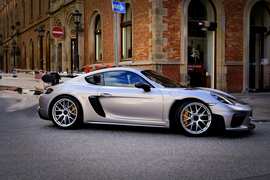
After four decades behind the wheel of the world’s most enduring and controversial sports car, the Porsche 911, I have experienced the good, the bad, and the downright exhilarating. From the brutal simplicity of the first turbocharged behemoths to the hyper-aerodynamic perfection of modern track weapons, the 911 has evolved more dramatically than any other vehicle on the road. But through every iteration—from the controversial shift to water-cooling to the relentless march of engine technology—Porsche has somehow kept the soul of its icon intact. Today, in 2025, the 911 remains one of the few cars I would actually spend my own money on. After literally hundreds of miles and countless laps, these five models stand out as the absolute pinnacles of the 911 legend.
The Originals: Tamed Vengeance and the Last of the Air-Cooled Dynasty
My 911 pilgrimage began in Australia with a white 1975 Carrera 3.0. It was a raw, unassisted machine—no power steering, no rear wing, just a raw 3.0-liter flat-six and a five-speed gearbox. It was fast, intoxicating, and deeply flawed. I remember comparing it to a contemporary 944 Turbo, a car that felt objectively superior in every way, offering more power and torque with far less effort. Yet, despite the 944’s competence, I was captivated. As I wrote then, the 911 was a car of “a different age” and “different values.” It demanded respect and understanding, and that emotional pull was undeniable.
The Beast: Porsche 930 (1975) – The Widowmaker Demystified
The legendary Porsche 930, the original 911 Turbo, was spoken of in hushed, reverent tones by veteran journalists. It was hailed as the ultimate test of driver skill—a binary monster where the switch from neutral to full boost could send an unprepared driver into a spin or off the road. It took me 35 years to finally get behind the wheel of one, and when I did, I discovered the truth behind the myth.
The specific car was one of the first 30 ever built, now a jewel in Porsche’s classic fleet. Hesitant at first, I took it easy, feeling the throttle response, testing the boost threshold. The engine was remarkably tractable at low RPMs, comfortable in traffic, but the legendary turbo lag was palpable. Once the tach needle crossed the 4,000 RPM mark, the 0.8 bar of boost kicked in, and it was a noticeable surge, but not the catastrophic blow to the chest I had anticipated. The key, I learned, was keeping the engine spinning above 4,000 RPM to keep the turbo energized and responsive. While the Turbo lag is undeniable by modern standards, it is manageable. Even today, this 911 is electrifying on the road. First gear hits 50 MPH, second pushes to 90 MPH, and third rockets past 130 MPH, allowing you to devour winding roads using just two gears. With a mere 256 horsepower and a curb weight of just 2,513 pounds, the 911 Turbo performance is stunning. Five decades later, its raw engine performance still feels otherworldly.
The Perfected Art: Porsche 993 (1996) – The Farewell to Air-Cooling
For the purest, the 993-generation Porsche 911 marks the end of the true line—the last air-cooled iteration. Driving it feels like touching history, a visceral connection to the snarling metallic clatter of the air-cooled flat-six that defined the 911 for decades. But in 1994, when I first drove it, the 993 wasn’t a relic; it was the 911 of the future, a masterclass in physics and engineering.
While the 993 front end still demanded the careful loading of weight on corner entry, and the rear end danced through rougher turns, the synergy between the front and rear was vastly improved. The 911 kinematics were transformed by a new rear suspension that replaced the decades-old semi-trailing arms with a sophisticated multilink setup. This provided slight initial toe-out on corner entry and progressive toe-in as cornering forces increased, dramatically reducing the dreaded camber change that had plagued 911s since 1963. This revolutionary 911 suspension system was combined with a new six-speed manual transmission and steering that was 16% quicker (2.5 turns lock-to-lock), making the front end feel razor-sharp. The 3.6-liter flat-six benefited from lighter internals, Bosch Motronic 2.0 engine management, and a dual exhaust, resulting in a higher power peak. Compared to its predecessor, the 964, the 993 was a revelation, not just in engineering but in design. Under Ulrich Bez and Harm Lagaay, the exterior was smoothed, correcting visual imbalances, and the interior was decluttered and modernized. The 993 generation was a faster, more forgiving, and infinitely more desirable 911.
The Modern Era: Saving the Brand and Redefining Performance
The 1990s were a critical turning point for Porsche. The brand was losing its identity, and the 911 was facing extinction. It was the 996 that stepped in to save the day, ushering in an era of engineering brilliance and commercial viability. Then came the era of the turbocharger, fundamentally changing how the 911 delivered power, and finally, the arrival of the ultimate track weapon, the GT3 RS.
The Rescuer: Porsche 996 (1996) – A Heretical Hero
Porsche’s decision to install a water-cooled flat-six engine in the 996-series 911 was, to the purists, the equivalent of Bob Dylan plugging in an electric guitar at the Newport Folk Festival. But the 996, the first complete redesign of the 911 in 34 years, was a hero car in my eyes. It was the 911 that saved Porsche from vanishing altogether.
Under the leadership of R&D chief Horst Marchart, the 996 was a masterstroke of engineering synergy. It shared 38% of its components with the all-new, lower-cost Boxster, a strategy iconoclastic boss Wendelin Weideking knew was essential to maintain dealer revenue while phasing out older models. As designer Harm Lagaay famously quipped after the unveiling, “We did two cars for the price of one-and-a-half.” While the media focused on the water-cooling and the Boxster connection, the 996’s real triumph lay in its transformation of production efficiency. Building a 993 took 130 hours; the 996 took just 60 hours to build. This was the modern 911—more spacious, packed with late 20th-century features, but still unmistakably a 911. Most importantly, it still drove like a 911—only better. There was a new layer of sophistication, but the 996 retained the addictive tactility and urgent responsiveness that makes the 911 unique. Alongside the original Boxster, it pulled Porsche back from the brink of bankruptcy.
The Purest Joy: Porsche 991.2 Carrera (2017) – The Benchmark of Feel
Of all the 911s I have ever driven, it was the base model 991.2 Carrera that truly captured my heart. The feedback from my colleagues who drove it was unanimous: this was something special. Most press fleets are loaded with high-spec, optional-heavy vehicles, presumably because automotive PR departments think we are impressed by such things. So, Porsche Cars North America’s decision to include a standard 911 Carrera among the 991.2 fleet for our 2017 MotorTrend Car of the Year testing seemed risky. In truth, it was genius.
The 991.2 introduced a new 3.4-liter turbocharged engine, offering 370 hp in the base model or 420 hp in the Carrera S. Even with the standard 370 hp tune, it delivered a massive torque curve and impressive fuel efficiency. But what really stunned me was the chassis. Even on the standard 911 wheel/tire combo, the suspension was staggeringly communicative and easy to balance. Visually, the 991.2 was a subtle refresh of the larger 991.1, a masterful execution of classic 911 proportions, looking both modern and beautiful. The interior featured a new infotainment system that was both stunning and user-friendly.
Porsche’s PDK dual-clutch automatic remains the benchmark for smooth, precise shifts, but the seven-speed manual on the base no-frills 911 was a revelation. It had a slick, rifle-bolt action that reignited my love for driving. MotorTrend’s testing director, Kim Reynolds, perfectly summarized the Carrera

 The Pantheon of the Rear-Engine Icon: 40 Years of Driving the World’s Most Legendary Sports Car
After four decades behind the wheel of the world’s most enduring and controversial sports car, the Porsche 911, I have experienced the good, the bad, and the downright exhilarating. From the brutal simplicity of the first turbocharged behemoths to the hyper-aerodynamic perfection of modern track weapons, the 911 has evolved more dramatically than any other vehicle on the road. But through every iteration—from the controversial shift to water-cooling to the relentless march of engine technology—Porsche has somehow kept the soul of its icon intact. Today, in 2025, the 911 remains one of the few cars I would actually spend my own money on. After literally hundreds of miles and countless laps, these five models stand out as the absolute pinnacles of the 911 legend.
The Originals: Tamed Vengeance and the Last of the Air-Cooled Dynasty
The Pantheon of the Rear-Engine Icon: 40 Years of Driving the World’s Most Legendary Sports Car
After four decades behind the wheel of the world’s most enduring and controversial sports car, the Porsche 911, I have experienced the good, the bad, and the downright exhilarating. From the brutal simplicity of the first turbocharged behemoths to the hyper-aerodynamic perfection of modern track weapons, the 911 has evolved more dramatically than any other vehicle on the road. But through every iteration—from the controversial shift to water-cooling to the relentless march of engine technology—Porsche has somehow kept the soul of its icon intact. Today, in 2025, the 911 remains one of the few cars I would actually spend my own money on. After literally hundreds of miles and countless laps, these five models stand out as the absolute pinnacles of the 911 legend.
The Originals: Tamed Vengeance and the Last of the Air-Cooled Dynasty