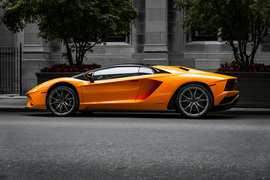
The 21C VMax: An Exhilarating Masterpiece from Czinger
For years, the automotive world has watched the Southern California startup Czinger with a mixture of intrigue and anticipation. They’ve built a reputation for pushing the boundaries of what’s possible, blending advanced engineering with futuristic design to create vehicles that defy convention. Finally, the opportunity arose to experience their creation firsthand: the Czinger 21C VMax.
This wasn’t just a test drive; it was a multi-day journey into the heart of automotive innovation. While the track performance of the 21C is already a matter of record, the true test lay in experiencing the center-steer, tandem two-seater in a real-world scenario. What does a 1,250-horsepower, 3D-printed hypercar feel like when faced with the unpredictable reality of a 500-mile road rally? The answer, as it turns out, is something akin to pure madness—in the best possible way.
Factory Fresh: A Glimpse into the Future
Getting behind the wheel of a Czinger vehicle is an experience unlike any other. As you approach the factory, located in Southern California, you realize that this is more than just a car manufacturer; it is a technology company at its core. The parent company, Divergent Technologies, utilizes artificial intelligence and massive 3D printers to create incredibly lightweight and strong mechanical components. In fact, you might even need to show your U.S. passport to enter the facility, as Divergent supplies parts to the Department of Defense.
During my tour, led by CEO Lukas Czinger, I witnessed firsthand the advanced technology that powers these vehicles. The 3D printing process, where lasers fuse powdered aluminum into intricate structures, felt like peering into the future. One particular printer, significantly larger than the others, had me imagining a future where cars are constructed like bird skeletons, optimized for strength and minimum weight.
Lukas Czinger explains that Divergent’s technology has reached what is known as “Pareto optimal”—a point where any further change, whether adding or subtracting weight, results in a negative outcome. To illustrate this, imagine engineers designing a remote reservoir mount for the car’s rear suspension. They specify a target space and the forces the component must withstand. The software then iterates hundreds of thousands of designs, searching for the optimal shape that balances these constraints. This process mimics evolutionary biology but on an accelerated timeline.
Beyond the Department of Defense, nine automotive OEMs utilize Divergent’s 3D printing technology. While Aston Martin, Bugatti, and McLaren publicly admit to using their components, it’s highly likely that others, like the Ferrari F80, use similar technology as well. The level of innovation at Czinger is truly remarkable.
Under the Carbon Fiber
Czinger produces two versions of what is essentially the same car: the track-focused 21C, named for the 21st century, and the wingless VMax with its extended tail. For the inaugural Velocity Tour, a 500-mile road rally through Central and Northern California’s wine country, I found myself behind the wheel of a sleek silver VMax.
I use the term “piloting” deliberately because the cabin feels less like a car interior and more like a jet fighter canopy. Czinger describes the experience as feeling like you’re in a jet fighter, and while I haven’t flown one, I have had the privilege of riding in an Extra 330LT stunt plane. There’s a distinct similarity between the two: glass extends less than a foot away from both sides of your head, offering unparalleled visibility.
The visibility, however, comes at the cost of an almost ridiculous entry and exit process. You must sit with your legs extended out on the massive sill, then pull your knees up and spin on your butt as you tuck your feet into the footwell. Finally, you slide your head under the roof—a truly unique way to get in and out of a car.
One reason for the large sills is the battery placement. The 21C VMax is a hybrid hypercar, with each sill housing 2.2 kWh of battery power, totaling 4.4 kWh. This is not a plug-in hybrid, as the motor powered by the mid-mounted V-8 engine keeps the pack charged. These batteries can deliver 500 horsepower to the front axle, which features one motor per wheel.
The combustion engine is a Czinger-designed 2.9-liter twin-turbo V-8 that produces 750 horsepower on California’s 91-octane premium gasoline. However, when fueled with 100-octane race fuel, the horsepower increases to 850. The engine is also capable of running on ethanol, which unlocks even more power, though Czinger has yet to release those figures (we predict a 10 percent increase).
The gasoline engine powers the rear wheels through an Xtrac single-clutch automated semi-sequential gearbox. This is similar to the Xtrac seven-speed gearbox used in the Pagani Utopia, but Czinger has gone a step further. They not only 3D-print the transmission case but also use small 48-volt electric motors to execute shifts more quickly at lower speeds. This eliminates the “drunken” surge that plagues other automated single-clutch gearboxes at low RPMs. The twin-barrel actuators work flawlessly, as I was thankful to discover. Navigating through parking lots and city streets felt almost normal—a testament to Czinger’s engineering prowess.
Track Time
While the low-speed refinement was impressive, the presence of a professional driver sitting behind me for the first day was a stark reminder of the VMax’s capabilities. As is common with Bugatti and Pagani, Czinger assigned a pro driver (Evan Jacobs) to ensure I didn’t drive the $2.5 million car off a cliff. Thankfully, later that night, Jacobs assured the Czinger team that I was no threat and could drive solo for the remainder of the rally.
We stopped by Laguna Seca for some parade laps, but non-Czinger employees are not allowed to drive the VMax on racetracks, even at the slow pace allowed during the rally. However, as I have learned the hard way, even if you can’t drive, always go for the ride. I squeezed into the bizarre rear seat, and the first thing I noticed was the lack of legroom for those with larger calves or feet. My XXL calves were wedged between the carbon-fiber tub and the carbon-fiber seat, and my feet fit poorly in the footwell. However, the side visibility was incredible—a novel experience that reminded me of the stunt plane.
Jacobs and I convinced the Skip Barber Racing School staff to let him take the VMax for a couple of “6/10ths” hot laps. The most impressive hot lap I’ve ever experienced was riding shotgun in an Aston Martin Valkyrie LMH race car, where I could feel the blood pooling in my extremities under heavy braking. The Czinger VMax now holds second place on that list, and remember, Jacobs wasn’t pushing the car to its limits. Even at less than full tilt and without the high-downforce rear wing, it was easy to understand how the Czinger 21C achieved what the brand calls the “California Gold Rush.”
This achievement involved setting five production car track records—at Thunder Hill, Sonoma Raceway, Laguna Seca, Willow Springs, and the Thermal Club—in just five days, while driving from each track to the next. Czinger later returned to Laguna Seca to not only beat its own record but to reclaim the title from the Koenigsegg Jesko Sadair’s Spear, a track-special Koenigsegg. That lap time, a mind-bending 1 minute, 22.30 seconds, is quicker than the fastest MotoAmerica Superbike lap ever recorded at Laguna—a 1:22.56.
Czinger claims a vehicle weight of approximately 3,600 pounds, which is incredibly light for a 1,250-horsepower hybrid hypercar. For context, the Ferrari SF90 Stradale Assetto Fiorano—the highest-performance version of a three-motor, twin-turbo V-8 PHEV that only produces 986 hp—weighs 3,839 pounds. The new Lamborghini Temerario, another three-motor, twin-turbo V-8 (producing less power, but the comparison is valid), pushes past the 4,000-pound mark at 4,185 pounds.
If Czinger’s weight claims prove accurate, they have managed to outperform two Italian legends with their first production car. This is a remarkable feat, especially considering that Southern California isn’t exactly known for its supercar building expertise. In other words, Los Angeles is no Modena.
On the Road
The route chosen for the rally consisted mostly of true back roads: tight, winding, and weathered pavement—not the ideal conditions for a hypercar road trip. There was a lot of following the pack, navigating to lunch and coffee stops, and keeping pace with the camera car. At the time, I might have felt a bit disappointed, but in retrospect, the experience was invaluable. It reflected what most owners will experience when living with a Czinger.
To my surprise, the VMax behaved mostly like any other hyper-exotic. Take everything out of your pockets, as the seats are tight. Drink your water before you get in, as there are no cupholders. Prepare yourself for the attention: almost everyone else on the road,

 The 21C VMax: An Exhilarating Masterpiece from Czinger
For years, the automotive world has watched the Southern California startup Czinger with a mixture of intrigue and anticipation. They’ve built a reputation for pushing the boundaries of what’s possible, blending advanced engineering with futuristic design to create vehicles that defy convention. Finally, the opportunity arose to experience their creation firsthand: the Czinger 21C VMax.
This wasn’t just a test drive; it was a multi-day journey into the heart of automotive innovation. While the track performance of the 21C is already a matter of record, the true test lay in experiencing the center-steer, tandem two-seater in a real-world scenario. What does a 1,250-horsepower, 3D-printed hypercar feel like when faced with the unpredictable reality of a 500-mile road rally? The answer, as it turns out, is something akin to pure madness—in the best possible way.
Factory Fresh: A Glimpse into the Future
Getting behind the wheel of a Czinger vehicle is an experience unlike any other. As you approach the factory, located in Southern California, you realize that this is more than just a car manufacturer; it is a technology company at its core. The parent company, Divergent Technologies, utilizes artificial intelligence and massive 3D printers to create incredibly lightweight and strong mechanical components. In fact, you might even need to show your U.S. passport to enter the facility, as Divergent supplies parts to the Department of Defense.
The 21C VMax: An Exhilarating Masterpiece from Czinger
For years, the automotive world has watched the Southern California startup Czinger with a mixture of intrigue and anticipation. They’ve built a reputation for pushing the boundaries of what’s possible, blending advanced engineering with futuristic design to create vehicles that defy convention. Finally, the opportunity arose to experience their creation firsthand: the Czinger 21C VMax.
This wasn’t just a test drive; it was a multi-day journey into the heart of automotive innovation. While the track performance of the 21C is already a matter of record, the true test lay in experiencing the center-steer, tandem two-seater in a real-world scenario. What does a 1,250-horsepower, 3D-printed hypercar feel like when faced with the unpredictable reality of a 500-mile road rally? The answer, as it turns out, is something akin to pure madness—in the best possible way.
Factory Fresh: A Glimpse into the Future
Getting behind the wheel of a Czinger vehicle is an experience unlike any other. As you approach the factory, located in Southern California, you realize that this is more than just a car manufacturer; it is a technology company at its core. The parent company, Divergent Technologies, utilizes artificial intelligence and massive 3D printers to create incredibly lightweight and strong mechanical components. In fact, you might even need to show your U.S. passport to enter the facility, as Divergent supplies parts to the Department of Defense.