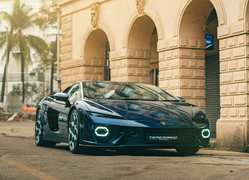
Czinger 21C VMax: The Extreme Future of Automotive Engineering
When a car arrives that pushes the boundaries of what we thought possible in performance, it stops the entire industry in its tracks. The Czinger 21C VMax is exactly that kind of vehicle. Forget everything you think you know about hypercars; this isn’t just an evolution—it’s a technological singularity disguised as a road-legal machine. From the brain-melting 3D-printed components to the center-mounted steering, this car is an audacious statement about where automotive engineering is heading.
We recently had the rare opportunity to spend significant time behind the yoke of the 21C VMax, taking it on a rigorous 500-mile road rally through the breathtaking landscapes of Central and Northern California. The goal was simple: to see if this aerospace-inspired demon can handle the demands of real-world driving, not just lap times. And while the track stories are legendary, we wanted to know what it feels like to live with a $2.5 million marvel of hyper-engineered insanity.
A Visit to the Cutting Edge: Divergent Technologies
Before we even touch the throttle, we need to talk about where the Czinger 21C VMax comes from. The company is the brainchild of Divergent Technologies, a Southern California startup that isn’t just building cars—they are fundamentally changing how they are made. To even enter their facility, you need to show your U.S. passport, and you soon find out why: Divergent is a major supplier to the Department of Defense, building advanced, lightweight structural components for military applications.
During a private tour led by CEO Lukas Czinger, we were given a jaw-dropping glimpse into the future. Inside the manufacturing bays, massive industrial 3D printers hummed to life, firing lasers into aluminum powder to create complex, organic shapes that resemble nothing found in a traditional engine bay. It was a surreal experience, watching intricate mechanical parts materialize atom by atom.
Lukas explained that this process is driven by what he calls “Pareto optimality.” The goal is to find the perfect balance of strength and weight where any single gram added or removed actively harms performance. Take a simple component like a suspension reservoir mounting bracket. Instead of a standard engineering design, the software iterates through hundreds of thousands of variations, ultimately producing a lattice-like structure that is lighter, stronger, and far more efficient than anything human hands could have designed.
This isn’t just theoretical technology. Nine major automotive OEMs already utilize Divergent’s additive manufacturing for crucial components. While Aston Martin, Bugatti, and McLaren have publicly confirmed their use, industry insiders widely speculate that even titans like Ferrari are employing Divergent technology, possibly in the stunning F80 supercar. Czinger is at the vanguard of a manufacturing revolution, building the chassis and components of the world’s most advanced vehicles.
The Evolution of the 21C: VMax vs. Track Dominance
Czinger builds two distinct versions of their revolutionary platform. The standard 21C is a high-downforce, wing-equipped monster, optimized for maximum aerodynamic grip. But for our inaugural Velocity Tour, we were handed the keys to the Czinger 21C VMax. This is the road-going version: wingless, long-tailed, and designed to be driven—even on public roads.
Piloting a Czinger is an experience unlike any other. The cockpit is more akin to a fighter jet canopy than a car cabin. Visibility is utterly panoramic, giving you an incredible sense of what a stunt plane must feel like from the inside. But that canopy comes with a significant challenge: getting in and out. The sills are massive—and we’ll get to why in a moment—forcing you to awkwardly maneuver your legs over the side, tuck them inside, and slide your head under the roof. It’s a ridiculous process, but worth it for the view.
One of the primary reasons for the sheer width of the sills is what lies within them: 1,250 horsepower of hybrid insanity.
Under the Carbon Fiber: The Hybrid Powerhouse
The Czinger 21C VMax is not just a car; it is a hybrid hypercar built to perform at the absolute extreme of the technological spectrum. Each sill is packed with 4.4 kWh worth of battery capacity, feeding two high-output electric motors that power the front axle. These motors provide instant, blistering torque to launch the car from a standstill.
But the heart of the beast is the Czinger-designed 2.9-liter twin-turbo V8 engine. On standard California 91-octane fuel, this powerhouse delivers a massive 750 horsepower. Step up to 100-octane race fuel, and the output jumps to 850 horsepower. Czinger has hinted that the engine is also capable of running on ethanol, which could potentially push the total output even higher, though those figures remain under wraps.
For the rear wheels, Czinger employs an Xtrac single-clutch automated semi-sequential gearbox. At first glance, this sounds identical to the renowned seven-speed transmission found in Pagani’s Utopia. However, Czinger doesn’t just print the gearbox casing; they utilize small 48-volt electric actuators to execute shifts at lower speeds with unprecedented smoothness. This innovation eliminates the typical lurching and surging common in automated single-clutch transmissions, ensuring a refined experience even at parking lot speeds. As we discovered at gas stations and restaurants, the VMax remains remarkably civilized, a testament to the engineering brilliance behind this machine.
Track Day: Witnessing the “California Gold Rush”
For a car as extreme as the 21C VMax, we would typically expect a chaperone. At big-dollar hypercar events, it’s common to have a professional driver sit beside you to ensure the $2.5 million machine doesn’t end up in the gravel trap. For our initial leg, we had Evan Jacobs of the Czinger team riding along to make sure we didn’t wreck their masterpiece. Thankfully, later that night, Jacobs gave the green light, and we were allowed to pilot the VMax solo for the remainder of the rally.
We stopped by Laguna Seca for a few parade laps, but unfortunately, as is standard practice, only Czinger employees are allowed to drive the VMax on the track, even at restricted rally speeds.
So, I did what any sane automotive journalist would do: I scrambled into the bizarre rear seat. It’s important to note that for passengers, legroom is severely limited. My XXL calves were wedged tightly between the carbon tub and the seat, and my feet barely fit. However, the visibility from the rear is nothing short of stunning. Again, it felt like a jet fighter, offering an incredible new perspective on track driving—something I’ve done thousands of times.
Later, Jacobs convinced the Skip Barber Racing School staff (whose track day we had essentially crashed) to let him take the VMax out for a few “6/10ths” hot laps. The benchmark for me is riding shotgun in an Aston Martin Valkyrie LMH race car, where I could feel the blood pooling in my extremities under hard braking.
The Czinger VMax is now a very close second. Even at a fraction of its potential and without the aid of the big-downforce rear wing, it was easy to understand how the standard 21C achieved what Czinger calls the “California Gold Rush.” The company set a staggering five production car track records—at Thunder Hill, Sonoma Raceway, Laguna Seca, Willow Springs, and the Thermal Club—all within the same five days. And they did it by driving from track to track, proving the VMax’s reliability.
Later, Czinger returned to Laguna Seca to not only beat its own record but to reclaim the throne from a track-special Koenigsegg Jesko Sadair’s Spear. The resulting lap time—a mind-bending 1 minute, 22.30 seconds—is faster than the fastest MotoAmerica Superbike lap ever recorded at Laguna, which clocks in at 1:22.56.
Weight is the other critical factor here. Czinger claims a vehicle weight of approximately 3,600 pounds. For a 1,250-horsepower hybrid, this is phenomenal. To put that into perspective, the Ferrari SF90 Stradale Asseto Fiorano—the highest-performance version of a three-motor, twin-turbo V8 PHEV with “only” 986 hp—weighs 3,839 pounds. The new Lamborghini Temerario, another three-motor, twin-turbo V8 with less power, pushes past the two-ton mark at a chunky 4,185 pounds.
The SF90 and Temerario are the two quickest gasoline-powered cars MotorTrend has ever tested (the Ferrari for 0–60 mph, the Lambo for the quarter mile). If Czinger’s weight claims hold true, this startup has managed to beat two Italian legends on the track. It’s remarkable on its own, but even more so considering that while Southern California is known for many things, it doesn’t exactly have Modena’s reputation for supercar engineering expertise.
The Road Less Traveled: Real-World Driving
The Velocity Tour route was intentionally challenging, consisting mostly of true back roads. Tight, winding, miserable asphalt—not the stuff dream hypercar trips are made of. Plus, there was a lot of following the pack, navigating traffic, and keeping up with the camera car. At the time, I was

 Czinger 21C VMax: The Extreme Future of Automotive Engineering
When a car arrives that pushes the boundaries of what we thought possible in performance, it stops the entire industry in its tracks. The Czinger 21C VMax is exactly that kind of vehicle. Forget everything you think you know about hypercars; this isn’t just an evolution—it’s a technological singularity disguised as a road-legal machine. From the brain-melting 3D-printed components to the center-mounted steering, this car is an audacious statement about where automotive engineering is heading.
We recently had the rare opportunity to spend significant time behind the yoke of the 21C VMax, taking it on a rigorous 500-mile road rally through the breathtaking landscapes of Central and Northern California. The goal was simple: to see if this aerospace-inspired demon can handle the demands of real-world driving, not just lap times. And while the track stories are legendary, we wanted to know what it feels like to live with a $2.5 million marvel of hyper-engineered insanity.
A Visit to the Cutting Edge: Divergent Technologies
Before we even touch the throttle, we need to talk about where the Czinger 21C VMax comes from. The company is the brainchild of Divergent Technologies, a Southern California startup that isn’t just building cars—they are fundamentally changing how they are made. To even enter their facility, you need to show your U.S. passport, and you soon find out why: Divergent is a major supplier to the Department of Defense, building advanced, lightweight structural components for military applications.
Czinger 21C VMax: The Extreme Future of Automotive Engineering
When a car arrives that pushes the boundaries of what we thought possible in performance, it stops the entire industry in its tracks. The Czinger 21C VMax is exactly that kind of vehicle. Forget everything you think you know about hypercars; this isn’t just an evolution—it’s a technological singularity disguised as a road-legal machine. From the brain-melting 3D-printed components to the center-mounted steering, this car is an audacious statement about where automotive engineering is heading.
We recently had the rare opportunity to spend significant time behind the yoke of the 21C VMax, taking it on a rigorous 500-mile road rally through the breathtaking landscapes of Central and Northern California. The goal was simple: to see if this aerospace-inspired demon can handle the demands of real-world driving, not just lap times. And while the track stories are legendary, we wanted to know what it feels like to live with a $2.5 million marvel of hyper-engineered insanity.
A Visit to the Cutting Edge: Divergent Technologies
Before we even touch the throttle, we need to talk about where the Czinger 21C VMax comes from. The company is the brainchild of Divergent Technologies, a Southern California startup that isn’t just building cars—they are fundamentally changing how they are made. To even enter their facility, you need to show your U.S. passport, and you soon find out why: Divergent is a major supplier to the Department of Defense, building advanced, lightweight structural components for military applications.