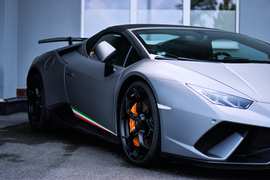
Czinger 21C VMax: Hypercar Performance Redefined by Cutting-Edge Additive Manufacturing
For years, industry insiders and automotive media have anticipated the arrival of Czinger’s revolutionary hypercar, the 21C VMax. Now that this groundbreaking machine has hit the streets, we are left to contemplate whether its performance is a testament to automotive innovation or a manifestation of pure engineering recklessness. After a grueling three-day road rally through the winding roads of California, the overwhelming impression is one of exhilarating, almost terrifying, power wrapped in a cocoon of advanced additive manufacturing technology.
While there is a definitive case to be made for its track dominance—the 21C has already shattered records across five iconic Californian circuits—the real question is: what is this center-steer, tandem two-seater like when pushed to the absolute limit of its performance envelope? More importantly, how does it handle the prosaic realities of a 500-mile road trip, involving gas stations, winding roads, and everyday driving scenarios? This journey through the landscape of the 21C VMax reveals not just a car, but a vision of the future of automotive design, underpinned by the unique capabilities of its parent company, Divergent Technologies.
Factory Fresh: A Glimpse into the Future of Manufacturing
Visiting the Czinger facility is an experience unlike any other in the automotive world. As a prerequisite for entry, a U.S. passport is required, a detail that immediately sets the stage for the unique nature of the company. Divergent Technologies, the parent company behind Czinger, is at the forefront of additive manufacturing. They employ iterative artificial intelligence and advanced 3D printers to design and produce components that are incredibly lightweight and robust. This specialization extends beyond the automotive sector; Divergent supplies parts to the Department of Defense and other defense suppliers. While touring the facility, military components were clearly visible, including one that strongly resembled a rocket.
Lukas Czinger, the young CEO of both Divergent and Czinger, provided a detailed tour of the operation. The experience was captivating, particularly the glimpse into one of the massive 3D printers. It felt like witnessing the future unfold, as lasers fused powdered aluminum into intricate automotive parts that resembled bird bones.
Czinger explains that Divergent’s technology achieves a state they call “Pareto optimal,” the point beyond which any minute change in weight, either addition or subtraction, results in a negative outcome for the vehicle’s performance. For example, an engineer may need a bracket to hold a rear suspension damper’s remote reservoir within a specific space while withstanding the highest possible forces. Using these parameters, the AI software iterates through hundreds of thousands of potential designs, ultimately finding the most structurally efficient shape. This process is akin to the principles of evolution being condensed and accelerated to an almost unbelievable speed.
Beyond the Department of Defense, nine different automotive OEMs utilize Divergent’s 3D-printed parts. While Aston Martin (DBR22 Roadster), Bugatti (Tourbillon), and McLaren (W1) have publicly acknowledged their partnerships, many suspect other manufacturers, like Ferrari, utilize their technology for components such as control arms.
Under the Carbon Fiber: A Deep Dive into the 21C VMax
Czinger produces two primary versions of what is essentially the same vehicle: the high-downforce, track-focused 21C, and the wingless, long-tailed VMax. Officially designated as the 21C VMax, the “21C” designation does not appear on the vehicle itself.
For the inaugural Velocity Tour—a 500-mile road rally through Northern California’s wine country—the author was assigned to pilot a silver VMax. The term “piloting” is used intentionally, as the cabin environment feels much more akin to a jet fighter’s canopy than a traditional car greenhouse. Czinger claims this is precisely the intention. While the author has never had the opportunity to ride in a fighter jet, the experience of being inside an Extra 330LT stunt plane offers a similar sensation. In essence, the side windows are positioned less than a foot away from both sides of the driver’s head.
The visibility afforded by this design is exceptional, even though the process of ingress and egress is somewhat ridiculous. The procedure involves: first, sitting with one’s legs extended out onto the wide sill, then pulling the knees up and rotating one’s body to swing the legs under the roof, and finally sliding the head under the canopy.
The necessity for such wide sills becomes apparent when one considers the contents housed within them: batteries. The 21C VMax is a hybrid hypercar, and each sill contains a 2.2-kWh battery (totaling 4.4 kWh). The car is not a plug-in hybrid; rather, a motor powered by the mid-mounted V-8 engine recharges the pack. These batteries are capable of delivering 500 horsepower to the front axle, which is driven by two independent motors, one per wheel.
The combustion engine is a Czinger-designed 2.9-liter twin-turbo V-8 producing 750 horsepower on the premium 91-octane gasoline typically available in California. When 100-octane racing fuel is used, the engine’s power output increases to 850 horsepower. The compact yet powerful engine is also capable of running on ethanol, which would produce even more power; however, Czinger has not yet released these figures. Industry speculation suggests a potential increase of 10%.
The gasoline engine powers the rear wheels through an Xtrac single-clutch automated semi-sequential gearbox. This transmission is similar to the Xtrac seven-speed unit used in the Pagani Utopia. However, Czinger not only 3D prints the gearbox casing but also utilizes small 48-volt electric motors to smooth out shifts at lower speeds. This innovative approach eliminates the characteristic lurching and surging that plague other automated single-clutch gearboxes during low-speed maneuvers. The twin-barrel actuators perform exactly as advertised in low-speed scenarios, a fact the author was grateful to discover. Maneuvering into gas stations, restaurants, and hotel parking lots felt almost routine. This technological achievement alone deserves significant commendation.
Track Time: Pushing the 21C VMax to Its Limits
The driving experience on the track was anything but routine, particularly due to the co-pilot assigned to the author for the duration of the rally. Following the typical practice for high-end hypercars such as those from Bugatti and Pagani, Czinger assigned a professional driver, Evan Jacobs, to ensure the $2.5 million vehicle was not driven off the road. Thankfully, Jacobs later assured the Czinger team that the driver posed no threat to the car and would be allowed to drive solo for the remainder of the rally.
The rally made a stop at Laguna Seca for parade laps, but due to a policy that prohibits non-Czinger employees from driving the VMax on racetracks, even at the extremely slow pace required for the rally participants, no testing was permitted.
As the author has learned through challenging experiences, even if one cannot drive the vehicle, the ride is still worth taking. Therefore, the author climbed into the rear seat. The initial observation is that the rear-seat experience is not ideal for individuals with large calves or feet. My XXL calves were pressed firmly between the carbon-fiber tub and the carbon-fiber seat, and my feet did not fit comfortably either.
However, the visibility through the side windows is remarkable. Again, the experience was reminiscent of a stunt plane, offering a uniquely novel perspective on driving around a track—an activity the author has performed over a thousand times.
This perspective became even more pronounced when Jacobs and the author convinced the Skip Barber Racing School staff (whose track day the rally had crashed) to allow him to take the VMax for a couple of “6/10ths” hot laps. The most impressive hot lap the author has ever experienced was riding shotgun in an Aston Martin Valkyrie LMH race car, where the braking forces caused blood to pool in the extremities. The Czinger 21C VMax has now earned the second position on that exclusive list. It is important to note that Jacobs did not attempt to push the car to its absolute limits.
Even at speeds well below the limit and without the high-downforce rear wing, it was easy to understand how the Czinger 21C achieved what the brand calls the “California Gold Rush.” This refers to the achievement of setting five production car track records—at Thunder Hill, Sonoma Raceway, Laguna Seca, Willow Springs, and The Thermal Club—in the span of five days, while also driving between each track. Later, Czinger returned to Laguna Seca to not only break its own record but to reclaim the title from a track-special Koenigsegg Jesko Sadair’s Spear. The lap time achieved was a staggering 1 minute, 22.30 seconds, which is faster than the fastest MotoAmerica Superbike lap ever recorded at Laguna, a 1:22.56.
Czinger claims a vehicle weight of approximately 3,600 pounds, which is remarkably light for a 1,250-horsepower hybrid vehicle. To provide some context, the Ferrari SF90 Stradale Asseto Fiorano—the highest-performance version of a three-motor, twin-turbo V-8 PHEV that produces only 986 horsepower—weighs 3,839 pounds. The new Lamborghini Temerario is another three-motor, twin-turbo V-8 (also producing less power, but the comparison remains valid) that pushes well past the two-

 Czinger 21C VMax: Hypercar Performance Redefined by Cutting-Edge Additive Manufacturing
For years, industry insiders and automotive media have anticipated the arrival of Czinger’s revolutionary hypercar, the 21C VMax. Now that this groundbreaking machine has hit the streets, we are left to contemplate whether its performance is a testament to automotive innovation or a manifestation of pure engineering recklessness. After a grueling three-day road rally through the winding roads of California, the overwhelming impression is one of exhilarating, almost terrifying, power wrapped in a cocoon of advanced additive manufacturing technology.
While there is a definitive case to be made for its track dominance—the 21C has already shattered records across five iconic Californian circuits—the real question is: what is this center-steer, tandem two-seater like when pushed to the absolute limit of its performance envelope? More importantly, how does it handle the prosaic realities of a 500-mile road trip, involving gas stations, winding roads, and everyday driving scenarios? This journey through the landscape of the 21C VMax reveals not just a car, but a vision of the future of automotive design, underpinned by the unique capabilities of its parent company, Divergent Technologies.
Factory Fresh: A Glimpse into the Future of Manufacturing
Czinger 21C VMax: Hypercar Performance Redefined by Cutting-Edge Additive Manufacturing
For years, industry insiders and automotive media have anticipated the arrival of Czinger’s revolutionary hypercar, the 21C VMax. Now that this groundbreaking machine has hit the streets, we are left to contemplate whether its performance is a testament to automotive innovation or a manifestation of pure engineering recklessness. After a grueling three-day road rally through the winding roads of California, the overwhelming impression is one of exhilarating, almost terrifying, power wrapped in a cocoon of advanced additive manufacturing technology.
While there is a definitive case to be made for its track dominance—the 21C has already shattered records across five iconic Californian circuits—the real question is: what is this center-steer, tandem two-seater like when pushed to the absolute limit of its performance envelope? More importantly, how does it handle the prosaic realities of a 500-mile road trip, involving gas stations, winding roads, and everyday driving scenarios? This journey through the landscape of the 21C VMax reveals not just a car, but a vision of the future of automotive design, underpinned by the unique capabilities of its parent company, Divergent Technologies.
Factory Fresh: A Glimpse into the Future of Manufacturing