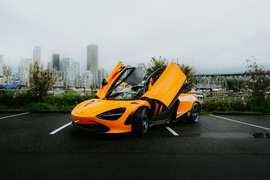
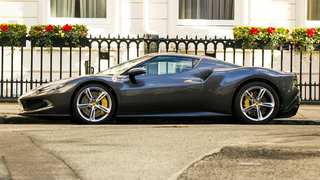
Czinger 21C VMax: The Limits of Automotive Insanity and the Future of Speed
The world of hypercars is defined by exclusivity, jaw-dropping performance, and a level of engineering that borders on the absurd. Manufacturers like Bugatti, Pagani, and Koenigsegg have built their empires on the promise of delivering the unimaginable. Yet, from the garages of Southern California, a company has emerged that threatens to redefine what “unimaginable” truly means. Czinger Vehicles, a subsidiary of the advanced manufacturing giant Divergent Technologies, isn’t just building another fast car; they are attempting to revolutionize the very concept of automotive engineering. Their flagship creation, the 21C VMax, is the physical manifestation of this ambition—a marriage of military-grade additive manufacturing, alien-tech hybrid powertrains, and performance that verges on physics-bending insanity.
Having closely followed the evolution of the automotive industry for over a decade, I’ve witnessed the industry’s slow migration toward electric propulsion, downsized combustion engines, and software-defined vehicle architectures. The Czinger 21C VMax represents the polar opposite of this trend. It is a statement of defiance, an assertion that the pursuit of ultimate performance requires shedding the constraints of traditional manufacturing and embracing radical technological innovation. This isn’t just a $2.5 million hypercar; it is a preview of a future where the lines between aircraft, space vehicles, and road cars begin to blur.
This report details my extensive experience with the Czinger 21C VMax, including a three-day road rally through Northern California, a tour of the unique Divergent Technologies factory, and extensive track time. It is an exploration of how this bizarre, beautiful, and baffling machine operates, what it feels like to experience it, and whether it represents the pinnacle of performance or simply automotive madness pushed to its absolute limit.
A Factory Frozen in Time
The journey into the world of Czinger begins not on a racetrack, but in a factory that feels suspended between the present and the distant future. To gain access to Divergent Technologies, the parent company of Czinger, one must present a U.S. passport. This is not for national security in the traditional sense, but because Divergent supplies cutting-edge 3D-printed components to the Department of Defense (DOD). While the specific military applications were strictly off-limits during my visit, a quick glimpse into one of the company’s production cells revealed how this unique specialization enables their automotive ambitions.
Inside one of the massive additive manufacturing printers, I witnessed more than a dozen lasers fusing powdered aluminum into intricate, structural geometries. This process, known as Directed Energy Deposition (DED), allows engineers to create parts that are significantly lighter and stronger than those produced through traditional machining. The engineering philosophy here is defined by the concept of “Pareto optimality”—the point at which any further reduction in weight or increase in strength becomes a net negative in terms of structural integrity.
Lukas Czinger, the young CEO of both Divergent and Czinger, explained that the software used in this process iterates through hundreds of thousands of designs to find the optimal shape for a specific performance target. Imagine a suspension damper remote reservoir: the software must account for the available space, the required load-bearing capacity, and the thermal dissipation needs, ultimately producing a shape that mimics the efficiency of a bird’s bone structure. It is evolution on fast-forward.
This advanced manufacturing capability isn’t limited to niche applications. Beyond their military contracts, Divergent supplies 3D-printed components to nine automotive Original Equipment Manufacturers (OEMs). While Aston Martin (DBR22 Roadster), Bugatti (Tourbillon), and McLaren (W1) publicly acknowledge their relationship, industry insiders suspect that even Ferrari’s new F80 utilizes these advanced structural elements. The ability to engineer and produce such complex parts in-house is the foundation upon which the Czinger hypercar is built.
The 21C Variants: Power Meets Aerodynamics
Czinger produces two primary variants of their flagship vehicle, which share the same fundamental architecture but are tailored for distinct purposes. The first is the Czinger 21C, a high-downforce, track-focused monster that boasts active aerodynamics and aggressive styling. The second is the 21C VMax, the model I tested, which features a long tail and wingless design, prioritizing top speed and long-distance touring over track performance.
For the inaugural Velocity Tour, a 500-mile road rally through California’s Central Valley and wine country, I had the privilege of piloting the VMax. As the name suggests, this car is all about maximizing velocity, a task perfectly suited to its unique configuration.
Entering the Machine: The Jet Fighter Cockpit
The interior experience of the Czinger 21C VMax is unlike anything else on the market. Czinger describes the cabin as being “like being in a jet fighter,” and this is not hyperbole. I have experienced the interior of a stunt plane, and the comparison is apt. The visibility is panoramic, with glass extending to the side of your head, but this comes at the cost of an equally extreme ingress and egress process.
To enter the car, you must first place your legs facing out, resting them on the massive carbon fiber sill. Then, you pull your knees toward your chin, pivot on your posterior, and tuck your feet into the narrow footwell. Finally, you slide your head under the canopy-like roof. It is a ballet of contortion that tests the limits of human flexibility.
One reason the sills are so substantial is that they house the battery packs. The 21C VMax is a hybrid hypercar, with each sill containing 2.2 kWh of battery power, totaling 4.4 kWh. This system is not plug-in capable; the batteries are charged exclusively by the mid-mounted internal combustion engine. These batteries provide 500 horsepower to the front axle, which features a motor for each wheel, giving the car all-wheel drive capability.
The combustion engine is a bespoke Czinger-designed 2.9-liter twin-turbo V-8. When powered by standard 91-octane California premium unleaded, the engine produces 750 horsepower. However, if you fill the tank with 100-octane race fuel, the output increases to 850 horsepower. Czinger has also indicated that the engine can run on ethanol, promising even higher power figures, although these remain unpublished.
The power is routed to the rear wheels through an Xtrac single-clutch automated semi-sequential gearbox. Similar to the Xtrac seven-speed unit found in the Pagani Utopia, the Czinger version benefits from additive 3D-printed transmission casings and the use of small 48-volt electric motors to facilitate lower-speed shifts. This innovation eliminates the common “lurching” or “drunken” sensation characteristic of automated single-clutch transmissions. During the rally, I was grateful to find that the dual-barrel actuators performed flawlessly at low speeds, making parking lot maneuvers and city driving surprisingly smooth.
Track Performance: Where the Insanity Begins
The initial plan for the rally was straightforward: drive from track to track, experiencing the 21C VMax in a variety of environments. However, as is often the case with hypercars of this caliber, access to the track is restricted. Czinger requires a professional driver (in my case, Evan Jacobs) to ride along for the first day to ensure the vehicle remains undamaged. Fortunately, by the end of the day, I had proven myself to be no threat to the $2.5 million machine, and was allowed to drive solo for the remainder of the tour.
We stopped at Laguna Seca, but non-Czinger employees are prohibited from driving the VMax on the track, even during low-speed parade laps. Nevertheless, I took advantage of the opportunity to ride along with Jacobs. The visibility from the rear seat is spectacular, offering a unique vantage point of the track that reminds one of a stunt plane. It is an odd but thrilling sensation, especially for someone who has witnessed thousands of track laps but rarely from the passenger seat of a road car.
Jacobs was kind enough to take the VMax out for a couple of “6/10ths” laps. The most awe-inspiring lap I have ever experienced was in the passenger seat of an Aston Martin Valkyrie LMH race car, feeling the extreme forces pull blood from my extremities during braking. The Czinger VMax is now a close second. It is essential to remember that Jacobs was not pushing the car to its absolute limit, and the VMax lacks the massive rear downforce wing of the standard 21C. Even at this tempered pace, it was easy to grasp how the 21C set five production car track records at iconic California circuits—Thunder Hill, Sonoma, Laguna Seca, Willow Springs, and The Thermal Club—in a single week.
Later, Czinger returned to Laguna Seca to set a new benchmark. They not only beat their own record but also reclaimed the top spot from Koenigsegg’s Jesko Sadair Spear. The time achieved was a staggering 1 minute, 22.30 seconds, a lap faster than the fastest MotoAmerica Superbike ever recorded at Laguna (1:22.56). This feat, accomplished in a hybrid road-going hypercar without a rear wing, is a testament to the raw performance potential of the Czinger platform.
Weight & Balance: Outpacing the Legends
Czinger claims a vehicle weight of approximately 3,600 pounds for the VMax, a remarkably light figure for a 1,250-horsepower

 Czinger 21C VMax: The Limits of Automotive Insanity and the Future of Speed
The world of hypercars is defined by exclusivity, jaw-dropping performance, and a level of engineering that borders on the absurd. Manufacturers like Bugatti, Pagani, and Koenigsegg have built their empires on the promise of delivering the unimaginable. Yet, from the garages of Southern California, a company has emerged that threatens to redefine what “unimaginable” truly means. Czinger Vehicles, a subsidiary of the advanced manufacturing giant Divergent Technologies, isn’t just building another fast car; they are attempting to revolutionize the very concept of automotive engineering. Their flagship creation, the 21C VMax, is the physical manifestation of this ambition—a marriage of military-grade additive manufacturing, alien-tech hybrid powertrains, and performance that verges on physics-bending insanity.
Having closely followed the evolution of the automotive industry for over a decade, I’ve witnessed the industry’s slow migration toward electric propulsion, downsized combustion engines, and software-defined vehicle architectures. The Czinger 21C VMax represents the polar opposite of this trend. It is a statement of defiance, an assertion that the pursuit of ultimate performance requires shedding the constraints of traditional manufacturing and embracing radical technological innovation. This isn’t just a $2.5 million hypercar; it is a preview of a future where the lines between aircraft, space vehicles, and road cars begin to blur.
This report details my extensive experience with the Czinger 21C VMax, including a three-day road rally through Northern California, a tour of the unique Divergent Technologies factory, and extensive track time. It is an exploration of how this bizarre, beautiful, and baffling machine operates, what it feels like to experience it, and whether it represents the pinnacle of performance or simply automotive madness pushed to its absolute limit.
A Factory Frozen in Time
Czinger 21C VMax: The Limits of Automotive Insanity and the Future of Speed
The world of hypercars is defined by exclusivity, jaw-dropping performance, and a level of engineering that borders on the absurd. Manufacturers like Bugatti, Pagani, and Koenigsegg have built their empires on the promise of delivering the unimaginable. Yet, from the garages of Southern California, a company has emerged that threatens to redefine what “unimaginable” truly means. Czinger Vehicles, a subsidiary of the advanced manufacturing giant Divergent Technologies, isn’t just building another fast car; they are attempting to revolutionize the very concept of automotive engineering. Their flagship creation, the 21C VMax, is the physical manifestation of this ambition—a marriage of military-grade additive manufacturing, alien-tech hybrid powertrains, and performance that verges on physics-bending insanity.
Having closely followed the evolution of the automotive industry for over a decade, I’ve witnessed the industry’s slow migration toward electric propulsion, downsized combustion engines, and software-defined vehicle architectures. The Czinger 21C VMax represents the polar opposite of this trend. It is a statement of defiance, an assertion that the pursuit of ultimate performance requires shedding the constraints of traditional manufacturing and embracing radical technological innovation. This isn’t just a $2.5 million hypercar; it is a preview of a future where the lines between aircraft, space vehicles, and road cars begin to blur.
This report details my extensive experience with the Czinger 21C VMax, including a three-day road rally through Northern California, a tour of the unique Divergent Technologies factory, and extensive track time. It is an exploration of how this bizarre, beautiful, and baffling machine operates, what it feels like to experience it, and whether it represents the pinnacle of performance or simply automotive madness pushed to its absolute limit.
A Factory Frozen in Time