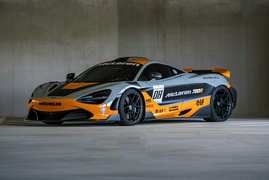
The Czinger 21C VMax: A Hypercar Engineered to Defy the Laws of Physics
For years, MotorTrend has been captivated by the promise of Czinger Vehicles—a company that stands at the intersection of artificial intelligence, 3D printing, and hypercar engineering. The prospect of sitting behind the yoke of a Czinger, a machine that looks less like a car and more like something beamed down from the future, has been a long-standing ambition. The opportunity finally arrived during a three-day road rally through the iconic vineyards of Central and Northern California. While the performance metrics of the 21C VMax are certainly worth exploring, the primary goal was to experience what this radical, seven-figure, 1,250-horsepower machine is like when put to the ultimate test on public roads.
This isn’t just another supercar story. Czinger represents a paradigm shift in automotive design and manufacturing. As we delve into the experience of driving the 21C VMax, we are essentially stepping into the future of automotive technology.
Factory Fresh: Entering the Alien Tech Lab
The journey began at the Divergent Technologies headquarters in Southern California. The name itself hints at the groundbreaking nature of the operation. Unlike traditional automotive companies, Divergent utilizes advanced AI and large-scale additive manufacturing to create mechanical components that are both incredibly light and phenomenally strong.
To enter the factory, I had to present my U.S. passport, a somewhat unusual requirement for an automotive manufacturer. The reason became clear as I toured the facility: Divergent is a supplier of 3D-printed parts to the Department of Defense, although the military hardware was covered during my visit. The highlight of the tour was a glimpse inside one of the massive 3D printers. The sight of lasers zapping powdered aluminum to create complex structures resembling bird bones was breathtaking—a true vision of the future of manufacturing.
Lukas Czinger, the young CEO of both Divergent and Czinger Vehicles, explained the philosophy behind their design process. They aim to reach “Pareto optimality,” the point where any additional mass would actually detract from performance. Imagine a target: a small space that needs to withstand immense force. Instead of relying on traditional design templates, the software iterates through hundreds of thousands of designs, creating the strongest and lightest shape possible. It’s like evolution on fast-forward. Beyond the DOD, nine automotive OEMs utilize Divergent’s technology. While only Aston Martin (DBR22), Bugatti (Tourbillon), and McLaren (W1) publicly acknowledge the partnership, the control arms of the Ferrari F80 certainly bear the hallmarks of 3D printing.
Under the Carbon Fiber Hood
Czinger builds two versions of essentially the same car. The 21C, named for the 21st century, is the track-focused, high-downforce variant. Then there is the 21C VMax, the wingless, long-tailed version designed for the road. For the inaugural Velocity Tour, a 500-mile road rally through California wine country, I was assigned a silver VMax.
The term “piloting” is used deliberately here, as the cabin feels more like a jet fighter canopy than a traditional car interior. Czinger likens it to being in a jet, and having experienced a ride in an Extra 330LT stunt plane, the similarity is striking. Glass is positioned less than a foot from either side of your head, offering incredible visibility. However, the process of entering and exiting the car is a challenge: you sit with your legs extended onto the massive sill, pull your knees up to your chest, spin on your buttocks, and tuck your feet into the footwell, then slide your head under the roof. It’s an ungainly maneuver that highlights the extreme engineering of the vehicle.
One reason for the large sills is that they are packed with batteries. The 21C VMax is a hybrid hypercar, with each sill containing 2.2 kWh of battery power for a total of 4.4 kWh. It’s not a plug-in hybrid, so a motor powered by the mid-mounted V8 keeps the battery charged. These batteries deliver 500 horsepower to the front axle, which features one motor per wheel. The combustion engine is a Czinger-designed 2.9-liter twin-turbo V8, producing 750 hp on standard 91-octane premium unleaded. Using 100-octane race fuel increases the horsepower to 850. The compact V8 can also run on ethanol, yielding even more power, though Czinger hasn’t released the exact figures yet—we predict a 10 percent increase.
The gasoline engine sends power to the rear wheels through an Xtrac single-clutch automated semi-sequential gearbox. This transmission is similar to the seven-speed Xtrac used by Pagani in the Utopia. However, Czinger not only 3D prints the transmission case but also employs small 48-volt electric motors to smooth out shifts at low speeds, eliminating the “drunken” lurching effect common in other automated single-clutch transmissions. The twin-barrel actuators perform as advertised, making low-speed maneuvers like pulling into gas stations, restaurants, and hotel parking lots feel almost normal.
Track Time: A Glimpse into the Future of Speed
The most bizarre part of the driving experience was the presence of a pro driver, Evan Jacobs, sitting in the rear seat for the first day. This is standard practice with some high-end hypercars (like Bugatti and Pagani) to ensure the driver doesn’t crash the million-dollar machine. Thankfully, Jacobs later assured the Czinger team that I was no threat and that I could drive solo for the remainder of the rally.
We stopped by Laguna Seca for some parade laps, but non-Czinger employees were not permitted to drive the VMax on the track, even at the restricted pace of the rally participants. However, even a ride-along in the unconventional rear seat was an incredible experience. If you have large calves or feet, the rear seat is uncomfortable—my large calves were pressed between the carbon-fiber tub and the seat, and my feet didn’t fit well either. Nonetheless, the visibility through the side glass was astounding, reinforcing the jet fighter analogy. It was a truly novel way to experience a track, something I’ve done thousands of times.
Jacobs convinced the Skip Barber Racing School staff (whose track day we crashed) to let him take the VMax for a couple of “6/10ths” hot laps. The most impressive hot lap I’ve ever experienced was in the Aston Martin Valkyrie LMH race car, where I felt blood pooling in my extremities during hard braking. The Czinger VMax is now a close second, and remember, Jacobs wasn’t even pushing the car to its limits. Even at less than maximum speed and without the big downforce wing, it was easy to understand how the 21C VMax achieved the California Gold Rush.
The 21C VMax holds five production car track records—at Thunder Hill, Sonoma Raceway, Laguna Seca, Willow Springs, and the Thermal Club—all set in five days, driving between each track. Czinger later returned to Laguna Seca to not only break its own record but to reclaim the throne from the Koenigsegg Jesko Sadair’s Spear. The lap time, a staggering 1 minute, 22.30 seconds, is faster than the fastest MotoAmerica Superbike lap ever recorded at Laguna (1:22.56).
Czinger claims a vehicle weight of approximately 3,600 pounds, which is remarkably light for a 1,250-hp hybrid. For context, the Ferrari SF90 Stradale Assetto Fiorano (the highest-performance version of a three-motor V8 PHEV with 986 hp) weighs 3,839 pounds. The new Lamborghini Temerario (another three-motor, twin-turbo V8 with less power) weighs over two tons at 4,185 pounds.
On the Road: Navigating the Winding Vineyards
The chosen route for the rally consisted mostly of narrow, winding roads with rough pavement—far from the ideal asphalt for a hypercar dream trip. There was also a lot of following the pack, navigating to lunch and coffee stops, and keeping pace with the camera car. While I was slightly disappointed at the time, in retrospect, the experience provided a realistic simulation of what most owners will experience with a Czinger.
To my surprise, the 21C VMax felt mostly like any other hyper-exotic. Remove everything from your pockets before you get in—the seats are tight. Drink your water beforehand; there are no cup holders. Prepare yourself for the constant attention of other drivers, especially males aged 16 to 24, who will undoubtedly stare, follow, wave, and rev their engines at you. Despite the engineering marvel under the hood, the Czinger rides much better than I anticipated; the team deserves applause for not making it overly stiff. Even the air conditioning works well.
If there’s one complaint about the “normal driving” experience, it’s the noise level in the cabin. This isn’t the exotic sound of the V8, but rather a lack of sound deadening. While this makes sense for a track-focused car, it’s an oversight in a road car like the VMax, becoming particularly annoying during long drives. Yes, weight is the enemy of performance, but how much does sound-deadening foam weigh?

 The Czinger 21C VMax: A Hypercar Engineered to Defy the Laws of Physics
For years, MotorTrend has been captivated by the promise of Czinger Vehicles—a company that stands at the intersection of artificial intelligence, 3D printing, and hypercar engineering. The prospect of sitting behind the yoke of a Czinger, a machine that looks less like a car and more like something beamed down from the future, has been a long-standing ambition. The opportunity finally arrived during a three-day road rally through the iconic vineyards of Central and Northern California. While the performance metrics of the 21C VMax are certainly worth exploring, the primary goal was to experience what this radical, seven-figure, 1,250-horsepower machine is like when put to the ultimate test on public roads.
This isn’t just another supercar story. Czinger represents a paradigm shift in automotive design and manufacturing. As we delve into the experience of driving the 21C VMax, we are essentially stepping into the future of automotive technology.
Factory Fresh: Entering the Alien Tech Lab
The Czinger 21C VMax: A Hypercar Engineered to Defy the Laws of Physics
For years, MotorTrend has been captivated by the promise of Czinger Vehicles—a company that stands at the intersection of artificial intelligence, 3D printing, and hypercar engineering. The prospect of sitting behind the yoke of a Czinger, a machine that looks less like a car and more like something beamed down from the future, has been a long-standing ambition. The opportunity finally arrived during a three-day road rally through the iconic vineyards of Central and Northern California. While the performance metrics of the 21C VMax are certainly worth exploring, the primary goal was to experience what this radical, seven-figure, 1,250-horsepower machine is like when put to the ultimate test on public roads.
This isn’t just another supercar story. Czinger represents a paradigm shift in automotive design and manufacturing. As we delve into the experience of driving the 21C VMax, we are essentially stepping into the future of automotive technology.
Factory Fresh: Entering the Alien Tech Lab