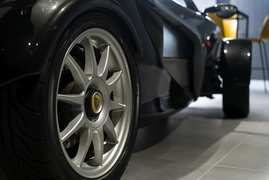
The Czinger 21C VMax: Pure Automotive Madness Redefined
For years, the automotive world has anticipated the arrival of a true game-changer, and Southern California-based Czinger has delivered. Their latest offering, the 21C VMax, is not just a hypercar; it’s a paradigm shift in vehicle engineering and design. We recently had the opportunity to put this revolutionary machine through its paces on a grueling 500-mile road rally, and the experience left us in awe.
While the standard 21C is a track-focused beast, the 21C VMax represents a different breed of insanity. It’s a road-legal hypercar that combines cutting-edge 3D printing technology with mind-bending performance. The cabin, designed in a tandem two-seater layout, is a technological marvel. We explored the depths of this automotive enigma, delving into its groundbreaking technology, its hybrid powertrain, and its jaw-dropping capabilities.
A Glimpse into the Future: The Divergent Technologies Factor
To understand the Czinger 21C VMax, one must first understand its parent company, Divergent Technologies. This organization operates at the intersection of aerospace engineering, artificial intelligence, and additive manufacturing, a domain where raw materials are transformed into components of unparalleled strength and minimal weight.
The company’s commitment to Pareto optimal design is its defining characteristic. Imagine an engineering challenge: a component must withstand forces stronger than X while occupying space less than Y. Divergent’s software algorithms then iterate through thousands of potential solutions, shedding every unnecessary gram until the optimal form is achieved. It is a process akin to accelerated evolution. This technology is not confined to the automotive realm; Divergent supplies the Department of Defense with similarly engineered components. While these military applications are confidential, evidence of their advanced manufacturing capabilities is visible in collaborations with automotive giants.
Luxury brands such as Aston Martin (DBR22 Roadster), Bugatti (Tourbillon), and McLaren (W1) utilize Divergent’s 3D printing expertise. It is also speculated that the control arms in the Ferrari F80 share similar origins. This widespread adoption across premium automakers is a testament to the efficacy and reliability of the Divergent-engineered components, which are becoming increasingly essential in the relentless pursuit of performance.
The Mechanics of Madness: Under the Carbon Fiber Hood
The Czinger 21C VMax represents a departure from traditional hypercar design. The two-seater configuration places the driver in a center-steer position, a feature inspired by fighter jets. The experience of entering and exiting the vehicle is certainly unconventional; it requires a degree of agility reminiscent of climbing into a canopy. However, once seated, the visibility is arguably among the best in the supercar world. The lack of a traditional greenhouse creates a tunnel-like environment that puts the focus squarely on the driver.
This innovative layout provides the perfect foundation for the 21C VMax’s hybrid powertrain. The sills, significantly wider than standard, house a 4.4-kWh battery system. This system provides up to 500 horsepower to the front axle, which features dual electric motors (one for each wheel).
The heartbeat of the VMax is its Czinger-designed 2.9-liter twin-turbo V-8. When fed 91-octane premium unleaded gasoline, this engine produces 750 horsepower. However, switching to 100-octane race fuel increases the output to 850 horsepower. Czinger is also exploring the use of ethanol as fuel, predicting a further 10% increase in power.
Power is delivered to the rear wheels via an Xtrac seven-speed automated semi-sequential gearbox. This is a derivative of the transmission found in the Pagani Utopia, but Czinger has pushed the envelope further. The gearbox utilizes additively 3D-printed components and 48-volt micro-motors to execute gear shifts with unprecedented smoothness, even at low speeds. This technology eliminates the jarring, lurching sensation that plagues most automated single-clutch transmissions, providing a more refined experience for everyday driving.
Track-Ready Performance: A Test of Limits
While the VMax is designed for the road, its capabilities are rooted in track-proven technology. During our test, we were joined by Evan Jacobs, a professional driver whose presence was mandated by Czinger to ensure the safety of the vehicle. Thankfully, Jacobs’ assessment proved that our driving skills were adequate, and we were permitted to pilot the VMax solo for the remainder of the rally.
Although non-Czinger personnel were restricted from driving the VMax on the track, we were afforded a unique opportunity to experience the vehicle from the rear seat. This experience was, in a word, unforgettable. The mid-mounted V-8 engine sits directly behind the driver and passenger, creating an intense connection to the car’s powertrain. The noise is deafening, immersive, and visceral—exactly what one expects from a modern hypercar.
The rear seat experience, however, is not without its challenges. The tight spacing between the carbon fiber tub and the seat structure makes it difficult for individuals with larger calves or feet. However, the side visibility is exceptional, offering an almost aerial perspective of the track. This provided a novel way to experience a racetrack, something I have done countless times before.
Jacobs and I managed to convince the Skip Barber Racing School staff to allow a few “6/10ths” laps. The most visceral track experience I have ever had was as a passenger in an Aston Martin Valkyrie LMH race car, where the braking forces left my extremities feeling blood-pooled. The Czinger VMax now holds the second spot on that list. Even at less than full tilt and without the massive downforce wing, it was clear how the Czinger 21C achieved the feat known as the California Gold Rush. This record-breaking run saw the car set five production car track records across Thunder Hill, Sonoma Raceway, Laguna Seca, Willow Springs, and the Thermal Club in just five days, driving from track to track each day.
Later, Czinger returned to Laguna Seca to reclaim the lap record from the Koenigsegg Jesko Sadair’s Spear. The resulting time of 1 minute, 22.30 seconds is faster than the fastest MotoAmerica Superbike lap ever recorded at the track. This astonishing achievement underscores the sheer performance potential of the 21C platform.
Engineering Efficiency: Beating the Legends
Czinger claims a vehicle weight of approximately 3,600 pounds, which is remarkably light for a 1,250-horsepower hybrid. To put this into perspective, the Ferrari SF90 Stradale Asseto Fiorano, the highest-performance version of a three-motor, twin-turbo V-8 PHEV (producing 986 hp), weighs 3,839 pounds. The new Lamborghini Temerario, another three-motor, twin-turbo V-8 (with less power, but an apt comparison), exceeds the two-ton mark at 4,185 pounds.
The Ferrari SF90 and Temerario are among the quickest gasoline-powered cars MotorTrend has ever tested, with the Ferrari holding the 0–60 mph record and the Lamborghini holding the quarter-mile record. Czinger’s weight claim, if accurate, places the 21C VMax ahead of two Italian legends. This feat is even more impressive considering that Southern California is not traditionally known for its supercar manufacturing expertise. In essence, L.A. is not Modena, and Czinger’s success is a testament to their groundbreaking approach to vehicle development.
The Road Less Traveled: Navigating the Chaos
The chosen route for the rally consisted of winding, poorly maintained roads, far from the pristine asphalt typically associated with hypercar road trips. Much of the journey involved following the pack, navigating to designated stops, and driving alongside the camera car. While this may have been disappointing at the time, it provided a realistic glimpse into what most owners will experience while living with a Czinger 21C VMax.
To my surprise, the VMax performed much like any other exotic hypercar. Owners must adhere to certain rituals: empty your pockets as the seats are tight, drink water before getting in as there are no cupholders, and brace for constant attention. Drivers on the road, particularly those between the ages of 16 and 24, will undoubtedly stare, follow, wave, and rev their engines.
However, the Czinger 21C VMax rides remarkably well, and the team deserves applause for avoiding the ultra-stiff ride typical of track-focused cars. The air conditioning works efficiently, which is a welcome feature on long journeys.
My only complaint about the everyday driving experience is the noise level. While the unique V-8 engine sounds incredible, there appears to be a complete lack of sound deadening in the cabin. This is perfectly acceptable for a dedicated track car, but it is an oversight for a road car. It becomes particularly noticeable during long drives. While weight is the enemy of performance, sound-deadening foam weighs only 20 to 50 pounds. Adding just 10 pounds of the material would significantly improve the cabin experience.
The Limit of Possibility: Pushing Beyond
We finally arrived at some proper California canyon roads, allowing me to fully unleash the Czinger 21C VMax. As quickly as my right foot found the throttle’s kickdown point, it was

 The Czinger 21C VMax: Pure Automotive Madness Redefined
For years, the automotive world has anticipated the arrival of a true game-changer, and Southern California-based Czinger has delivered. Their latest offering, the 21C VMax, is not just a hypercar; it’s a paradigm shift in vehicle engineering and design. We recently had the opportunity to put this revolutionary machine through its paces on a grueling 500-mile road rally, and the experience left us in awe.
While the standard 21C is a track-focused beast, the 21C VMax represents a different breed of insanity. It’s a road-legal hypercar that combines cutting-edge 3D printing technology with mind-bending performance. The cabin, designed in a tandem two-seater layout, is a technological marvel. We explored the depths of this automotive enigma, delving into its groundbreaking technology, its hybrid powertrain, and its jaw-dropping capabilities.
A Glimpse into the Future: The Divergent Technologies Factor
To understand the Czinger 21C VMax, one must first understand its parent company, Divergent Technologies. This organization operates at the intersection of aerospace engineering, artificial intelligence, and additive manufacturing, a domain where raw materials are transformed into components of unparalleled strength and minimal weight.
The company’s commitment to Pareto optimal design is its defining characteristic. Imagine an engineering challenge: a component must withstand forces stronger than X while occupying space less than Y. Divergent’s software algorithms then iterate through thousands of potential solutions, shedding every unnecessary gram until the optimal form is achieved. It is a process akin to accelerated evolution. This technology is not confined to the automotive realm; Divergent supplies the Department of Defense with similarly engineered components. While these military applications are confidential, evidence of their advanced manufacturing capabilities is visible in collaborations with automotive giants.
The Czinger 21C VMax: Pure Automotive Madness Redefined
For years, the automotive world has anticipated the arrival of a true game-changer, and Southern California-based Czinger has delivered. Their latest offering, the 21C VMax, is not just a hypercar; it’s a paradigm shift in vehicle engineering and design. We recently had the opportunity to put this revolutionary machine through its paces on a grueling 500-mile road rally, and the experience left us in awe.
While the standard 21C is a track-focused beast, the 21C VMax represents a different breed of insanity. It’s a road-legal hypercar that combines cutting-edge 3D printing technology with mind-bending performance. The cabin, designed in a tandem two-seater layout, is a technological marvel. We explored the depths of this automotive enigma, delving into its groundbreaking technology, its hybrid powertrain, and its jaw-dropping capabilities.
A Glimpse into the Future: The Divergent Technologies Factor
To understand the Czinger 21C VMax, one must first understand its parent company, Divergent Technologies. This organization operates at the intersection of aerospace engineering, artificial intelligence, and additive manufacturing, a domain where raw materials are transformed into components of unparalleled strength and minimal weight.
The company’s commitment to Pareto optimal design is its defining characteristic. Imagine an engineering challenge: a component must withstand forces stronger than X while occupying space less than Y. Divergent’s software algorithms then iterate through thousands of potential solutions, shedding every unnecessary gram until the optimal form is achieved. It is a process akin to accelerated evolution. This technology is not confined to the automotive realm; Divergent supplies the Department of Defense with similarly engineered components. While these military applications are confidential, evidence of their advanced manufacturing capabilities is visible in collaborations with automotive giants.