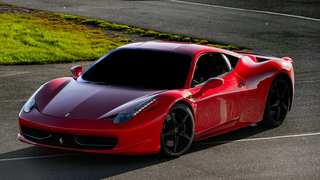
Driving the Czinger 21C VMax: When Extreme Engineering Meets the Open Road
For over a decade, the automotive world has speculated about the Czinger 21C, the controversial hypercar built by the Los Angeles-based firm. We finally had the opportunity to drive the 21C VMax on a three-day road rally through California’s wine country, a journey that blended the cutting-edge technology of a 3D-printed car with the visceral reality of center-steer hybrid hypercars.
While the track prowess of the 21C is legendary, achieving five production car lap records in five days and reclaiming the Laguna Seca record from Koenigsegg, the question remained: how does this avant-garde design translate to the road? Does the Czinger 21C VMax transition from a track weapon to a usable hypercar? The answer, as we discovered, is complex and captivating.
Factory Fresh: Inside Divergent Technologies
My journey began at Divergent Technologies, the parent company of Czinger. Entering the facility felt like stepping into a military R&D lab—a stark contrast to the typical automotive aesthetic. To gain access, I had to present a U.S. passport, as Divergent supplies parts to the Department of Defense. While all military hardware was shielded from view, I was granted a privileged tour by CEO Lukas Czinger.
The tour culminated in a glimpse of the 3D printing process. Lasers fused powdered aluminum into automotive components with avian bone-like structures, showcasing a revolutionary approach to manufacturing. Lukas explained that Divergent’s technology has reached “Pareto optimal,” the point where any gram added or subtracted becomes detrimental.
Using iterative artificial intelligence, engineers design parts that achieve maximum strength with minimum weight. The software iterates hundreds of thousands of designs until it finds the lightest, strongest shape. Aside from the DOD, nine automotive OEMs use Divergent’s 3D-printed components. The most notable partners include Aston Martin (DBR22 Roadster), Bugatti (Tourbillon), and McLaren (W1), though the Ferrari F80 control arms are also strong suspects.
Under the Carbon Fiber: The 21C VMax Specs
Czinger offers two versions of the 21C: the high-downforce track model and the wingless, long-tailed VMax. The VMax represents the touring version, intended for 500-mile road rallies like the Velocity Tour. The car’s designation, “21C,” signifies the 21st century, emphasizing its forward-thinking technology.
The driving position is the most striking aspect of the 21C VMax. The cabin feels more like a jet fighter canopy than a traditional car greenhouse. The visibility is exceptional, but the entry and exit process is notoriously awkward: sit with legs facing out, pull knees up, tuck feet into the footwell, and slide head under the roof.
One reason for the large sills is the battery storage. The 21C VMax is a hybrid hypercar with 2.2 kWh of battery power in each sill, totaling 4.4 kWh. The car is not a plug-in hybrid, with the battery charged by a motor powered by the mid-mounted V-8 engine. These batteries provide 500 hp to the front axle (one motor per wheel).
The combustion engine is a Czinger-designed 2.9-liter twin-turbo V-8, delivering 750 hp on California’s 91-octane fuel. Using 100-octane race fuel, the output jumps to 850 hp. The V-8 also supports ethanol, promising even higher power figures—expected to be around 10% more than the gasoline figures.
The gas engine connects to the rear wheels via an Xtrac single-clutch automated semi-sequential gearbox. Similar to the Pagani Utopia’s seven-speed Xtrac, Czinger utilizes additive 3D printing for the transmission case. However, they also employ small 48-volt electric motors to execute shifts at low speeds, eliminating the lurching found in other automated single-clutch transmissions. The twin-barrel actuators perform as advertised, making transitions into gas stations and hotel parking lots nearly normal—a significant achievement for a car of this nature.
Track Time: The Czinger Speed Machine
For the Velocity Tour, Czinger assigned a professional driver (Evan Jacobs) to ensure my safety—a common practice with high-dollar hypercars like Bugatti and Pagani. Thankfully, after assuring the team of my capabilities, I was allowed to drive solo for the rest of the rally.
We stopped at Laguna Seca for parade laps, but non-Czinger employees are restricted from driving the VMax on the track, even at the slow pace of the rally. Nevertheless, I opted for a ride in the unique rear seat. The visibility was incredible, reminding me of a stunt plane and offering a novel perspective on track riding, a scene I’ve witnessed over 1,000 times.
Jacobs convinced Skip Barber Racing School staff to allow a “6/10ths” hot lap. The most impressive hot lap I’ve ever experienced was in an Aston Martin Valkyrie LMH race car, feeling the blood pool in my extremities under braking. The Czinger VMax now takes second place, and Jacobs was holding back. Even at reduced speeds and without the rear wing, it was easy to understand how the 21C achieved the California Gold Rush: five production car track records in five days, each driven between tracks.
Czinger claims a vehicle weight of around 3,600 pounds, incredibly light for a 1,250 hp hybrid. The Ferrari SF90 Stradale Asseto Fiorano—a three-motor, twin-turbo V-8 PHEV with less power (986 hp)—weighs 3,839 pounds. The new Lamborghini Temerario—another three-motor, twin-turbo V-8 (making less power but offering comparison)—weighs 4,185 pounds.
The SF90 and Temerario are the quickest gasoline-powered cars MotorTrend has ever tested (Ferrari for 0–60 mph, Lamborghini for the quarter mile). If Czinger’s weight claim holds true, the innovative California startup has outperformed two Italian legends on paper. This is especially remarkable considering that Los Angeles isn’t traditionally known for supercar manufacturing.
On the Road: The Czinger Experience
The route chosen for the rally consisted of tight, winding, poor-quality back roads—not the typical playground for hypercars. Following the pack and navigating to lunch stops, I was initially disappointed. However, I realized this offered a more realistic experience of living with a Czinger.
Surprisingly, the VMax felt much like any other hyper-exotic. Take everything out of your pockets, as the seats are tight; drink water before getting in, as there are no cupholders. Be prepared for attention: males between 16 and 24 will stare, follow, wave, and rev at you, likely shouting friendly obscenities.
Despite the tight seating, the 21C rides surprisingly well. The team deserves applause for not making it overly stiff, and the air conditioning works effectively. The only real complaint is the cabin noise. It’s not the V-8’s sound that’s the issue but the lack of sound deadening, which feels like an oversight in a road car. This becomes particularly noticeable during long drives; while weight is the enemy of performance, adding 10–20 pounds of soundproofing would be a significant improvement.
Getting to the Good Part: The Czinger Velocity
Finally, we hit some proper California canyon roads, and I finally opened up the Czinger 21C VMax. As quickly as my foot moved past the throttle’s kickdown point, it was already mashing the brake pedal. I’ve driven EVs with this much power, but there’s just so much more weight. I’ve driven the Ferrari F80, which has similar power but less electric assistance. The Czinger is a different kind of accelerative beast.
This is the first time I’ve said this in my career: this car might be too much for public roads. Typing that is difficult, but every time I accelerated, the braking zone arrived almost immediately—like warp drive, as if the car bent the road instead of rolling over it. I hate to say it, but for this specific car, the Czinger VMax on 91-octane fuel is too much.
That being said, it corners beautifully with prodigious grip. Southern California canyons are larger and faster than the ones we drove; I would have loved to test it on Angeles Crest or Highway 33. It might be that too much is not enough, but for everyday use, it is certainly more than plenty.
Who Is This Car For?
If you are considering a $2.5 million tandem-seat hypercar, this is likely not your first high-performance ride. You probably own a garage (or warehouse) full of over-the-top toys, thinking they are all essentially the same. Well, Czinger offers something fundamentally different

 Driving the Czinger 21C VMax: When Extreme Engineering Meets the Open Road
For over a decade, the automotive world has speculated about the Czinger 21C, the controversial hypercar built by the Los Angeles-based firm. We finally had the opportunity to drive the 21C VMax on a three-day road rally through California’s wine country, a journey that blended the cutting-edge technology of a 3D-printed car with the visceral reality of center-steer hybrid hypercars.
While the track prowess of the 21C is legendary, achieving five production car lap records in five days and reclaiming the Laguna Seca record from Koenigsegg, the question remained: how does this avant-garde design translate to the road? Does the Czinger 21C VMax transition from a track weapon to a usable hypercar? The answer, as we discovered, is complex and captivating.
Factory Fresh: Inside Divergent Technologies
My journey began at Divergent Technologies, the parent company of Czinger. Entering the facility felt like stepping into a military R&D lab—a stark contrast to the typical automotive aesthetic. To gain access, I had to present a U.S. passport, as Divergent supplies parts to the Department of Defense. While all military hardware was shielded from view, I was granted a privileged tour by CEO Lukas Czinger.
The tour culminated in a glimpse of the 3D printing process. Lasers fused powdered aluminum into automotive components with avian bone-like structures, showcasing a revolutionary approach to manufacturing. Lukas explained that Divergent’s technology has reached “Pareto optimal,” the point where any gram added or subtracted becomes detrimental.
Driving the Czinger 21C VMax: When Extreme Engineering Meets the Open Road
For over a decade, the automotive world has speculated about the Czinger 21C, the controversial hypercar built by the Los Angeles-based firm. We finally had the opportunity to drive the 21C VMax on a three-day road rally through California’s wine country, a journey that blended the cutting-edge technology of a 3D-printed car with the visceral reality of center-steer hybrid hypercars.
While the track prowess of the 21C is legendary, achieving five production car lap records in five days and reclaiming the Laguna Seca record from Koenigsegg, the question remained: how does this avant-garde design translate to the road? Does the Czinger 21C VMax transition from a track weapon to a usable hypercar? The answer, as we discovered, is complex and captivating.
Factory Fresh: Inside Divergent Technologies
My journey began at Divergent Technologies, the parent company of Czinger. Entering the facility felt like stepping into a military R&D lab—a stark contrast to the typical automotive aesthetic. To gain access, I had to present a U.S. passport, as Divergent supplies parts to the Department of Defense. While all military hardware was shielded from view, I was granted a privileged tour by CEO Lukas Czinger.
The tour culminated in a glimpse of the 3D printing process. Lasers fused powdered aluminum into automotive components with avian bone-like structures, showcasing a revolutionary approach to manufacturing. Lukas explained that Divergent’s technology has reached “Pareto optimal,” the point where any gram added or subtracted becomes detrimental.