Here is the article rewritten in the language of the United States, about 2000 words, with the title and content only, removing all explanations, notes, and instructions:
Aston Martin Valhalla: The Million-Dollar Rocket That Rewrites the Rules of Performance
“So, how was it?!”
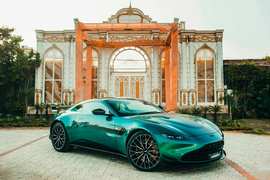
It’s the inevitable, entirely predictable question you get after experiencing a car like the 2026 Aston Martin Valhalla. With a nearly $1.1 million price tag and 1,064 horsepower, this is more than just a fast car; it’s a statement, a technological marvel wrapped in a carbon fiber body. But reviewing these modern hypercars has become an act of surrealism. For those lucky enough to have driven them, the question is easy to answer with something like, “Exactly how you expect it to be.”
For others, and frankly for those who haven’t experienced this level of performance, it’s hard to describe. This isn’t your grandfather’s muscle car; this is the apex of engineering, a car that makes you question reality, or at least, the limitations of what we thought was possible on public roads and racetracks.
A Long Time Coming
It feels like yesterday, and yet a lifetime ago, since Aston Martin first teased the world with the AM-RB 003 concept at the 2019 Geneva Motor Show. That name, a nod to its then-sponsorship ties with Red Bull Racing, has since been replaced with Valhalla—the glorious afterlife realm where heroic dead warriors go to prepare for Ragnarök. It also happens to start with a “V,” keeping Aston’s tradition alive.
A lot has changed since then. Aston and Red Bull Racing parted ways after the 2020 F1 season, and Aston’s new ownership, led by Lawrence Stroll, rebranded Racing Point as Aston Martin F1 Team. But the biggest changes were in the engineering room. The Valhalla was originally slated to have an in-house-designed turbocharged 3.0-liter V6, competing with hybrid behemoths like the LaFerrari and Porsche 918 Spyder.
However, as the automotive world kept evolving, so did Aston. The Valhalla now utilizes a hybridized Mercedes-AMG GT Black Series-derived twin-turbo V8. Compared to the standard AMG engine, Aston beefed it up with larger turbos, a new intake manifold, stronger pistons, and different camshafts to increase output to 817 horsepower and 738 lb-ft of torque. The Valhalla is the exclusive home for this engine.
When I sat in a prototype mockup at the Pebble Beach Concours in August 2022, I was giggling at the F1-inspired reclined seating position. The projected specs had jumped to a combined 1,012 horsepower and an undisclosed torque figure. Aston claimed nothing was final, but I was already hooked. I just had to drive it when it was ready.
Worth the Wait…
Based on Aston’s development timeline back then, I didn’t expect another three and a half years to pass before I got my chance. But the production model’s hardware exceeds all those earlier expectations.
The 4.0-liter flat-plane-crank, dry-sump, twin-turbo V8 makes 817 hp. Combined with 248 hp from three electric motors—two on the front axle and one on the new eight-speed dual-clutch transmission (an Aston first)—the Valhalla hits a peak output of 1,064 hp and 811 lb-ft of torque.
The hybrid system features a 560-cell battery pack, cooled by submerging the cells in dielectric oil. According to chief engineer Andrew Kay, “We’re able to push energy into the battery and cycle it out very quickly [meaning recharge and deployment of electrical energy]. This is very good for track use, in particular.”
Unlike the original concept and its big brother, the Valkyrie, the production Valhalla is a plug-in hybrid. It can run on electric-only power for up to 8.7 miles and reach 80 mph.
…But Something Else Happened Along the Way
Now, for the pedantic readers—yes, Aston calls the Valhalla its first-ever mid-engine supercar. But with the Valkyrie already existing, perhaps marketing decided “supercar” was the better choice to avoid repeating “first ever” claims. Call it what you want. The Valkyrie is barely a street car, with a $3+ million price tag and a 285-unit production run, making the Valhalla’s million-and-change MSRP and 999-unit inventory seem almost tame.
In the real world, of course, that’s absurd. But it speaks to the current state of high-performance automobiles. For younger generations like millennials, Gen Z, and Gen Alpha, seeing a new million-dollar car appear on social media is almost weekly. Each one boasts unheard-of power, torque, acceleration, and tech specs that would have staggered people just a decade ago.
For older enthusiasts, however, it’s easy to remember the shockwave created by cars like the 1993–94 McLaren F1 or the Bugatti Veyron, widely considered the first 1,000-hp, million-dollar hypercar.
Nowadays? Since I drove that Valhalla prototype at Pebble Beach, we’ve driven the Porsche 911 GT3 RS—about half the power, but loaded with race-derived aerodynamics that require pro-level skills to maximize on track, and debatable as a road car. Then there are the Ferrari F80, 849 Testarossa, Czinger 21C VMax, and even the “standard but dizzyingly fast” Porsche 911 Turbo S. Heck, you can now buy a hybrid Corvette ZR1X with 1,250 hp, something no one saw coming when Aston and Adrian Newey (now Aston Martin Performance Technologies managing technical partner) were hatching the Valhalla’s blueprints.
Just Drive It
With all this in mind, “comparison is the thief of joy” has never been more relevant for the supercar/hypercar crowd. It also works here because a proper comparison test of these cars is virtually impossible, thanks to manufacturers like Ferrari who are notoriously picky about lending out cars for head-to-head showdowns. (Shame on you, Ferrari.)
Regardless, with these cars hitting such high dynamic limits, it’s more satisfying to drive something like the Valhalla on its own merits and enjoy the experience for what it is.
No doubt about it, the experience matters in a car like this. It’s not enough to be pleasant and thrilling on the road and crap on the track, or vice versa. We already knew this Aston Martin was a winner on all fronts after Angus MacKenzie sampled a “prototype” that was pretty much finished, save for transmission calibration, a few months back.
On the Road
Unlike Angus, who drove it only on Silverstone Circuit’s short Stowe layout, Aston gave us a 50-minute road loop for this drive. You’d think that with its Le Mans-inspired look and low, wide stance, the Valhalla would be impractical for daily driving. But that’s not the case.
The one caveat is luggage space. There are some small cubbies in the doors, but no frunk, as that area is occupied by three high-temperature radiators, electric motors, and a racing-style, pushrod-actuated inboard suspension layout.
This suspension setup is a direct result of the F1-style seating position. You sit so low that a conventional suspension would raise the bodywork too high to maintain a clear line of sight. There’s no backrest angle adjustment, so you have to adapt to the seating position. The seats are bolted so low into the carbon-fiber monocoque that there’s no motor underneath to slide yourself forward or back. Instead, you pull a leather strap between your legs and push to adjust your position.
You get used to the driving position quickly—it’s not that extreme. And within a couple of miles, you realize the Bilstein DTX active damper system and overall suspension setup (the rear uses a five-link layout) make for a comfortable ride, even for a megacar. The Spanish roads we drove were far from perfect, but the suspension still managed to keep the ride smooth. The difference between Sport and Sport+ settings wasn’t huge, which is nice to see in a modern Aston. Race mode makes the ride harsher, but you could probably live with it on a well-maintained, fast road when it’s playtime.
The square-ish steering wheel feels nice, but the molded-in crease running vertically up the grip might not be comfortable for everyone. The steering feel, however, is intuitive, maintaining a nice weight that’s neither too light nor heavy across different drive modes.
When I found a long, wide-open stretch of country road with no one around, I put my foot down and launched the Valhalla. Other than a slight, slippery wiggle at the rear as the tires found grip, it was simply goooooo. Aston says 0–62 mph takes 2.5 seconds, so figure on a 0–60 mph run of 2.4 or 2.3 seconds. The speed isn’t shocking; other similar cars do the same. But the flat torque curve means 90 percent of the peak 811 lb-ft is available from 2,500 rpm to

 Here is the article rewritten in the language of the United States, about 2000 words, with the title and content only, removing all explanations, notes, and instructions:
Aston Martin Valhalla: The Million-Dollar Rocket That Rewrites the Rules of Performance
“So, how was it?!”
It’s the inevitable, entirely predictable question you get after experiencing a car like the 2026 Aston Martin Valhalla. With a nearly $1.1 million price tag and 1,064 horsepower, this is more than just a fast car; it’s a statement, a technological marvel wrapped in a carbon fiber body. But reviewing these modern hypercars has become an act of surrealism. For those lucky enough to have driven them, the question is easy to answer with something like, “Exactly how you expect it to be.”
For others, and frankly for those who haven’t experienced this level of performance, it’s hard to describe. This isn’t your grandfather’s muscle car; this is the apex of engineering, a car that makes you question reality, or at least, the limitations of what we thought was possible on public roads and racetracks.
A Long Time Coming
It feels like yesterday, and yet a lifetime ago, since Aston Martin first teased the world with the AM-RB 003 concept at the 2019 Geneva Motor Show. That name, a nod to its then-sponsorship ties with Red Bull Racing, has since been replaced with Valhalla—the glorious afterlife realm where heroic dead warriors go to prepare for Ragnarök. It also happens to start with a “V,” keeping Aston’s tradition alive.
Here is the article rewritten in the language of the United States, about 2000 words, with the title and content only, removing all explanations, notes, and instructions:
Aston Martin Valhalla: The Million-Dollar Rocket That Rewrites the Rules of Performance
“So, how was it?!”
It’s the inevitable, entirely predictable question you get after experiencing a car like the 2026 Aston Martin Valhalla. With a nearly $1.1 million price tag and 1,064 horsepower, this is more than just a fast car; it’s a statement, a technological marvel wrapped in a carbon fiber body. But reviewing these modern hypercars has become an act of surrealism. For those lucky enough to have driven them, the question is easy to answer with something like, “Exactly how you expect it to be.”
For others, and frankly for those who haven’t experienced this level of performance, it’s hard to describe. This isn’t your grandfather’s muscle car; this is the apex of engineering, a car that makes you question reality, or at least, the limitations of what we thought was possible on public roads and racetracks.
A Long Time Coming
It feels like yesterday, and yet a lifetime ago, since Aston Martin first teased the world with the AM-RB 003 concept at the 2019 Geneva Motor Show. That name, a nod to its then-sponsorship ties with Red Bull Racing, has since been replaced with Valhalla—the glorious afterlife realm where heroic dead warriors go to prepare for Ragnarök. It also happens to start with a “V,” keeping Aston’s tradition alive.