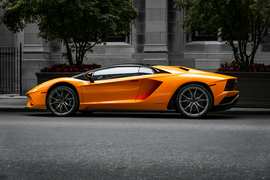
Aston Martin Valhalla: A Journey into Automotive Extremes
A Modern Hypercar Odyssey
The year is 2025, and the automotive landscape is defined by unprecedented power, mind-bending technology, and price tags that once belonged in the realm of science fiction. In this era of hypercar saturation, how does a car like the Aston Martin Valhalla stand out? What does it feel like to drive a vehicle that pushes the boundaries of what we thought was possible on four wheels? Having spent significant time behind the wheel, I can attest that the Valhalla is not just a car; it is a statement—a fusion of elite engineering, raw performance, and unadulterated exhilaration.
This is not a tale of ordinary driving. This is an exploration of automotive extremism, a deep dive into a machine that transforms everyday roads into thrilling circuits and transforms the driver into an artist of precision and speed. From the moment you first sit behind the wheel, it becomes clear that this is no ordinary supercar. It is a modern masterpiece that demands respect, engages the senses, and leaves you questioning the very definition of performance.
The Evolution of a Legend: A Long Time Coming
Seven years is a long time in the world of performance cars, a period that can feel like an eternity, especially when accelerated by the surreal isolation of the pandemic years. Yet, it was only in 2019 that Aston Martin first unveiled the concept that would eventually become the Valhalla, then known as the AM-RB 003. The name itself, derived from Norse mythology, reflects the glorious afterlife where heroic warriors await their final battle. More than that, it signaled a powerful connection to the Red Bull Racing Formula 1 team, a relationship that would shape the car’s evolution profoundly.
But as we know in the high-stakes world of automotive engineering, plans change. Aston and Red Bull eventually parted ways after the 2020 F1 season, following Lawrence Stroll’s strategic decision to rename his Racing Point team to Aston Martin. More significantly, the automotive industry was undergoing rapid transformation, and Aston Martin was at the forefront of this evolution. Internal changes led to a significant shift in the Valhalla’s powertrain. What was initially conceived as an in-house-designed turbocharged 3.0-liter V-6 with performance benchmarks set by hybrid hypercars like the LaFerrari and Porsche 918 Spyder evolved into a hybridized Mercedes-AMG GT Black Series-derived twin-turbo V-8.
Aston took the formidable foundation of the GT Black Series and pushed it further. They enhanced the turbos, redesigned the intake manifold, reinforced the pistons, and optimized the camshafts. The result was a power output increase of nearly 100 horsepower and 50 lb-ft of torque, securing the Valhalla’s place as the exclusive home of this refined AMG engine. When I first sat in a mockup of the car at Pebble Beach in August 2022, the projected specifications had jumped to 1,012 hp and an unspecified torque figure. Even then, the promise was tantalizing. I knew then that I had to drive it, regardless of when it became ready.
Worth the Wait, but Something Else Happened Along the Way
For those who follow the automotive industry closely, the distinction between a “supercar” and a “hypercar” is a topic of intense debate. Aston Martin officially refers to the Valhalla as their first mid-engine supercar. However, given the existence of the Valkyrie, which operates in an entirely different echelon of price and exclusivity, Aston Martin has found itself marketing its “first ever” achievements by carefully selecting the term “super” rather than “hyper.”
In the real world, of course, this semantic debate is trivial. When dealing with price tags in the million-dollar range and production runs of 999 units, calling it a supercar is hardly a downgrade from a hypercar. Yet, this subtle distinction speaks to a broader trend in the realm of modern high-performance automobiles. The gap between the elite and the stratospheric has widened considerably.
For enthusiasts born in the 1990s and beyond, the concept of a million-dollar car is almost commonplace. Social media feeds are inundated with images of newly released hypercars, each boasting unprecedented power, torque, acceleration, and tech specifications that stretch for pages. For those of us who remember the shockwave of the McLaren F1’s 627 hp and $800,000 price tag in the mid-90s, or even the Bugatti Veyron just 20 years ago—generally considered the first 1,000-hp, million-dollar hypercar—the current reality feels surreal.
Since the Pebble Beach prototype reveal, the market has shifted dramatically. We have driven the Porsche 911 GT3 RS, a car with half the horsepower but a level of racing-derived aerodynamics and hardware that requires a professional race driver to fully maximize. Its suitability as a daily driver, given its track-tuned suspension, remains a matter of debate. Stepping up in price, construction, and technological prowess, MotorTrend has recently sampled the Ferrari F80, the 849 Testarossa, the Czinger 21C VMax, and even the deceptively capable Porsche 911 Turbo S. In a development that few saw coming, we can now even buy a hybrid Corvette ZR1X with 1,250 horsepower, a feat unimaginable when the Valhalla was still a concept born from the minds of Aston Martin and Adrian Newey.
Just Drive It
In this era of automotive excess, the adage “comparison is the thief of joy” has never been more relevant, especially when discussing hypercars. It is also ironically fitting here, as the chances of orchestrating a true comparison test between the vehicles listed above—with the possible exception of the ZR1X—are virtually nonexistent. Ferrari, in particular, has a long-standing aversion to providing publications like ours with cars for head-to-head showdowns.
Regardless of the comparisons, the true value of a car like the Valhalla lies in driving it on its own merits and appreciating the experience it provides. In a car of this caliber, the overall experience matters immensely. It is no longer enough to be pleasant and thrilling on the road but perform poorly on the track. Nor is it acceptable to be mesmerizing on the circuit but brutal on the road. As Angus MacKenzie previously discovered, the Valhalla is a winner on all fronts, needing only some transmission calibration to be the finished article.
On the Road: A Surprising Level of Comfort
Unlike Angus, who experienced the Valhalla exclusively on the short Stowe layout at Silverstone, Aston Martin provided me with a 50-minute road loop to begin my test. At first glance, the Valhalla’s Le Mans Hypercar-esque appearance and low, wide stance suggest a compromised daily driver. However, this could not be further from the truth. The only sacrifice is luggage space; while there are small cubbies in the door cards, there is no frunk. The space that would typically be used for storage is occupied by three high-temperature radiators, electric motors, and a racing-style, pushrod-actuated suspension system.
This suspension layout is a direct result of the F1-style driving position. Sitting so low requires a unique solution to maintain a clear line of sight over the hood. There is no backrest angle adjustment, meaning you must adapt to the seating position. Furthermore, the seats are bolted so far down into the carbon-fiber monocoque tub that there is no motor to slide them forward or back. Instead, you must pull a leather strap between your legs to adjust your position.
You adapt to the driving position quickly—it’s not as extreme as it sounds. Within two miles, you realize that the Valhalla-specific Bilstein DTX active damper system and overall suspension setup make for a surprisingly comfortable ride, even for a hypercar of this caliber. The Spanish road route we drove was not exactly a perfectly smooth surface, but neither was it excessively rough. The suspension’s Sport and Sport+ settings offer a narrow gap, a welcome trait we’ve praised on other new Astons like the Vantage. Race mode introduces a harsher ride that you would likely grow tired of during mundane driving, but it remains livable, especially on well-maintained, sweeping roads when it is time to push the car.
The square-ish steering wheel feels good in hand. However, the molded-in crease that runs vertically along the backside where your fingers naturally bend to grip the wheel might not be the most comfortable for everyone. The steering feel itself is intuitive, maintaining a lovely weight that feels neither too light nor too heavy across different drive modes.
When I found a long, wide-open stretch of country road with no one in sight, I stopped the car, applied full brake and throttle, and launched the Valhalla as hard as it would go. After a slight initial wiggle from the rear as the tires found their grip, the response was simply “goooooo.” Aston claims 0–62 mph in 2.5 seconds, so expect a 0–60 mph time of around 2.4, perhaps 2.3 seconds. The speed is no more or less shocking than in other similar cars, but the impressively flat torque curve ensures that 90 percent of the peak 811 lb-ft of torque is available from 2,500 rpm all the way to the power peak at 6,700 rpm. The car simply refuses to let up.
If there is a relative disappointment that supercar and hypercar enthusiasts might point to, it is the lack of ultra-high revs. The redline is set at

 Aston Martin Valhalla: A Journey into Automotive Extremes
A Modern Hypercar Odyssey
The year is 2025, and the automotive landscape is defined by unprecedented power, mind-bending technology, and price tags that once belonged in the realm of science fiction. In this era of hypercar saturation, how does a car like the Aston Martin Valhalla stand out? What does it feel like to drive a vehicle that pushes the boundaries of what we thought was possible on four wheels? Having spent significant time behind the wheel, I can attest that the Valhalla is not just a car; it is a statement—a fusion of elite engineering, raw performance, and unadulterated exhilaration.
This is not a tale of ordinary driving. This is an exploration of automotive extremism, a deep dive into a machine that transforms everyday roads into thrilling circuits and transforms the driver into an artist of precision and speed. From the moment you first sit behind the wheel, it becomes clear that this is no ordinary supercar. It is a modern masterpiece that demands respect, engages the senses, and leaves you questioning the very definition of performance.
Aston Martin Valhalla: A Journey into Automotive Extremes
A Modern Hypercar Odyssey
The year is 2025, and the automotive landscape is defined by unprecedented power, mind-bending technology, and price tags that once belonged in the realm of science fiction. In this era of hypercar saturation, how does a car like the Aston Martin Valhalla stand out? What does it feel like to drive a vehicle that pushes the boundaries of what we thought was possible on four wheels? Having spent significant time behind the wheel, I can attest that the Valhalla is not just a car; it is a statement—a fusion of elite engineering, raw performance, and unadulterated exhilaration.
This is not a tale of ordinary driving. This is an exploration of automotive extremism, a deep dive into a machine that transforms everyday roads into thrilling circuits and transforms the driver into an artist of precision and speed. From the moment you first sit behind the wheel, it becomes clear that this is no ordinary supercar. It is a modern masterpiece that demands respect, engages the senses, and leaves you questioning the very definition of performance.