Here is a rewrite of the article in the language of the United States, keeping the main idea and length while ensuring fresh content and SEO optimization for 2025.
Aston Martin Valhalla: The Digital-Era Hypercar That Defies Today’s Absurd Expectations
Aston Martin’s $1.1-million Valhalla isn’t just a car; it’s a declaration that the future of performance has arrived—and it’s terrifyingly composed. Driving this 1,064-horsepower missile leaves you questioning everything you thought you knew about road-legal speed, demanding an entirely new understanding of modern automotive physics.
A Decade in the Making: The Unrelenting Ascent of the Valhalla
Seven years feels like a lifetime in automotive terms, a sensation amplified by the pandemic years that fragmented our sense of time. Since the 2019 Geneva debut of the AM-RB 003, the world has transformed. Originally conceived as a tribute to Aston’s then-sponsorship ties with the Red Bull Racing Formula 1 team, the name transitioned to Valhalla—the mythical afterlife for heroic warriors. The change, while linguistically convenient, reflected deeper shifts: Aston’s ties with Red Bull dissolved following the 2020 F1 season, and the automotive landscape evolved at breakneck speed.
The Valhalla project endured chaotic internal turnover. The hybrid powertrain, initially slated as an in-house 3.0-liter V-6, was ultimately adapted from a Mercedes-AMG GT Black Series. Aston engineers significantly enhanced the hybrid V-8, boosting output by nearly 100 hp and 50 lb-ft of torque with larger turbos, a redesigned intake manifold, stronger pistons, and upgraded camshafts. This engine, now exclusive to the Valhalla, marked Aston’s bold commitment to electrification.
Beyond the Specs: Experience Trumps the Numbers
Even as a prototype on the Pebble Beach lawn in 2022, the Valhalla’s radical F1-inspired reclined seating position captured the imagination. Initial performance projections—1,012 hp and 738 lb-ft of torque—suggested a formidable machine. But as development continued, the production hardware would eclipse all prior expectations.
Today, the 2026 Aston Martin Valhalla utilizes a dry-sump, flat-plane-crank 4.0-liter V-8 producing a staggering 817 hp. This is supplemented by a 248-hp output from three Aston-designed radial-flux permanent-magnet motors—two driving the front axle and a third integrated into the new eight-speed dual-clutch transmission (a first for Aston Martin). The combined result is 1,064 hp and 811 lb-ft of torque.
Beyond the raw numbers, the hybrid system is a technical marvel. It features a 560-cell battery pack—an off-the-shelf AMG unit treated as the sole non-Aston component of the system. Engineers immerse these cells in dielectric oil, allowing for incredibly rapid energy cycling. As chief engineer Andrew Kay explained, “We’re able to push energy into the battery and cycle it out very quickly. This is very good for track use, in particular.”
Unlike its concept sibling and the Valkyrie, the production Valhalla is a true plug-in hybrid, capable of 8.7 miles of EV-only range at speeds up to 80 mph.
The Problem With Progress: Why “Supercar” Feels Insufficient
For years, the term “supercar” has been stretched to its breaking point. Yet, Aston Martin officially markets the Valhalla as its first-ever mid-engine supercar. This semantic distinction, however, hints at a larger truth: the existence of the Valkyrie relegates the Valhalla to a tier below. With the Valkyrie’s $3+ million starting price and a production run of only 285 units, the Valhalla’s $1 million starting price and 999-unit inventory suddenly seem almost pedestrian.
This absurdity underscores a broader shift in the high-performance automotive landscape. For a generation raised on social media, the proliferation of $1 million cars delivering once-unfathomable power figures and lap times has become routine. But for those with longer memories, the shockwave of the $800,000 McLaren F1 in the 1990s, or even the Bugatti Veyron two decades ago—the car that defined the 1,000-hp supercar benchmark—feels like a distant memory.
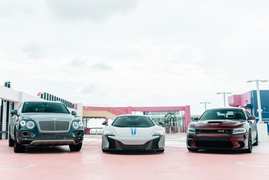
Since the Valhalla prototype debuted at Pebble Beach, the market has continued to race forward. The Ferrari F80, the 849 Testarossa, the Czinger 21C VMax, and even the hyper-tuned Porsche 911 Turbo S have all entered the conversation. It’s even possible to buy a hybrid Corvette ZR1X with 1,250 hp, a prospect that few saw coming when Aston Martin and Adrian Newey first envisioned the Valhalla.
The Paradox of Performance: When Comparison Destroys Joy
Perhaps Teddy Roosevelt never said it, but the phrase “comparison is the thief of joy” has never been more relevant than in today’s supercar and hypercar landscape. It’s also coincidentally accurate because the odds of organizing a proper comparison test among these vehicles are virtually zero, thanks primarily to Ferrari’s historical aversion to supplying publications with cars for head-to-head showdowns.
No matter. When the dynamic limits are as stratospheric as they are today, the most satisfying endeavor is to evaluate a car like the Valhalla on its own merits. It’s not enough to be thrilling on the road and handle like an understeering nightmare on the track, or vice versa. We already knew Aston Martin had engineered a multi-talented performer, especially after MotorTrend’s Angus MacKenzie sampled a near-final prototype months earlier.
On the Road: A Familiar Comfort in an Unfamiliar Package
Initially, I expected the Valhalla to be a compromise—a pseudo Le Mans-style silhouette suggesting a challenging daily driver. However, that couldn’t be further from the truth. The only true limitation is the near-total lack of luggage space. While small door pockets provide some storage, the frunk is occupied by three high-temperature radiators, the electric motors, and a race-style pushrod-actuated inboard suspension.
This suspension design is necessitated by the F1-inspired seating position. The ultra-low posture would raise the bodywork too high for a clear forward sightline with a conventional setup. There is no backrest angle adjustment; drivers must adapt to the fixed position. Since the seats are bolted directly into the carbon fiber monocoque, there’s no electric motor for fore/aft adjustment. Instead, you pull a leather strap between your legs and push to position yourself correctly.
You adapt to the driving position quickly—it’s not as extreme as it looks. Within two miles, the Valhalla-specific Bilstein DTX active damper system and the overall suspension setup (including a five-link rear end) make for a surprisingly comfortable megacar. The Spanish roads we drove were decent but not perfect, and the suspension maintained a smooth ride across both Sport and Sport+ settings—a welcome trait we’ve praised on other recent Astons, like the Vantage. Race mode introduces a harsher ride that would likely prove tedious in mundane situations, but it’s still usable, especially on sweeping, fast country roads during spirited driving.
The square steering wheel feels mostly excellent, though a molded vertical crease in the grip that your fingers naturally follow for a more positive hold might not suit everyone. The steering feel itself is intuitive, maintaining a perfect weight that remains consistent across all drive modes.
Coming across a long, open stretch of country road with no one in sight, I brought the car to a stop, engaged launch control, and unleashed the Valhalla. After an initial slight rear-end wiggle as the tires gripped, it was simply a matter of pure acceleration. Aston claims 0-62 mph in 2.5 seconds, so 0-60 mph likely clocks in around 2.4 seconds. The speed is no more shocking than in other similar cars, but the impressively flat torque curve means 90 percent of the peak 811 lb-ft is available from 2,500 rpm to 6,700 rpm. The engine simply never stops pulling.
If there’s a relative disappointment, it’s the lack of extreme revs, with the redline set at 7,000 rpm. The accompanying engine note is a complex blend of electric motors, turbos, induction, and exhaust. While loud when the throttle is wide open, it won’t rank among the best-sounding engines of all time—there’s simply a lot happening, and the acoustic result isn’t breathtakingly unique.
Valhalla Unleashed: The Track Dominates
The experience becomes even more intoxicating on the track, in this case Spain’s Circuito de Navarra. This 2.7-mile circuit offers a superb mix of corners, heavy braking zones, and elevation changes, making it the ideal proving ground for the Valhalla’s torque vectoring, aerodynamics, and braking system.
You should drive the car in Race mode, not just because of its name, but because of how the hybrid system operates. In Sport+ on the road, drivers don’t typically request full power in sustained bursts, so the system injects a huge amount of electric boost, rapidly draining the battery. The brake-by-wire system then recovers this energy, preparing you for

 Here is a rewrite of the article in the language of the United States, keeping the main idea and length while ensuring fresh content and SEO optimization for 2025.
Aston Martin Valhalla: The Digital-Era Hypercar That Defies Today’s Absurd Expectations
Aston Martin’s $1.1-million Valhalla isn’t just a car; it’s a declaration that the future of performance has arrived—and it’s terrifyingly composed. Driving this 1,064-horsepower missile leaves you questioning everything you thought you knew about road-legal speed, demanding an entirely new understanding of modern automotive physics.
A Decade in the Making: The Unrelenting Ascent of the Valhalla
Seven years feels like a lifetime in automotive terms, a sensation amplified by the pandemic years that fragmented our sense of time. Since the 2019 Geneva debut of the AM-RB 003, the world has transformed. Originally conceived as a tribute to Aston’s then-sponsorship ties with the Red Bull Racing Formula 1 team, the name transitioned to Valhalla—the mythical afterlife for heroic warriors. The change, while linguistically convenient, reflected deeper shifts: Aston’s ties with Red Bull dissolved following the 2020 F1 season, and the automotive landscape evolved at breakneck speed.
The Valhalla project endured chaotic internal turnover. The hybrid powertrain, initially slated as an in-house 3.0-liter V-6, was ultimately adapted from a Mercedes-AMG GT Black Series. Aston engineers significantly enhanced the hybrid V-8, boosting output by nearly 100 hp and 50 lb-ft of torque with larger turbos, a redesigned intake manifold, stronger pistons, and upgraded camshafts. This engine, now exclusive to the Valhalla, marked Aston’s bold commitment to electrification.
Here is a rewrite of the article in the language of the United States, keeping the main idea and length while ensuring fresh content and SEO optimization for 2025.
Aston Martin Valhalla: The Digital-Era Hypercar That Defies Today’s Absurd Expectations
Aston Martin’s $1.1-million Valhalla isn’t just a car; it’s a declaration that the future of performance has arrived—and it’s terrifyingly composed. Driving this 1,064-horsepower missile leaves you questioning everything you thought you knew about road-legal speed, demanding an entirely new understanding of modern automotive physics.
A Decade in the Making: The Unrelenting Ascent of the Valhalla
Seven years feels like a lifetime in automotive terms, a sensation amplified by the pandemic years that fragmented our sense of time. Since the 2019 Geneva debut of the AM-RB 003, the world has transformed. Originally conceived as a tribute to Aston’s then-sponsorship ties with the Red Bull Racing Formula 1 team, the name transitioned to Valhalla—the mythical afterlife for heroic warriors. The change, while linguistically convenient, reflected deeper shifts: Aston’s ties with Red Bull dissolved following the 2020 F1 season, and the automotive landscape evolved at breakneck speed.
The Valhalla project endured chaotic internal turnover. The hybrid powertrain, initially slated as an in-house 3.0-liter V-6, was ultimately adapted from a Mercedes-AMG GT Black Series. Aston engineers significantly enhanced the hybrid V-8, boosting output by nearly 100 hp and 50 lb-ft of torque with larger turbos, a redesigned intake manifold, stronger pistons, and upgraded camshafts. This engine, now exclusive to the Valhalla, marked Aston’s bold commitment to electrification.