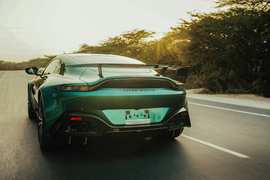
Aston Martin Valhalla: The Digital-Age Hypercar Redefined
“So, how was it?”
That’s the question everyone asks when you’ve just experienced a machine like the Aston Martin Valhalla, a $1.1 million, 1,064-horsepower hypercar that blurs the line between the street and the circuit. But in the 2020s, this age-old tradition of reviewing supercars has entered a realm of pure surrealism.
For decades, the dream of driving a million-dollar car that could hold its own against Formula 1 machines was confined to fantasy. Now, it’s Tuesday morning in Gaydon.
For some, this evolution is thrilling; for others, it’s disorienting. When friends asked about the Valhalla, I struggled to find the words. How do you describe a car that makes the impossible feel mundane? The truth is, it’s exactly what you’d expect—if “expect” means defying everything you once thought was possible in automotive engineering.
The Long Road to Valhalla
The journey to the 2026 Aston Martin Valhalla has been a long and winding one. First teased in 2019 as the AM-RB 003, the name changed to reflect Aston’s mythological heritage and its traditional “V” nomenclature. But the name wasn’t the only thing that evolved.
The Valhalla’s powertrain was originally planned as a bespoke 3.0-liter V-6 hybrid, but Aston’s trajectory shifted. After a partnership dissolution with Red Bull Racing, the focus moved to their primary technology partner: Mercedes-AMG. The production Valhalla adopts a hybridized version of the Mercedes-AMG GT Black Series V-8 engine, enhanced with larger turbos and racing-derived internals to reach a staggering 1,064 horsepower.
When I first sat in the prototype at Pebble Beach in 2022, the specs were impressive, but the reality of a mid-engine supercar designed for the track was even more captivating. The reclined seating position, inspired by F1, places you in a command center that feels both alien and perfectly natural.
A Decade of Performance Madness
Thinking back, it’s hard to believe how far we’ve come in just ten years. We remember the shock of the McLaren F1 in the 90s or the Bugatti Veyron two decades ago—the first cars that broke the 1,000-hp barrier.
Today? The world is a different place.
Since 2019, the landscape of automotive performance has accelerated exponentially. While the Valhalla boasts 1,064 horsepower, we’ve also driven the Porsche 911 GT3 RS with its track-focused aerodynamics, the Ferrari F80’s aggressive design, and the Czinger 21C VMax’s radical carbon-fiber construction. Even the Corvette ZR1X now offers 1,250 horsepower, a number that would have seemed like pure science fiction when the Valhalla was first conceived.
In this era of hypercar saturation, the concept of a “comparison” becomes almost meaningless. These cars are so extreme that they exist in their own universes. Ferrari often keeps their best models private, making direct shootouts rare.
Instead, we’re left to appreciate each machine on its own merits—a philosophy that has never been more relevant than in the current market.
On the Road: The Unexpected Luxury
Walking up to the Valhalla, you expect a compromise. Its low, wide stance and aggressive aerodynamics suggest a car that would punish its occupants on public roads. Aston Martin, however, has defied these expectations.
The mid-engine layout, while sacrificing luggage space (the front trunk is taken up by radiators and suspension), has been meticulously executed. The pushrod-actuated suspension allows for a lower center of gravity, maintaining that vital line of sight for the driver. While the seats are fixed, the ergonomics adapt quickly, and the steering wheel feels balanced and responsive.
The ride quality is, quite frankly, shocking. Thanks to the Bilstein DTX active damping system, the Valhalla glides over imperfect roads with a plushness that belies its track-focused intent. In Sport+ mode, the suspension tightens but remains composed, offering a smooth transition to Race mode when the road opens up.
The 4.0-liter twin-turbo V-8 provides an unrelenting surge of power. Aston claims 0–60 mph in 2.5 seconds, but the feeling is more about the relentless torque than raw acceleration. With 90% of the peak 811 lb-ft available from 2,500 rpm, the Valhalla doesn’t just pull—it catapults.
However, the soundtrack is not what you might expect. The 7,000 rpm redline limits the high-revving symphony we associate with older sports cars. The combined effect of the electric motors, turbos, and exhaust creates a complex sound profile—loud, but not necessarily beautiful. For purists, this might be the only disappointment in an otherwise masterful package.
Mastering the Track: The Valhalla Advantage
Driving the Valhalla on a closed circuit like Circuito de Navarra reveals the true genius of its design. The power is immense, but it’s the torque vectoring, aerodynamics, and braking system that make it truly exceptional.
The hybrid system is crucial to track performance. In Sport+ mode, the battery drains rapidly as the car uses maximum electric boost. Race mode, however, implements a sophisticated recharge strategy, holding back a percentage of battery charge to prevent sudden power loss. This ensures consistent performance, even during aggressive lapping sessions.
As Angus MacKenzie noted previously, the Valhalla is stable and predictable, even for experienced drivers. The car inspires confidence, allowing you to push deeper into corners without fear. For those seeking high-drama slides and tail-happy antics, the Valhalla is not the choice. It’s a precision instrument that wants to go fast with minimal fuss.
The double- Wishbone suspension and all-wheel drive keep the chassis planted, while the torque-vectoring system pulls the car through corners with minimal effort. It’s a testament to modern engineering that all this technology feels virtually invisible, allowing the driver to focus on the track ahead.
The Dynamics of Speed
Aerodynamics play a critical role in the Valhalla’s stability. The front wing, inspired by F1, generates significant downforce while maintaining a clean profile. The deployable rear wing provides an air brake during deceleration but can be blocked by the rearview camera if activated on the street.
Aston Martin has achieved a critical balance: consistent downforce without destabilizing pressure shifts. At 124 mph, the Valhalla generates 935 pounds of downforce, increasing to 1,345 pounds at 149 mph. This predictable behavior ensures stability at high speeds, giving drivers the confidence to push the limits.
Braking, too, is a marvel of modern engineering. The brake-by-wire system delivers a firm, consistent pedal feel, with much of the stopping power coming from battery regeneration. While lacking the granular feedback of traditional hydraulics, it provides reliable, fade-free performance regardless of speed.
For enthusiasts, the Valhalla offers a glimpse into the future of supercars. It’s a car that proves performance isn’t just about horsepower; it’s about how that power is delivered, how it interacts with the chassis, and how it makes the driver feel.
A Hypercar Reimagined
In the 2020s, the world of automotive performance has become increasingly complex. We have cars that redefine speed, redefine luxury, and redefine what it means to drive. The Aston Martin Valhalla sits at the apex of this evolution—a mid-engine hybrid hypercar that blends cutting-edge technology with Aston Martin’s iconic design heritage.
As chief engineer Andrew Kay noted, explaining everything about this car would require a full book. But the core experience is simple: the Valhalla is exactly what you’d expect—and in today’s world, that’s nothing short of extraordinary.
It’s a reminder that in the 2020s, the impossible has become commonplace.
Have you experienced the future of performance? Discover how the Aston Martin Valhalla is redefining the supercar landscape and explore the cutting-edge technology that makes it possible.

 Aston Martin Valhalla: The Digital-Age Hypercar Redefined
“So, how was it?”
That’s the question everyone asks when you’ve just experienced a machine like the Aston Martin Valhalla, a $1.1 million, 1,064-horsepower hypercar that blurs the line between the street and the circuit. But in the 2020s, this age-old tradition of reviewing supercars has entered a realm of pure surrealism.
For decades, the dream of driving a million-dollar car that could hold its own against Formula 1 machines was confined to fantasy. Now, it’s Tuesday morning in Gaydon.
For some, this evolution is thrilling; for others, it’s disorienting. When friends asked about the Valhalla, I struggled to find the words. How do you describe a car that makes the impossible feel mundane? The truth is, it’s exactly what you’d expect—if “expect” means defying everything you once thought was possible in automotive engineering.
The Long Road to Valhalla
The journey to the 2026 Aston Martin Valhalla has been a long and winding one. First teased in 2019 as the AM-RB 003, the name changed to reflect Aston’s mythological heritage and its traditional “V” nomenclature. But the name wasn’t the only thing that evolved.
The Valhalla’s powertrain was originally planned as a bespoke 3.0-liter V-6 hybrid, but Aston’s trajectory shifted. After a partnership dissolution with Red Bull Racing, the focus moved to their primary technology partner: Mercedes-AMG. The production Valhalla adopts a hybridized version of the Mercedes-AMG GT Black Series V-8 engine, enhanced with larger turbos and racing-derived internals to reach a staggering 1,064 horsepower.
Aston Martin Valhalla: The Digital-Age Hypercar Redefined
“So, how was it?”
That’s the question everyone asks when you’ve just experienced a machine like the Aston Martin Valhalla, a $1.1 million, 1,064-horsepower hypercar that blurs the line between the street and the circuit. But in the 2020s, this age-old tradition of reviewing supercars has entered a realm of pure surrealism.
For decades, the dream of driving a million-dollar car that could hold its own against Formula 1 machines was confined to fantasy. Now, it’s Tuesday morning in Gaydon.
For some, this evolution is thrilling; for others, it’s disorienting. When friends asked about the Valhalla, I struggled to find the words. How do you describe a car that makes the impossible feel mundane? The truth is, it’s exactly what you’d expect—if “expect” means defying everything you once thought was possible in automotive engineering.
The Long Road to Valhalla
The journey to the 2026 Aston Martin Valhalla has been a long and winding one. First teased in 2019 as the AM-RB 003, the name changed to reflect Aston’s mythological heritage and its traditional “V” nomenclature. But the name wasn’t the only thing that evolved.
The Valhalla’s powertrain was originally planned as a bespoke 3.0-liter V-6 hybrid, but Aston’s trajectory shifted. After a partnership dissolution with Red Bull Racing, the focus moved to their primary technology partner: Mercedes-AMG. The production Valhalla adopts a hybridized version of the Mercedes-AMG GT Black Series V-8 engine, enhanced with larger turbos and racing-derived internals to reach a staggering 1,064 horsepower.