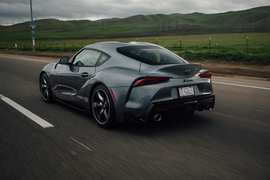
Aston Martin Valhalla Review: Modern Performance Redefined
When the world of automotive performance is constantly pushing boundaries, it can be hard to keep track of where the next leap forward is coming from. We’ve been introduced to mind-bending speeds, impossible handling, and technology that once seemed reserved for Formula 1 circuits or sci-fi films. It’s against this backdrop that the 2026 Aston Martin Valhalla arrives, not just as another addition to the million-dollar supercar elite, but as a true benchmark for what modern performance means.
For years, the Valhalla was more of a dream than a reality. Introduced at the 2019 Geneva Motor Show as the AM-RB 003, it bore the hallmarks of its partnership with the Red Bull Racing Formula 1 team, signaling a fusion of elite motorsport and road-going engineering. However, as Aston Martin navigated changes in leadership and market dynamics, the car evolved. The F1 sponsorship ended, and the powertrain strategy shifted from an in-house V-6 to a hybridized Mercedes-AMG GT Black Series-derived V-8.
This evolution didn’t dilute the car’s essence; it refined it. The Valhalla took what was once reserved for hypercars—such as the Valkyrie—and brought it to a price point that, while still astronomical, feels almost attainable in comparison. When you consider the engineering prowess involved in creating a car that can deliver over 1,000 horsepower from a hybridized V-8, you start to understand why this machine is more than just a fast car; it’s a technological marvel.
Engineering an Icon
The heart of the Valhalla is its powerplant: a flat-plane-crank, dry-sump, twin-turbo 4.0-liter V-8 that generates a formidable 817 horsepower. But the combustion engine is only part of the story. Aston Martin added three electric motors to the mix: two on the front axle and a third integrated into the new eight-speed dual-clutch gearbox. The combined output reaches a breathtaking 1,064 horsepower and 811 lb-ft of torque. This hybrid system isn’t just for show; it’s designed for performance, utilizing a 560-cell battery pack that is liquid-cooled for rapid energy cycling. This means consistent power delivery, especially critical for track driving.
Aston Martin also pushed the boundaries of aerodynamics. The Valhalla features an underbody front wing and a deployable rear wing that are intricately connected to the car’s speed and dynamic conditions. This isn’t just about creating downforce; it’s about managing the air so the car remains stable and predictable at extreme speeds. The rear wing doubles as an air brake, further reducing stopping distances when needed.
The production model also includes a plug-in hybrid capability, allowing for EV-only driving for up to 8.7 miles at speeds up to 80 mph. While this might seem secondary in a car built for performance, it reflects Aston Martin’s commitment to a holistic approach to modern motoring, where efficiency is as important as raw power.
A Masterclass in Dynamics
One of the most striking aspects of the Valhalla is how the engineers managed to integrate so much technology without making the car feel artificial. Modern performance cars often struggle with a disconnect between the driver and the road, with electronic aids sanding off the raw edges of the experience. The Valhalla, however, feels organic and intuitive, even with a sophisticated torque-vectoring system and advanced aerodynamics.
In Race mode, the car adjusts its hybrid system to prioritize performance over efficiency. By holding back up to 15 percent of the battery’s state of charge, the car prevents the performance drops that can plague hybrid systems under extreme stress. This ensures that the Valhalla delivers consistent power lap after lap, a crucial factor for anyone pushing the limits on a track.
Handling is another area where the Valhalla excels. It combines the stability of a racing prototype with the composure of a road-going GT. The suspension, a Bilstein DTX active damper system with a five-link rear layout, strikes a rare balance between comfort and responsiveness. While Race mode offers a stiffer ride, the overall suspension setup ensures that the Valhalla remains composed even on imperfect road surfaces.
Beyond the Numbers
In the age of instant gratification, it’s easy to get caught up in the raw numbers: horsepower, torque, and lap times. But a true measure of a supercar’s excellence lies in the experience it delivers. The Valhalla doesn’t just go fast; it makes the driver feel fast. The seating position, inspired by Formula 1, puts the driver low in the carbon-fiber tub, creating an intimate connection with the machine. And while the cockpit is focused and minimalist, it doesn’t sacrifice luxury or refinement.
The steering wheel, while ergonomically designed to provide a better grip, might not suit every driver. But the steering feel itself is intuitive, maintaining a balance that is neither too light nor too heavy across different driving modes. And when you put your foot down, the Valhalla responds instantly, with a torque curve that fills the power band from low revs to the 7,000 rpm redline.
However, this is where some purists might find the Valhalla less appealing. The powertrain, while powerful, doesn’t offer the screaming high revs that enthusiasts associate with traditional supercars. And the exhaust note, while loud, is more of a multifaceted orchestra of mechanical sounds rather than a raw, unadulterated symphony.
On the track, the Valhalla shines brightest. The front-axle torque vectoring and rear e-differential work in harmony to keep the chassis rotating through corners with minimal fuss. The result is a car that feels stable and predictable, encouraging drivers to push harder without fear of losing control. The double achievement here is making all this technology feel natural and virtually invisible to the driver. When the lapping sessions are over, the overwhelming feeling isn’t relief for surviving a near-death experience, but a desire for more time to explore the car’s full potential.
The Price of Perfection
The Valhalla’s price tag puts it firmly in the realm of ultra-exclusive automobiles. Yet, for those who can afford it, the car offers a level of performance, engineering, and exclusivity that few vehicles can match. It’s a car that defies categorization, sitting somewhere between a hypercar and a supercar, yet pushing the boundaries of both.
Perhaps the most remarkable aspect of the Valhalla is that it feels like a realistic representation of the future of performance. As we move toward a world of hybrid powertrains, advanced aerodynamics, and automated driving systems, the Valhalla shows that these technologies don’t have to compromise the driving experience. They can, in fact, enhance it, making performance more accessible and more sustainable than ever before.
Conclusion
The 2026 Aston Martin Valhalla is more than just a new car; it’s a statement about the direction of modern performance. It’s a machine that combines brute force with surgical precision, luxury with performance, and cutting-edge technology with a driver-focused experience. It’s a car that leaves you questioning reality, not because it’s impossible, but because it’s now possible.
If you’re looking for a supercar that redefines what’s possible, the Aston Martin Valhalla is the car to watch. It’s a testament to what happens when engineering prowess meets automotive passion, and it’s an experience you won’t soon forget. Are you ready to experience the future of performance? Contact Aston Martin to learn more about the Valhalla and how you can get your hands on this incredible machine.

 Aston Martin Valhalla Review: Modern Performance Redefined
When the world of automotive performance is constantly pushing boundaries, it can be hard to keep track of where the next leap forward is coming from. We’ve been introduced to mind-bending speeds, impossible handling, and technology that once seemed reserved for Formula 1 circuits or sci-fi films. It’s against this backdrop that the 2026 Aston Martin Valhalla arrives, not just as another addition to the million-dollar supercar elite, but as a true benchmark for what modern performance means.
For years, the Valhalla was more of a dream than a reality. Introduced at the 2019 Geneva Motor Show as the AM-RB 003, it bore the hallmarks of its partnership with the Red Bull Racing Formula 1 team, signaling a fusion of elite motorsport and road-going engineering. However, as Aston Martin navigated changes in leadership and market dynamics, the car evolved. The F1 sponsorship ended, and the powertrain strategy shifted from an in-house V-6 to a hybridized Mercedes-AMG GT Black Series-derived V-8.
This evolution didn’t dilute the car’s essence; it refined it. The Valhalla took what was once reserved for hypercars—such as the Valkyrie—and brought it to a price point that, while still astronomical, feels almost attainable in comparison. When you consider the engineering prowess involved in creating a car that can deliver over 1,000 horsepower from a hybridized V-8, you start to understand why this machine is more than just a fast car; it’s a technological marvel.
Aston Martin Valhalla Review: Modern Performance Redefined
When the world of automotive performance is constantly pushing boundaries, it can be hard to keep track of where the next leap forward is coming from. We’ve been introduced to mind-bending speeds, impossible handling, and technology that once seemed reserved for Formula 1 circuits or sci-fi films. It’s against this backdrop that the 2026 Aston Martin Valhalla arrives, not just as another addition to the million-dollar supercar elite, but as a true benchmark for what modern performance means.
For years, the Valhalla was more of a dream than a reality. Introduced at the 2019 Geneva Motor Show as the AM-RB 003, it bore the hallmarks of its partnership with the Red Bull Racing Formula 1 team, signaling a fusion of elite motorsport and road-going engineering. However, as Aston Martin navigated changes in leadership and market dynamics, the car evolved. The F1 sponsorship ended, and the powertrain strategy shifted from an in-house V-6 to a hybridized Mercedes-AMG GT Black Series-derived V-8.
This evolution didn’t dilute the car’s essence; it refined it. The Valhalla took what was once reserved for hypercars—such as the Valkyrie—and brought it to a price point that, while still astronomical, feels almost attainable in comparison. When you consider the engineering prowess involved in creating a car that can deliver over 1,000 horsepower from a hybridized V-8, you start to understand why this machine is more than just a fast car; it’s a technological marvel.