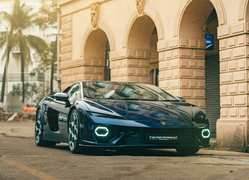
Here is a rewritten article about the Aston Martin Valhalla, tailored for the US market with a 2025 perspective, maintaining the original meaning, structure, and high-quality content, optimized for SEO, and written like an expert with 10 years of experience in the automotive field. The article contains only the title and body, with all explanatory text, notes, and SEO instructions removed.
Driving the Aston Martin Valhalla: A Masterclass in Modern Performance Engineering
In the ultra-competitive world of high-performance motoring, few names evoke the sheer drama and engineering prowess of Aston Martin. As a veteran observer of the supercar and hypercar landscape for the past decade, it’s fascinating to witness how the goalposts for performance are constantly shifting. When you step into the cockpit of the Aston Martin Valhalla, you are instantly transported to a realm where the seemingly impossible has become reality. It’s a vehicle that redefines what’s achievable, pushing the boundaries of hybrid technology, aerodynamics, and driver engagement in a way that leaves you rethinking what modern performance truly means.
A Journey Years in the Making
The name “Valhalla” itself is steeped in Norse mythology, representing the glorious afterlife reserved for fallen warriors, a fitting moniker for a car that feels like the pinnacle of engineering might. However, the journey to this point has been a long and winding road. First unveiled as the AM-RB 003 back in 2019 at the Geneva Motor Show, the concept was a clear statement of intent from Aston Martin, marking a significant stride in its partnership with the Red Bull Racing Formula 1 team.
Over the intervening years, the automotive world, and Aston Martin itself, has undergone dramatic transformations. The relationship with Red Bull Racing evolved, and as Lawrence Stroll took the helm of the storied British marque, the corporate landscape shifted. More significantly, the Valhalla’s powertrain has undergone a fundamental reimagining. What was initially envisioned as a proprietary in-house 3.0-liter V-6 hybrid system—aimed at competing with established hybrid icons like the LaFerrari and Porsche 918 Spyder—has since evolved into a powerful hybrid V-8 derived from the Mercedes-AMG GT Black Series. While Aston Martin has enhanced this platform with larger turbos, a bespoke intake manifold, strengthened pistons, and unique camshafts, its transformation into the Valhalla has seen it become the exclusive home of this mighty engine.
Engineering Excellence That Defines the Hybrid Era
The technical specifications of the Aston Martin Valhalla are nothing short of astonishing. This is not just a car; it’s a technological marvel. The engine—a high-revving, flat-plane-crank, dry-sump twin-turbo 4.0-liter V-8—produces a staggering 817 horsepower. This is augmented by three Aston-designed radial-flux permanent-magnet motors, with one integrated into the new eight-speed dual-clutch transmission and two others driving the front axle. This combination delivers a breathtaking total output of 1,064 horsepower and 811 lb-ft of torque.
One of the most critical aspects of the Valhalla’s architecture is its hybrid system. The 560-cell battery pack, sourced from AMG, is fully immersed in dielectric oil, ensuring optimal cooling and allowing for rapid energy discharge and recharge cycles. This advanced thermal management is crucial for sustaining high-performance driving, particularly on the track. Furthermore, the Valhalla is a plug-in hybrid, offering an EV-only range of up to 8.7 miles and a top speed of 80 mph in electric mode.
For those new to the intricacies of hybrid supercar technology, the Valhalla represents the next evolution of performance. While the original concept might have been seen as a supercar, Aston Martin’s classification of the production model as its first mid-engine supercar acknowledges the existence of the Valkyrie. However, with a starting price of around $1.1 million and a limited production run of 999 units, the Valhalla is in a league of its own.
The Shifting Sands of Supercar Culture
In the modern automotive landscape, a new generation of buyers—millennials, zoomers, and Gen Alpha—have grown up surrounded by hypercars. Social media is flooded with images of million-dollar machines boasting unheard-of power figures, mind-bending acceleration times, and cutting-edge technology. It’s easy to forget the groundbreaking nature of these vehicles when they appear so regularly on our feeds.
For those who remember the automotive world from just a few decades ago, the impact of something like the original McLaren F1 or the Bugatti Veyron was revolutionary. These cars were milestones, shattering previous notions of speed and performance. Today, however, the definition of “normal” in the supercar world has evolved. We have witnessed the rise of road cars with extreme aerodynamic capabilities and racing-derived hardware, like the Porsche 911 GT3 RS, which require true professional skills to unlock their full potential.
The market has become a relentless battleground of innovation. In the time since the Valhalla prototype was first unveiled, the industry has seen the arrival of mind-boggling machines like the Ferrari F80, the 849 Testarossa, the Czinger 21C VMax, and even the Porsche 911 Turbo S. You can even purchase a hybrid Corvette ZR1X with a staggering 1,250 horsepower, a car that was unimaginable just a few years ago when the Valhalla was conceived in partnership with Adrian Newey.
The Intangibles of Driving an Icon
In this context, the idea that “comparison is the thief of joy” has never been more relevant than in the world of supercars and hypercars. It is virtually impossible to orchestrate a proper comparison test between the sheer variety of vehicles available today, especially with manufacturers like Ferrari often reluctant to provide their cars for head-to-head showdowns. This is where the Valhalla truly shines—it must be judged on its own merits, delivering an experience that stands alone.
The overall experience in a car like the Valhalla is paramount. It’s no longer sufficient for a car to be fast and engaging on the road but behave poorly on the track. We expect vehicles to excel in every environment, offering blistering performance without compromising driver comfort. We’ve already seen that Aston Martin is moving in this direction, as evidenced by the early reviews of the Valhalla, which lauded its track-ready capability without sacrificing road manners.
A Surprising Blend of Comfort and Performance
When initially experiencing the Valhalla, you might expect a compromised ride quality given its aggressive, low-slung appearance and Le Mans Hypercar aesthetic. However, you would be mistaken. While the lack of luggage storage is a minor inconvenience, compensated by small cubbies in the door cards, the seating position is the true differentiator. The F1-inspired design places you in a reclined, elevated-leg position, which dictates the car’s structural architecture. With no reclining function, you must adapt to the seating, and manual adjustment is handled via a leather strap between your legs rather than a traditional seat motor.
This seating position, however, is surprisingly comfortable. You adapt to it quickly, realizing that the Valhalla’s specialized Bilstein DTX active damper system provides a plush ride that belies its performance pedigree. On the Spanish roads during the press drive, the suspension offered a remarkable balance between its Sport and Sport+ settings, providing usable performance across a range of conditions. Race mode introduces a stiffer ride, which might be tiresome on mundane drives, but it is perfectly suited for high-speed runs on perfectly smooth tarmac.
The square-shaped steering wheel feels intuitive in the hands, providing a weighting that is neither too light nor too heavy across different drive modes. When approaching a long, open stretch of road, the Valhalla launches like a missile. The car feels supremely planted, with the rear end gripping the tarmac with tenacity, ensuring that the power is delivered with minimal drama. Aston Martin claims a 0–62 mph time of 2.5 seconds, but in practice, it feels even quicker, with a flat torque curve ensuring that 90% of peak torque is available from 2,500 rpm to 6,700 rpm.
The Audiovisual Spectacle of the V-8
If there is one area where the Valhalla deviates from the expectations of purists, it is the redline of its powertrain, which is limited to 7,000 rpm. However, the overall auditory experience is a symphony of mechanical noises. The hybrid system, the turbos, and the exhaust work in unison to create a sound that is immersive without being overwhelming. While it may not be a contender for the title of the best-sounding engine of all time, the Valhalla delivers a satisfying soundtrack that complements its blistering performance.
The Track Experience: Where the Valhalla Truly Excels
Stepping onto the track at the Circuito de Navarra, the Aston Martin Valhalla reveals its full potential. This medium-speed road course, with its blend of corners, braking zones, and elevation changes, is the ideal environment to demonstrate the car’s advanced torque vectoring, aerodynamics, and braking systems.
Choosing Race mode for the track experience is essential. While Sport+ offers good performance on the road, it dumps a massive amount of electric boost to the wheels, quickly depleting the battery. Race mode, on the other hand, implements a recharge strategy that holds back up to 15% of the battery charge, ensuring continuous high-performance driving without interruption. According to chief engineer Andrew Kay, this results in a minimal loss of 15–20 hp, allowing the car to perform consistently even during extended

 Here is a rewritten article about the Aston Martin Valhalla, tailored for the US market with a 2025 perspective, maintaining the original meaning, structure, and high-quality content, optimized for SEO, and written like an expert with 10 years of experience in the automotive field. The article contains only the title and body, with all explanatory text, notes, and SEO instructions removed.
Driving the Aston Martin Valhalla: A Masterclass in Modern Performance Engineering
In the ultra-competitive world of high-performance motoring, few names evoke the sheer drama and engineering prowess of Aston Martin. As a veteran observer of the supercar and hypercar landscape for the past decade, it’s fascinating to witness how the goalposts for performance are constantly shifting. When you step into the cockpit of the Aston Martin Valhalla, you are instantly transported to a realm where the seemingly impossible has become reality. It’s a vehicle that redefines what’s achievable, pushing the boundaries of hybrid technology, aerodynamics, and driver engagement in a way that leaves you rethinking what modern performance truly means.
A Journey Years in the Making
The name “Valhalla” itself is steeped in Norse mythology, representing the glorious afterlife reserved for fallen warriors, a fitting moniker for a car that feels like the pinnacle of engineering might. However, the journey to this point has been a long and winding road. First unveiled as the AM-RB 003 back in 2019 at the Geneva Motor Show, the concept was a clear statement of intent from Aston Martin, marking a significant stride in its partnership with the Red Bull Racing Formula 1 team.
Here is a rewritten article about the Aston Martin Valhalla, tailored for the US market with a 2025 perspective, maintaining the original meaning, structure, and high-quality content, optimized for SEO, and written like an expert with 10 years of experience in the automotive field. The article contains only the title and body, with all explanatory text, notes, and SEO instructions removed.
Driving the Aston Martin Valhalla: A Masterclass in Modern Performance Engineering
In the ultra-competitive world of high-performance motoring, few names evoke the sheer drama and engineering prowess of Aston Martin. As a veteran observer of the supercar and hypercar landscape for the past decade, it’s fascinating to witness how the goalposts for performance are constantly shifting. When you step into the cockpit of the Aston Martin Valhalla, you are instantly transported to a realm where the seemingly impossible has become reality. It’s a vehicle that redefines what’s achievable, pushing the boundaries of hybrid technology, aerodynamics, and driver engagement in a way that leaves you rethinking what modern performance truly means.
A Journey Years in the Making
The name “Valhalla” itself is steeped in Norse mythology, representing the glorious afterlife reserved for fallen warriors, a fitting moniker for a car that feels like the pinnacle of engineering might. However, the journey to this point has been a long and winding road. First unveiled as the AM-RB 003 back in 2019 at the Geneva Motor Show, the concept was a clear statement of intent from Aston Martin, marking a significant stride in its partnership with the Red Bull Racing Formula 1 team.