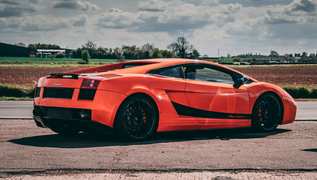
The Pinnacle of Automotive Engineering: A Deep Dive into the World’s Top Supercars and Hypercars of 2025
Welcome to the electrifying world where engineering prowess meets automotive artistry. In 2025, the lines between “supercar” and “hypercar” have blurred to the point of near-invisibility. The only defining characteristics that truly matter are the sheer audacity of their performance, the razor-sharp precision of their handling, and the heart-stopping beauty of their design.
For the enthusiast and collector alike, the chase is on for a machine that doesn’t just cover ground but transcends it. We are living in an era where hybrid technology is not just an efficiency measure but a performance amplifier, and electric propulsion is finally flexing muscle that rivals the most fearsome internal combustion engines ever built.
This comprehensive guide has been curated through the lens of decades of automotive expertise, dissecting the current market trends, technological leaps, and the very essence of what makes a modern machine a legend. Get ready to explore the elite echelon of automotive perfection, where the only limit is the stratosphere and the price tag is simply a reflection of rarity and technological supremacy.
Bugatti Chiron: The Reigning Champion Refined
For years, the Bugatti Chiron has sat on the throne of automotive excellence, serving as the yardstick against which all other hypercars are measured. It’s more than just a car; it’s a statement of intent, a fusion of raw, unfettered power and unparalleled luxury.
The Heart of the Beast
The Chiron remains anchored by the engineering marvel that is its W16 quad-turbocharged engine. This 8.0-liter behemoth produces a staggering 1,500 horsepower and 1,600 Nm of torque, but the 2025 market has seen the introduction of specialized variants that push the envelope even further. While Bugatti’s official top speed has always been electronically limited for safety (though that limitation is often a mere formality), the sheer ferocity of its acceleration is what defines the Chiron experience.
We’re talking 0 to 100 km/h in a breathtaking 2.5 seconds, a figure that defies the physics of mass and friction. The 16-cylinder heart, once thought to be on the brink of extinction, thrives in the Chiron, proving that there is still no substitute for displacement when it comes to the visceral thrill of performance motoring.
Aesthetic Mastery and Rarity
The design language of the Chiron is one of sophisticated aggression. Its elongated silhouette, signature Bugatti horseshoe grille, and aerodynamic C-line flowing along the profile are instantly recognizable. In 2025, the Chiron Super Sport and Chiron Pur Sport variants continue to dominate the conversation.
The Super Sport, with its optimized aerodynamics for high-speed stability, pushes the definition of a production car’s top speed, while the Pur Sport offers a track-focused experience with downforce-generating wings and lightweight construction. Bugatti’s commitment to limited production ensures that owning a Chiron remains a privilege reserved for the few. The expected price for this masterpiece sits well into the $3 million to $4 million bracket, fluctuating based on the bespoke customizations available to the discerning buyer.
Bugatti Bolide: The Track-Ready Weapon
While the Chiron reigns supreme on the road, the Bugatti Bolide enters the scene as an extraterrestrial invader from the world of simulation racing. It is the physical manifestation of what happens when a manufacturer throws away the rulebook of road legality and focuses purely on lap times and the thrill of ultimate speed.
Engineering the Extreme
The Bolide is a testament to Bugatti’s commitment to pushing boundaries, but it does so in a way that is fundamentally different from the Chiron. It sheds the luxury cruiser persona for a track-only chassis constructed from advanced carbon fiber, making it astonishingly light for the power it produces.
Under the hood, the Bolide features a modified W16 engine that, when fueled with racing-grade gasoline, delivers close to 1,850 horsepower. This massive output, coupled with the car’s incredibly low curb weight, results in a power-to-weight ratio that borders on the absurd. Bugatti claims a top speed of nearly 500 km/h, a figure that has been partially tested and verified, making the Bolide one of the fastest track-only vehicles on the planet.
The Aesthetics of Aerodynamics
Visually, the Bolide is nothing short of art in motion. Every curve, vent, and wing serves a singular purpose: airflow management at extreme velocity. The cockpit is minimalist, focused entirely on the driver’s connection to the machine, stripping away the creature comforts found in its road-legal brethren.
With a production run of only 40 units, the Bolide is the epitome of exclusivity. The starting price for one of these automotive missiles is in the region of $4.7 million, positioning it as a collector’s item rather than a mere means of transportation.
McLaren Speedtail: The Art of High-Speed Flight
McLaren’s Speedtail is not just a hypercar; it’s a direct homage to the aerodynamic pioneers of the past, particularly the iconic McLaren F1. Yet, it distinguishes itself through a revolutionary powertrain and a design that seems to melt into the wind.
The Hybrid Powerhouse
At the heart of the Speedtail lies a hybrid powertrain. This innovative marriage of a twin-turbocharged V8 engine and electric motors produces a combined output of 1,050 horsepower, ensuring that the power delivery is instantaneous, smooth, and relentlessly strong. The engine works in symphony with the electric motors to provide brutal acceleration and a top speed that places it in elite company.
The Speedtail boasts a 0 to 100 km/h time of just 2.9 seconds, and its aerodynamic profile allows it to reach speeds in excess of 403 km/h. The integration of electric assistance allows for better torque vectoring and instant responsiveness, making it a sharp tool on the track and an elegant cruiser on the open road.
The Streamline Aesthetic
The most striking feature of the Speedtail is its design, often referred to as a “teardrop” or “flying bullet” silhouette. This shape is not merely for show; it is a masterclass in fluid dynamics, engineered to minimize drag and maximize downforce with minimal intrusion.
Inside, the cabin is a study in modern luxury and minimalist design. It uniquely seats the driver in the center, flanked by two passenger seats that are set slightly back, reminiscent of the F1. McLaren has strictly limited production to 106 units, a nod to the F1’s production number. This scarcity has driven the price past $2 million, making it a highly sought-after asset in the hypercar market.
Aston Martin Valkyrie: Formula 1 on the Road
The Aston Martin Valkyrie is the brainchild of a unique partnership between the British luxury marque and Red Bull Racing’s Adrian Newey, arguably the most celebrated aerodynamicist in Formula 1 history. This collaboration has produced a road-legal hypercar that is little more than a racing car with headlights.
Featherweight Powerhouse
The Valkyrie’s performance is derived from its naturally aspirated 6.5-liter Cosworth V12 engine, a symphony of high-revving mechanics that pushes the boundaries of what’s possible without turbochargers. The engine produces a spine-tingling 1,160 horsepower, but it is the combination of this raw power with the car’s incredibly light carbon fiber monocoque that yields its breathtaking performance.
With a curb weight of only around 1,030 kg, the Valkyrie boasts a power-to-weight ratio that allows it to accelerate to 100 km/h in just 2.5 seconds. The car’s extreme aerodynamic elements, including the massive underbody diffuser, generate enough downforce to compress the chassis at high speeds.
Exclusivity and Legacy
The Aston Martin Valkyrie represents the peak of road-going racecar engineering, a halo project designed to cement the company’s engineering prowess in the public consciousness. Production is strictly limited to 175 units, and this exclusivity, combined with the revolutionary technology and collaboration with Red Bull, has made it one of the most desirable hypercars of the decade.
The starting price for the Valkyrie has been quoted in the region of $3.2 million, but due to the limited supply and intense demand, actual market prices often reach significantly higher figures. The initial allocation has been completely sold out, signaling the immense value placed on this engineering masterpiece by collectors and enthusiasts.
Koenigsegg Jesko Absolute: The Pursuit of Infinite Speed
Koenigsegg, the Swedish manufacturer known for its relentless pursuit of ultimate speed, continues to redefine what’s possible in the world of hypercars. The Jesko Absolute is the current benchmark for the fastest production car in the world, a machine built for one purpose: to break the barrier of 300 mph.
The Twin-Turbo V8 Legend
The heart of the Jesko Absolute is a 5.0-liter twin-turbocharged V8 engine that produces a colossal 1,600 horsepower when fed with E85 biofuel. The engine is paired with Koenigsegg’s revolutionary 9-speed Light Speed Transmission (LST), a highly efficient system designed to minimize power loss during gear changes.

 The Pinnacle of Automotive Engineering: A Deep Dive into the World’s Top Supercars and Hypercars of 2025
Welcome to the electrifying world where engineering prowess meets automotive artistry. In 2025, the lines between “supercar” and “hypercar” have blurred to the point of near-invisibility. The only defining characteristics that truly matter are the sheer audacity of their performance, the razor-sharp precision of their handling, and the heart-stopping beauty of their design.
For the enthusiast and collector alike, the chase is on for a machine that doesn’t just cover ground but transcends it. We are living in an era where hybrid technology is not just an efficiency measure but a performance amplifier, and electric propulsion is finally flexing muscle that rivals the most fearsome internal combustion engines ever built.
This comprehensive guide has been curated through the lens of decades of automotive expertise, dissecting the current market trends, technological leaps, and the very essence of what makes a modern machine a legend. Get ready to explore the elite echelon of automotive perfection, where the only limit is the stratosphere and the price tag is simply a reflection of rarity and technological supremacy.
Bugatti Chiron: The Reigning Champion Refined
For years, the Bugatti Chiron has sat on the throne of automotive excellence, serving as the yardstick against which all other hypercars are measured. It’s more than just a car; it’s a statement of intent, a fusion of raw, unfettered power and unparalleled luxury.
The Heart of the Beast
The Chiron remains anchored by the engineering marvel that is its W16 quad-turbocharged engine. This 8.0-liter behemoth produces a staggering 1,500 horsepower and 1,600 Nm of torque, but the 2025 market has seen the introduction of specialized variants that push the envelope even further. While Bugatti’s official top speed has always been electronically limited for safety (though that limitation is often a mere formality), the sheer ferocity of its acceleration is what defines the Chiron experience.
We’re talking 0 to 100 km/h in a breathtaking 2.5 seconds, a figure that defies the physics of mass and friction. The 16-cylinder heart, once thought to be on the brink of extinction, thrives in the Chiron, proving that there is still no substitute for displacement when it comes to the visceral thrill of performance motoring.
Aesthetic Mastery and Rarity
The Pinnacle of Automotive Engineering: A Deep Dive into the World’s Top Supercars and Hypercars of 2025
Welcome to the electrifying world where engineering prowess meets automotive artistry. In 2025, the lines between “supercar” and “hypercar” have blurred to the point of near-invisibility. The only defining characteristics that truly matter are the sheer audacity of their performance, the razor-sharp precision of their handling, and the heart-stopping beauty of their design.
For the enthusiast and collector alike, the chase is on for a machine that doesn’t just cover ground but transcends it. We are living in an era where hybrid technology is not just an efficiency measure but a performance amplifier, and electric propulsion is finally flexing muscle that rivals the most fearsome internal combustion engines ever built.
This comprehensive guide has been curated through the lens of decades of automotive expertise, dissecting the current market trends, technological leaps, and the very essence of what makes a modern machine a legend. Get ready to explore the elite echelon of automotive perfection, where the only limit is the stratosphere and the price tag is simply a reflection of rarity and technological supremacy.
Bugatti Chiron: The Reigning Champion Refined
For years, the Bugatti Chiron has sat on the throne of automotive excellence, serving as the yardstick against which all other hypercars are measured. It’s more than just a car; it’s a statement of intent, a fusion of raw, unfettered power and unparalleled luxury.
The Heart of the Beast
The Chiron remains anchored by the engineering marvel that is its W16 quad-turbocharged engine. This 8.0-liter behemoth produces a staggering 1,500 horsepower and 1,600 Nm of torque, but the 2025 market has seen the introduction of specialized variants that push the envelope even further. While Bugatti’s official top speed has always been electronically limited for safety (though that limitation is often a mere formality), the sheer ferocity of its acceleration is what defines the Chiron experience.
We’re talking 0 to 100 km/h in a breathtaking 2.5 seconds, a figure that defies the physics of mass and friction. The 16-cylinder heart, once thought to be on the brink of extinction, thrives in the Chiron, proving that there is still no substitute for displacement when it comes to the visceral thrill of performance motoring.
Aesthetic Mastery and Rarity