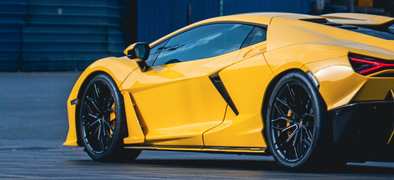
The Apex of Automotive Engineering: A Deep Dive into the World’s Most Exclusive Supercars and Hypercars
In the high-octane realm of automotive excellence, the terms “supercar” and “hypercar” often blur, serving as umbrella descriptors for the pinnacle of performance and design. Yet, a distinction emerges when viewing these machines not just as vehicles, but as rolling sculptures, where every curve, vent, and intake serves a dual purpose: aerodynamic superiority and visual awe. For decades, manufacturers have pursued the elusive trifecta of speed, power, and aesthetic perfection, yielding a stable of road-legal marvels that often transcend the boundaries of their respective classes. This exploration delves into the most compelling supercars and hypercars that have defined the modern automotive landscape, balancing raw performance metrics with the visceral thrill of their revolutionary designs.
Bugatti Chiron: The Evolution of Velocity
When discussing the apex of automotive engineering, the Bugatti Chiron remains an undisputed titan. Succeeding the legendary Veyron, the Chiron was not merely an incremental update; it was a reimagining of what a road-legal hypercar could be. It represents the zenith of Veyron’s “ultimate machine” philosophy, refined for the 21st century with a focus on refined power delivery and an even more radical interpretation of aerodynamic efficiency.
Under the expansive carbon-fiber skin lies the iconic 8.0-liter quad-turbocharged W16 engine. This powerhouse produces a breathtaking 1,500 horsepower and 1,600 Nm of torque at 6,000 rpm, pushing the Chiron to a restricted top speed of 443 km/h (275 mph). Achieving 60 mph from a standstill is a mere spectacle of physics, accomplished in around 2.4 seconds. The transmission, a seven-speed dual-clutch unit, ensures seamless acceleration, transforming raw power into usable, exhilarating speed.
Beyond the staggering numbers, the Chiron’s design is a masterclass in form following function. The signature C-shaped line that bisects the car from the roof to the door creates a visual identity that is instantly recognizable, while also serving as a critical element for cooling the massive engine and generating downforce. The cockpit is a sanctuary of bespoke craftsmanship, offering a level of luxury that belies the car’s savage performance. Bugatti’s commitment to exclusivity is reflected in its production figures, with a planned run of only 500 units. The starting price, around $2.5 million, reflects the exclusivity and the sheer engineering brilliance encapsulated within this automotive icon.
Bugatti Bolide: A Hypercar Reimagined
While the Chiron represents the ultimate fusion of hypercar performance and luxury, the Bugatti Bolide represents the purest, most aggressive distillation of Bugatti’s engineering capabilities. Designed to be a track-focused weapon, the Bolide stands apart visually from its road-going siblings. It features a radical, uncompromised aerodynamic design that looks less like a car and more like a fighter jet on wheels.
The Bolide is powered by a modified version of the Chiron’s W16 engine, producing a staggering 1,850 horsepower when fed with high-octane racing fuel. The engineers managed to extract this immense power from the 8.0-liter quad-turbocharged unit while achieving a weight of only 1,450 kilograms. This incredible power-to-weight ratio theoretically allows the Bolide to exceed 499 km/h (310 mph), although official testing is still underway. In simulated tests, the car achieved a blistering acceleration to 100 km/h in just 2.17 seconds.
The external design is defined by its raw, exposed carbon-fiber structure and dramatic aerodynamic elements, including massive air intakes and a fixed rear wing that generates tremendous downforce. The cockpit is minimalist and driver-focused, with a racing harness and digital instrumentation, creating an intense, visceral driving experience that is not for the faint of heart. Due to its bespoke, track-only nature, production is strictly limited to 40 units, and the starting price of $4.7 million ensures that only the world’s most elite collectors will ever experience the Bolide’s raw power.
McLaren Speedtail: The Apex of Aerodynamics
McLaren’s approach to the hypercar segment is defined by its obsession with weight reduction and aerodynamics. The Speedtail, often referred to as the “McLaren Hyper-GT,” is the spiritual successor to the legendary McLaren F1 and represents a new benchmark in high-speed efficiency. Its design is fluid and organic, evoking the image of a raindrop, which is no coincidence. This teardrop shape is the pinnacle of aerodynamic efficiency, allowing the car to slice through the air with minimal resistance.
The Speedtail is a hybrid, combining a 4.0-liter twin-turbocharged V8 engine with an electric motor. This advanced powertrain produces a combined output of 1,050 horsepower, enabling the Speedtail to reach a breathtaking top speed of 403 km/h (250 mph). While many manufacturers have moved beyond this speed limit, McLaren focused on the balance of this speed with efficiency and range. The car accelerates to 100 km/h in 2.9 seconds, providing seamless, electrifying acceleration.
One of the Speedtail’s most distinctive features is its unique three-seat layout. The driver sits centrally, positioned slightly ahead of the two passenger seats located behind, mirroring the original F1 configuration. The cockpit is a masterpiece of lightweight technology, featuring digital displays, carbon fiber accents, and an innovative active-privacy glass roof that can switch from transparent to opaque at the driver’s command. Production is strictly limited to 106 units, honoring the original McLaren F1’s production number, and the price starts at over €2 million, depending on the customization level.
Aston Martin Valkyrie: F1 Technology for the Road
The Aston Martin Valkyrie is the result of an extraordinary collaboration between Aston Martin and Red Bull Racing’s legendary chief technical officer, Adrian Newey. It is perhaps the closest road-legal vehicle to an F1 car ever conceived, blurring the lines between the world of Formula 1 and consumer automobiles. The design is aggressively sculpted, with the bodywork acting as a massive aerodynamic surface to generate downforce without the need for traditional wings.
At the heart of the Valkyrie is a custom-developed, naturally aspirated 6.5-liter V12 engine, developed by Cosworth. This engine produces a staggering 1,160 horsepower in standard form and can rev up to a mind-bending 11,100 rpm. This high-revving capability, combined with a KERS-style hybrid boost system, provides an astonishing power-to-weight ratio. The Valkyrie weighs only 1,030 kg, allowing it to accelerate to 100 km/h in around 2.5 seconds.
The exterior is defined by its extreme aerodynamics, with a low nose, massive side pods that channel air to the rear diffuser, and a distinctive open-wheel arch design. The cockpit features a compact two-seat configuration with upward-opening dihedral doors, wrapped in a carbon-fiber monocoque that provides an unparalleled sense of structural rigidity and driver connection. The total production is limited to 175 units, with a starting price of approximately $3.2 million. Due to the exclusivity and the engineering complexity, many of these have already been allocated to pre-order customers.
Koenigsegg One:1: The Power-to-Weight Ratio Benchmark
Koenigsegg, the Swedish hypercar manufacturer, has built a reputation for pushing the boundaries of what is technically possible. The Koenigsegg One:1 is a prime example of this philosophy, with its name encapsulating its defining characteristic: a power-to-weight ratio of one metric horsepower per kilogram. This concept, pioneered by Christian von Koenigsegg, was revolutionary at the time of its release and remains one of the most ambitious engineering targets ever achieved in a production car.
The One:1 is powered by a 5.0-liter twin-turbocharged V8 engine that produces 1,360 horsepower and 1,371 Nm of torque, while the car weighs exactly 1,360 kg. This precise ratio results in staggering performance metrics: 0 to 100 km/h in 2.6 seconds, and a theoretically unrestricted top speed of 430 km/h (267 mph). The engine is paired with a 7-speed dual-clutch transmission that can handle the immense torque generated at high engine speeds.
The exterior features aggressive aerodynamic elements, including a large, fixed rear wing that generates significant downforce at high speeds, a feature rare in modern hypercars that typically prioritize active aerodynamics. The interior is luxurious yet purposeful, with carbon fiber accents and a focus on driver engagement. The Koenigsegg One:1 was produced in an extremely limited run of only seven units, each commanding a price of over $2 million, making it one of the most exclusive and sought-after hypercars in the world.
Koenigsegg Jesko Absolute: The Quest for the Ultimate Top Speed
Following the success of the One:1, Koenigsegg introduced the Jesko, a hypercar designed to push the boundaries of speed even further. The Jesko Absolute represents the absolute pinnacle of this ambition, specifically engineered to break the 500 km/h (310 mph) barrier, and ultimately, to hold the title of the world’s fastest production car.
The Jesko Absolute is powered by an advanced 5.0-liter twin-turbocharged V

 The Apex of Automotive Engineering: A Deep Dive into the World’s Most Exclusive Supercars and Hypercars
In the high-octane realm of automotive excellence, the terms “supercar” and “hypercar” often blur, serving as umbrella descriptors for the pinnacle of performance and design. Yet, a distinction emerges when viewing these machines not just as vehicles, but as rolling sculptures, where every curve, vent, and intake serves a dual purpose: aerodynamic superiority and visual awe. For decades, manufacturers have pursued the elusive trifecta of speed, power, and aesthetic perfection, yielding a stable of road-legal marvels that often transcend the boundaries of their respective classes. This exploration delves into the most compelling supercars and hypercars that have defined the modern automotive landscape, balancing raw performance metrics with the visceral thrill of their revolutionary designs.
Bugatti Chiron: The Evolution of Velocity
When discussing the apex of automotive engineering, the Bugatti Chiron remains an undisputed titan. Succeeding the legendary Veyron, the Chiron was not merely an incremental update; it was a reimagining of what a road-legal hypercar could be. It represents the zenith of Veyron’s “ultimate machine” philosophy, refined for the 21st century with a focus on refined power delivery and an even more radical interpretation of aerodynamic efficiency.
Under the expansive carbon-fiber skin lies the iconic 8.0-liter quad-turbocharged W16 engine. This powerhouse produces a breathtaking 1,500 horsepower and 1,600 Nm of torque at 6,000 rpm, pushing the Chiron to a restricted top speed of 443 km/h (275 mph). Achieving 60 mph from a standstill is a mere spectacle of physics, accomplished in around 2.4 seconds. The transmission, a seven-speed dual-clutch unit, ensures seamless acceleration, transforming raw power into usable, exhilarating speed.
The Apex of Automotive Engineering: A Deep Dive into the World’s Most Exclusive Supercars and Hypercars
In the high-octane realm of automotive excellence, the terms “supercar” and “hypercar” often blur, serving as umbrella descriptors for the pinnacle of performance and design. Yet, a distinction emerges when viewing these machines not just as vehicles, but as rolling sculptures, where every curve, vent, and intake serves a dual purpose: aerodynamic superiority and visual awe. For decades, manufacturers have pursued the elusive trifecta of speed, power, and aesthetic perfection, yielding a stable of road-legal marvels that often transcend the boundaries of their respective classes. This exploration delves into the most compelling supercars and hypercars that have defined the modern automotive landscape, balancing raw performance metrics with the visceral thrill of their revolutionary designs.
Bugatti Chiron: The Evolution of Velocity
When discussing the apex of automotive engineering, the Bugatti Chiron remains an undisputed titan. Succeeding the legendary Veyron, the Chiron was not merely an incremental update; it was a reimagining of what a road-legal hypercar could be. It represents the zenith of Veyron’s “ultimate machine” philosophy, refined for the 21st century with a focus on refined power delivery and an even more radical interpretation of aerodynamic efficiency.
Under the expansive carbon-fiber skin lies the iconic 8.0-liter quad-turbocharged W16 engine. This powerhouse produces a breathtaking 1,500 horsepower and 1,600 Nm of torque at 6,000 rpm, pushing the Chiron to a restricted top speed of 443 km/h (275 mph). Achieving 60 mph from a standstill is a mere spectacle of physics, accomplished in around 2.4 seconds. The transmission, a seven-speed dual-clutch unit, ensures seamless acceleration, transforming raw power into usable, exhilarating speed.