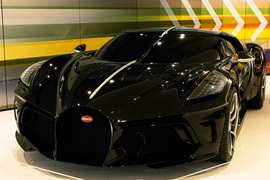
The 2025 Ferrari 296 GTB: A New Benchmark in Hybrid Supercar Engineering
In the exclusive realm of high-performance automobiles, few names carry the weight, history, and sheer prestige of Ferrari. For generations, the Prancing Horse from Maranello has consistently pushed the boundaries of automotive engineering. Even by Ferrari’s own lofty standards, the introduction of the Ferrari 296 GTB in 2022 marked a significant paradigm shift. As we move through 2025, where electrification is no longer a distant concept but a present-day reality, the 296 GTB stands as a definitive benchmark against which all new contenders—including the highly anticipated Lamborghini Temerario—must measure themselves. Having spent over a decade immersed in the supercar industry, observing trends, evaluating engineering marvels, and experiencing these magnificent machines firsthand, it’s clear the Ferrari 296 GTB didn’t just adopt hybridization; it perfected it, creating a symbiotic relationship between internal combustion and electric power that elevates the driving experience to unprecedented heights.
This in-depth analysis explores what makes the Ferrari 296 GTB a pivotal achievement. We will examine its revolutionary powertrain, advanced chassis dynamics, sophisticated aerodynamics, and its profound impact on the supercar market. The article will delve into its ingenious engineering, unparalleled driver engagement, and its strategic position in an increasingly competitive segment, all while considering its enduring appeal as a luxury supercar investment in a world grappling with the transition to sustainable performance.
The Heart of the Beast: A Revolutionary V6 Hybrid Powertrain
Setting aside its award-winning twin-turbo V8, Ferrari introduced an entirely new era for its mid-engined road cars with the innovative twin-turbo V6 engine, augmented by a powerful electric motor. This wasn’t merely a downsizing exercise; it was a masterclass in re-engineering. At its core lies an all-new 120-degree V6, boasting a “hot-vee” turbocharger installation where the turbos reside within the engine’s V-angle. This configuration drastically shortens exhaust paths, minimizing turbo lag and creating an immediate, visceral throttle response that belies forced induction.
This V6, on its own, produces a stunning 654 horsepower and 546 lb-ft of torque. However, the true genius of the Ferrari 296 GTB lies in its seamless integration with a rear-mounted electric motor, which adds a substantial 165 horsepower and 232 lb-ft of torque. The combined output is a staggering 819 horsepower, an awe-inspiring figure that would have been unimaginable from a V6 just a few years ago. While Ferrari typically refrains from quoting a combined peak torque figure due to the intricate dance between the two power sources, the sensation on the road confirms it is, without a doubt, monumental.
This advanced V6 hybrid powertrain is a masterclass in modern high-performance engineering, offering blistering acceleration while simultaneously providing the capability for up to 15 miles of pure electric driving, making it a genuine plug-in hybrid performance vehicle. This “e-Manettino” functionality allows for quiet, emissions-free urban commutes—a previously unthinkable luxury for a car of this caliber—before unleashing its full, electrifying fury on the open road or track. The V6 itself also benefits from a 30 kg weight saving over its V8 counterparts, contributing to the car’s remarkable agility, and is expertly paired with an eight-speed twin-clutch gearbox, ensuring lightning-fast shifts and an engaging driving experience. For those considering a premium automotive technology showcase, the Ferrari 296 GTB is a compelling choice.
Technical Innovation: The V6 Architecture and E-Performance
The adoption of the 120-degree V6 architecture is a cornerstone of the 296 GTB’s design, offering distinct advantages over traditional V8 or flat-plane crank engines. This configuration allows for a compact cylinder layout and places the turbochargers in the “hot-vee,” minimizing exhaust runner length and reducing turbo lag. The result is a motor that feels naturally aspirated, with an immediate response to throttle inputs that belies the forced induction.
The integration of the electric motor is more than just a power boost; it is a fundamental enabler of the car’s character. In the 296 GTB, Ferrari has optimized the hybrid system to reduce the perceived weight of the engine, effectively eliminating the turbo lag common in modern forced-induction cars. The electric motor acts as a torque fill, providing instant low-end thrust that makes the V6 feel lighter and more responsive than its physical weight suggests.
Furthermore, the 296 GTB is Ferrari’s first mid-engine production road car with rear-wheel drive and a V6 engine. It utilizes an advanced hybrid architecture that allows for up to 15 miles of electric-only driving, which is perfect for city driving or conserving fuel. The car offers various driving modes, including Electric, Hybrid, Performance, and Qualify, each adjusting the powertrain’s responsiveness, power delivery, and electric assistance. The e-Manettino switch on the steering wheel, inspired by Ferrari’s Formula 1 technology, allows drivers to select these modes with a simple flick of the wrist. This innovative integration of electric and gasoline power sets a new standard for hybrid supercar performance.
Sculpted for Speed: Aerodynamics and Chassis Innovation
Beyond its groundbreaking powertrain, the Ferrari 296 GTB features an entirely new aluminum chassis, meticulously engineered for optimal dynamics. A reduction of 50mm in the wheelbase compared to previous V8 models, coupled with a slightly forward seating position for the occupants, translates into a car that feels more compact and responsive from behind the wheel.
Maranello’s expertise in active aerodynamics reaches new heights with the 296 GTB. Unlike some predecessors that focused primarily on drag reduction, this vehicle masterfully employs active aero to dramatically increase downforce. A deployable rear wing, emerging from the car’s elegant rear section, is responsible for up to 100kg of the 360kg of downforce quoted at 155 mph. But the real magic happens underneath. Ferrari has dedicated meticulous attention to the underbody, where the majority of downforce is generated. The precise channeling of air, the sophisticated rear diffuser design, and the optimized ground clearance work in concert to create a ground-hugging effect that enhances stability and grip at extreme speeds.
Cooling, critical for a hybrid supercar of this magnitude, is meticulously managed. Twin radiators in the nose handle engine and gearbox cooling, complemented by two additional condensers for the battery pack. Hot air is strategically exited underneath the car to prevent interference with the intercoolers’ airflow, while small apertures below the headlamps efficiently channel air to cool the brakes. Even the roofline features an integrated wing that creates a “virtual” rear screen, guiding air to the car’s rear as if by a physical surface. This holistic approach to airflow management underscores the Ferrari 296 GTB’s cutting-edge automotive engineering.
Aerodynamic Philosophy and Chassis Dynamics
Ferrari’s philosophy for the 296 GTB’s chassis and aerodynamics was clear: reduce weight, increase agility, and enhance driver engagement while providing world-class downforce. The all-new aluminum chassis is stiff, rigid, and designed to provide the driver with a pure connection to the road. The reduced wheelbase, combined with a slight forward shift of the occupant’s seating position, creates a more compact and agile feel from behind the wheel.
The aerodynamic package is where the 296 GTB truly distinguishes itself. Instead of focusing solely on drag reduction, Ferrari utilized active aerodynamics to dramatically increase downforce. The deployable rear wing is the most visible component, but the underbody is the true hero. Ferrari meticulously sculpted the underbody to generate the majority of the downforce, using ground effects to create a ground-hugging effect that significantly enhances stability and grip at high speeds. The combination of active aero and sculpted underbody allows the car to achieve a remarkable 360 kg of downforce at 155 mph, which is a significant achievement for a mid-engine V6.
Cooling is also a critical aspect of the aerodynamic design. The 296 GTB features twin radiators in the nose, complemented by two additional condensers for the battery pack. Hot air is strategically exited underneath the car to prevent interference with the intercoolers’ airflow, while small apertures below the headlamps efficiently channel air to cool the brakes. Even the roofline features an integrated wing that creates a “virtual” rear screen, guiding air to the car’s rear as if by a physical surface. This holistic approach to airflow management underscores the Ferrari 296 GTB’s cutting-edge automotive engineering.
Ferrari’s Electronic Chassis Systems: The Science of Control
Ferrari’s electronic chassis systems have always been at the forefront, and the 296 GTB introduces a new level of sophistication. The innovative six-axis sensor, 6w-CDS, replaces conventional yaw sensors, providing an unprecedented understanding of the car’s movements across X, Y, and Z planes, including both acceleration and rotational speed. Combined with a steering rack-mounted sensor, this system precisely gauges driver input and, crucially, real-time grip levels at the tire contact patches. This data feeds into other critical systems like Side Slip Control (SSC) and the active E-Diff, maximizing cornering speed while maintaining impeccable stability and driver confidence. Furthermore, a new ABS-evo system, integrated into the brake-by-wire system, significantly shortens braking distances and improves trail braking performance, especially in RACE mode and above. This suite of advanced driver assistance systems (ADAS)

 The 2025 Ferrari 296 GTB: A New Benchmark in Hybrid Supercar Engineering
In the exclusive realm of high-performance automobiles, few names carry the weight, history, and sheer prestige of Ferrari. For generations, the Prancing Horse from Maranello has consistently pushed the boundaries of automotive engineering. Even by Ferrari’s own lofty standards, the introduction of the Ferrari 296 GTB in 2022 marked a significant paradigm shift. As we move through 2025, where electrification is no longer a distant concept but a present-day reality, the 296 GTB stands as a definitive benchmark against which all new contenders—including the highly anticipated Lamborghini Temerario—must measure themselves. Having spent over a decade immersed in the supercar industry, observing trends, evaluating engineering marvels, and experiencing these magnificent machines firsthand, it’s clear the Ferrari 296 GTB didn’t just adopt hybridization; it perfected it, creating a symbiotic relationship between internal combustion and electric power that elevates the driving experience to unprecedented heights.
This in-depth analysis explores what makes the Ferrari 296 GTB a pivotal achievement. We will examine its revolutionary powertrain, advanced chassis dynamics, sophisticated aerodynamics, and its profound impact on the supercar market. The article will delve into its ingenious engineering, unparalleled driver engagement, and its strategic position in an increasingly competitive segment, all while considering its enduring appeal as a luxury supercar investment in a world grappling with the transition to sustainable performance.
The 2025 Ferrari 296 GTB: A New Benchmark in Hybrid Supercar Engineering
In the exclusive realm of high-performance automobiles, few names carry the weight, history, and sheer prestige of Ferrari. For generations, the Prancing Horse from Maranello has consistently pushed the boundaries of automotive engineering. Even by Ferrari’s own lofty standards, the introduction of the Ferrari 296 GTB in 2022 marked a significant paradigm shift. As we move through 2025, where electrification is no longer a distant concept but a present-day reality, the 296 GTB stands as a definitive benchmark against which all new contenders—including the highly anticipated Lamborghini Temerario—must measure themselves. Having spent over a decade immersed in the supercar industry, observing trends, evaluating engineering marvels, and experiencing these magnificent machines firsthand, it’s clear the Ferrari 296 GTB didn’t just adopt hybridization; it perfected it, creating a symbiotic relationship between internal combustion and electric power that elevates the driving experience to unprecedented heights.
This in-depth analysis explores what makes the Ferrari 296 GTB a pivotal achievement. We will examine its revolutionary powertrain, advanced chassis dynamics, sophisticated aerodynamics, and its profound impact on the supercar market. The article will delve into its ingenious engineering, unparalleled driver engagement, and its strategic position in an increasingly competitive segment, all while considering its enduring appeal as a luxury supercar investment in a world grappling with the transition to sustainable performance.