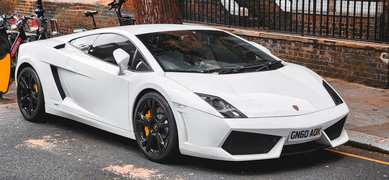
When the Race Ends, the Road Begins: Top Production Cars Engineered for the Track
For decades, the automotive world has been fueled by a dual engine: the relentless pursuit of victory on the racetrack and the desire to deliver that same thrill to everyday drivers. But this isn’t just a marketing gimmick; it’s a symbiotic relationship built on pure engineering. The extreme pressure of competition pushes manufacturers to innovate faster than ever, developing cutting-edge technologies in aerodynamics, lightweight materials, and high-performance powertrains. When these innovations are proven on the circuit, they don’t stay locked behind pit lanes; they translate directly into the cars we can all drive.
This is where the true magic happens. The average driver might never pilot a Formula 1 machine or a Le Mans prototype, but by buying a race-bred production car, they get to experience a piece of that exhilarating world. It blurs the lines between the Monday commute and the Sunday race, transforming everyday driving into something truly special.
Let’s dive into the engineering and history that define this unique fusion of motorsports and production vehicles.
The Engineering of Speed: From Competition to Consumer
At the heart of this relationship lies a fundamental truth: automotive advancement is inextricably linked to the roar of engines on the track. Motorsport isn’t just about winning races; it’s a high-stakes proving ground where engineers are forced to push materials, aerodynamics, and powertrain technology to their absolute limits.
The Tech Transfer: What Filters Down to Your Car
What emerges from this intense environment inevitably trickles down to the cars we drive.
Aerodynamics: Race cars at speeds exceeding 200 mph need to handle massive aerodynamic forces. Manufacturers study how air flows over high-performance bodies to design downforce-generating wings, diffusers, and splitters that improve stability at speed. This same thinking applies to road-going supercars, giving them their signature aggressive looks while enhancing handling.
Lightweight Composites: To save weight and improve agility, race teams use advanced materials like carbon fiber and composites. These materials offer incredible strength at a fraction of the weight of steel. When these materials filter down to production cars, they significantly improve everything from acceleration and handling to fuel efficiency.
Powertrain Innovation: Every component in a race engine—from the cylinder head design to the lubrication system—is optimized for extreme stress, high RPMs, and maximum power output. Race teams constantly experiment with new combustion technologies and fuel injection systems. These advancements don’t stay on the track; they refine the engines in production cars, leading to smoother, more powerful, and more efficient road-going powertrains.
High-Performance Components: Basic technologies that we take for granted today owe their existence to racing. Disc brakes, developed to handle the intense heat generated by racing cars, are now standard on virtually every vehicle. Paddle shifters, a staple of modern supercars, originated in Formula 1 to allow drivers to shift gears faster without taking their hands off the wheel.
The Marketing Magnet: Winning on the Track, Selling on the Street
Beyond pure engineering, motorsport success acts as a powerful brand accelerator. When a manufacturer’s racing division achieves dominance, its road-going counterparts gain an aura of desirability and performance credibility. This “win on Sunday, sell on Monday” philosophy has been the cornerstone of automotive marketing for decades, and it’s experiencing a robust resurgence today.
Modern manufacturers leverage racing heritage to build brand identity. Even if the average consumer never drives a race-bred car, the presence of race-derived technology under the hood gives them a vicarious connection to that exhilarating world. This infusion of motorsport spirit transforms mundane commutes into moments of exhilaration, blurring the lines between the everyday and the extraordinary.
Let’s explore some iconic examples where this direct lineage from the track to the showroom is most evident, showcasing how the relentless pursuit of speed and performance has shaped some of the most compelling production cars ever built.
Iconic Race-Bred Production Cars
Throughout automotive history, several production vehicles have carried the unmistakable DNA of the racetrack. These cars are not just inspired by motorsport; they are born from it, offering enthusiasts a visceral connection to the machines that push the boundaries of automotive performance.
Alfa Romeo Montreal: The V8 Heartbeat of a Sports Prototype
The Alfa Romeo Montreal stands as a unique gem in automotive history, combining striking Italian design with a powerplant that echoes its motorsport heritage. While it may not be as widely known as some of its competitors, the Montreal offers a compelling story of race-derived technology finding its way into a production sports car.
The Engineering Roots: The heart of the Montreal is its 2.6-liter V8 engine, a powerplant that traces its lineage directly back to Alfa Romeo’s formidable Tipo 33 sports prototype. This endurance racer was a regular competitor in legendary events like the Targa Florio and the 24 Hours of Daytona, representing the pinnacle of sports car racing in its era.
The Tipo 33 was a lightweight, nimble machine, and the V8 engine was designed to provide the necessary power and rev range for endurance racing. When Alfa Romeo decided to produce a road car that matched the excitement of its racing programs, they adapted the V8 from the Tipo 33.
On the Street: While recalibrated for street legality and comfort, the Montreal’s V8 retains a significant portion of its motorsport character. It eagerly spins to 7,000 RPM, delivering a spirited 200 horsepower that, when combined with its striking design, cemented the Montreal’s status as an understated yet potent icon of the Alfa Romeo marque. The design itself, penned by Marcello Gandini at Bertone, was a radical departure from the sports cars of the 1970s, featuring iconic louvered headlight covers and a dramatic profile.
The Montreal exemplifies how exotic racing technology can be successfully adapted for consumer enjoyment. It offers a unique blend of performance, style, and motorsport heritage, making it a highly desirable collector’s item for those who appreciate the enduring appeal of a race-bred engine in a road-going package.
BMW M Division: Engineering Excellence Forged in Competition
BMW’s M division, synonymous with performance, has consistently leveraged its motorsport heritage to create automotive legends. The story of the M division is a testament to how a commitment to racing can elevate a brand and produce some of the most coveted performance cars in the world.
The M1: A Racing Homologation Special: The iconic BMW M1, a mid-engined marvel launched in 1972, was a direct product of motorsport requirements. To compete in the Group 4 and Group 5 racing series, BMW needed to produce a certain number of road-legal versions of their race car. This resulted in the M1 being the first dedicated M-car, designed primarily as a road car but built with racing in mind.
It was powered by the legendary 3.5-liter inline-six M88 engine, a powerplant that was a direct offshoot of BMW’s highly successful racing programs. This engine was specifically developed for the M1 ProCar series, a single-make racing championship that featured Formula 1 drivers competing against each other in M1s. The engine was a powerhouse, delivering 470 horsepower in race trim, a massive figure for a naturally aspirated engine of that era.
Cross-Pollination of Performance: This racing pedigree wasn’t confined to a single model. The M88 engine later found its way into the esteemed E24 M6 and E28 M5, bestowing them with exceptional performance capabilities that transformed them from luxury sedans into genuine performance benchmarks.
Furthermore, the four-cylinder S14 engine that propelled the E30 M3, a titan of touring car racing, drew significant inspiration from the M88 and the turbocharged M12 Formula 1 engines. This cross-pollination of engineering across different racing disciplines and production cars highlights BMW’s commitment to transferring championship-winning technology directly to its performance vehicles. The development of the BMW M3 price and the availability of high-performance parts for these classic models continue to attract enthusiasts seeking authentic motorsport experiences.
Chevrolet Camaro ZL1: A Can-Am Beast Unleashed on the Streets
The 1969 Chevrolet Camaro ZL1 represents a bold fusion of racing ambition and street-legal muscle. Its heart is a formidable 427 cubic-inch (7.0-liter) V8, an engine originally conceived for the demanding world of Can-Am (Canadian-American Challenge Cup) racing.
Built for Endurance, Modified for the Road: The Can-Am series was famous for its unrestrained rules, allowing teams to build some of the most powerful racing cars ever conceived. Chevrolet wanted to compete in this highly technical and extreme environment, so they developed a racing-grade engine that was both powerful and lightweight. The result was the all-aluminum ZL1 427 V8.
This all-aluminum powerhouse was remarkable for its era, engineered for extreme performance. While capable of an astonishing 500 horsepower in its race trim, the road-going version was artfully detuned to a still-impressive 430 horsepower. This strategic reduction in power was necessary to maintain reliability and ensure the engine could withstand the rigors of street use, which was a significant challenge for a motor built to race.
A Street-Legal Terror: The ZL1 package transformed the Camaro from a mere pony car into a legitimate drag strip terror, a street-legal monster capable of exhilarating acceleration. This engine’s prowess also extended to the competitive arena,

 When the Race Ends, the Road Begins: Top Production Cars Engineered for the Track
For decades, the automotive world has been fueled by a dual engine: the relentless pursuit of victory on the racetrack and the desire to deliver that same thrill to everyday drivers. But this isn’t just a marketing gimmick; it’s a symbiotic relationship built on pure engineering. The extreme pressure of competition pushes manufacturers to innovate faster than ever, developing cutting-edge technologies in aerodynamics, lightweight materials, and high-performance powertrains. When these innovations are proven on the circuit, they don’t stay locked behind pit lanes; they translate directly into the cars we can all drive.
This is where the true magic happens. The average driver might never pilot a Formula 1 machine or a Le Mans prototype, but by buying a race-bred production car, they get to experience a piece of that exhilarating world. It blurs the lines between the Monday commute and the Sunday race, transforming everyday driving into something truly special.
Let’s dive into the engineering and history that define this unique fusion of motorsports and production vehicles.
The Engineering of Speed: From Competition to Consumer
At the heart of this relationship lies a fundamental truth: automotive advancement is inextricably linked to the roar of engines on the track. Motorsport isn’t just about winning races; it’s a high-stakes proving ground where engineers are forced to push materials, aerodynamics, and powertrain technology to their absolute limits.
The Tech Transfer: What Filters Down to Your Car
When the Race Ends, the Road Begins: Top Production Cars Engineered for the Track
For decades, the automotive world has been fueled by a dual engine: the relentless pursuit of victory on the racetrack and the desire to deliver that same thrill to everyday drivers. But this isn’t just a marketing gimmick; it’s a symbiotic relationship built on pure engineering. The extreme pressure of competition pushes manufacturers to innovate faster than ever, developing cutting-edge technologies in aerodynamics, lightweight materials, and high-performance powertrains. When these innovations are proven on the circuit, they don’t stay locked behind pit lanes; they translate directly into the cars we can all drive.
This is where the true magic happens. The average driver might never pilot a Formula 1 machine or a Le Mans prototype, but by buying a race-bred production car, they get to experience a piece of that exhilarating world. It blurs the lines between the Monday commute and the Sunday race, transforming everyday driving into something truly special.
Let’s dive into the engineering and history that define this unique fusion of motorsports and production vehicles.
The Engineering of Speed: From Competition to Consumer
At the heart of this relationship lies a fundamental truth: automotive advancement is inextricably linked to the roar of engines on the track. Motorsport isn’t just about winning races; it’s a high-stakes proving ground where engineers are forced to push materials, aerodynamics, and powertrain technology to their absolute limits.
The Tech Transfer: What Filters Down to Your Car