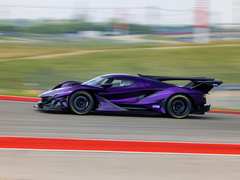
Engineering the Speed: How Racetrack Technology Shapes Street Cars
For over a decade in the automotive world, I’ve seen how the line between the racing track and the production car blurs. It’s not just about a fancy badge; it’s about taking the raw engineering from the most demanding competitions and turning it into an experience anyone can enjoy. This deep dive looks at ten amazing cars where that competition DNA is clear, showing how the spirit of the race transforms what we drive every day.
The Motorsport Crucible: Where Road Car Tech is Born
The quest for performance in road-going cars is directly tied to the roar of engines on the track. Motorsport is essentially a proving ground, a high-stakes lab where engineers push limits under extreme pressure. This constant drive for victory forces innovation in materials, aerodynamics, and powertrain technology. The results aren’t just confined to the winner’s circle; they eventually influence the cars we drive every day. From advanced aerodynamic designs that improve stability at high speeds to lightweight composites that enhance efficiency and handling, lessons learned in competition translate directly into better road vehicles. Even basic features like disc brakes and paddle shifters owe their origins to the demands of racing circuits.
Racing Prowess Driving Brand and Performance
Beyond engineering, motorsport success acts as a powerful amplifier for brands. When a manufacturer’s racing division achieves dominance, its road cars gain desirability and performance credibility. This “win on Sunday, sell on Monday” philosophy, a core marketing concept for decades, is seeing a strong comeback. Even though most drivers won’t pilot a Formula 1 challenger or a Le Mans Prototype, having race-inspired engines in production cars allows enthusiasts to vicariously experience that exciting world. This infusion of motorsport spirit transforms everyday commutes into thrilling moments, bridging the gap between the ordinary and the extraordinary.
From Race-Winning Tech to Street-Legal Thrills: A Deep Dive
Alfa Romeo Montreal: The V8 Heartbeat of a Sports Prototype
The Alfa Romeo Montreal remains a testament to the enduring appeal of a powerful V8 engine. Under its stylish hood sits a 2.6-liter V8 that traces its roots back to Alfa Romeo’s formidable Tipo 33 sports prototype. This endurance racer regularly competed in legendary events like the Targa Florio and the demanding 24 Hours of Daytona, representing the pinnacle of sports car racing in its era. While tuned for street use and comfort, the Montreal’s V8 retains a significant amount of its motorsport character. It revs eagerly to 7,000 RPM, producing a spirited 200 horsepower that, combined with its striking design, cemented the Montreal’s status as an understated yet potent icon of the Alfa Romeo marque. This vehicle exemplifies how exotic racing technology can be adapted for consumer enjoyment, offering a unique blend of performance and Italian flair.
BMW’s M Division: Engineering Excellence Forged in Competition
BMW’s M division, synonymous with performance, has consistently leveraged its motorsport heritage to create automotive legends. The iconic BMW M1, a mid-engined marvel, was powered by the legendary 3.5-liter inline-six M88 engine. This powerplant was a direct offshoot of BMW’s highly successful racing programs, most notably finding a home in the M1 ProCar series. This racing pedigree wasn’t confined to a single model; the M88 engine later found its way into the esteemed E24 M6 and E28 M5, bestowing them with exceptional performance capabilities. Furthermore, the four-cylinder S14 engine that propelled the E30 M3, a titan of touring car racing, drew significant inspiration from the M88 and the turbocharged M12 Formula 1 engines. This cross-pollination of engineering across different racing disciplines and production cars highlights BMW’s commitment to transferring championship-winning technology directly to its performance vehicles, solidifying its reputation for producing driver-focused automobiles.
Chevrolet Camaro ZL1: A Can-Am Beast Unleashed on the Streets
The 1969 Chevrolet Camaro ZL1 represents a bold fusion of racing ambition and street-legal muscle. Its heart is a formidable 427 cubic-inch (7.0-liter) V8, an engine originally conceived for the demanding world of Can-Am racing. This all-aluminum powerhouse, remarkable for its era, was engineered for extreme performance. While capable of an astonishing 500 horsepower in its race trim, the road-going version was artfully detuned to a still-impressive 430 horsepower. The ZL1 package transformed the Camaro from a mere pony car into a legitimate drag strip terror, a street-legal monster capable of exhilarating acceleration. This engine’s prowess also extended to the competitive arena, finding its way into various race cars competing in the SCCA Trans-Am series. With a production run of only 69 units, the Camaro ZL1 remains an exceptionally rare and highly coveted collector’s item, a tangible link to an era of uncompromising American performance.
Ferrari Dino 206 GT: A V6 Prelude to Prancing Horse Excellence
The Ferrari Dino 206 GT, though bearing a name separate from its famed parent marque, introduced a groundbreaking V6 engine that echoed Ferrari’s Formula 2 racing efforts of the 1960s. This compact 2.0-liter V6, while de-tuned for road use, retained a thrillingly high-revving character, imbuing the Dino with a distinct racing spirit that made it an absolute joy to drive on winding roads. Producing a capable 180 horsepower, this engine provided ample motivation for a car weighing just over 2,000 pounds. The Dino was more than just a beautiful car; it marked Ferrari’s significant foray into mid-engine V6 sports cars, establishing a design and engineering philosophy that would influence subsequent generations of iconic Ferrari models.
Ferrari F50: Formula 1 DNA on Public Roads
The Ferrari F50, conceived to commemorate the Italian marque’s 50th anniversary, represents an audacious elevation of the track-derived engine concept. Its 4.7-liter V12 engine is not merely inspired by racing; it’s a direct descendant of the powertrain used in Ferrari’s 1990 Formula 1 car, the Tipo 641, famously piloted by Alain Prost. This naturally aspirated marvel is a symphony of mechanical precision, capable of reaching an astonishing 8,500 RPM and unleashing 513 horsepower. The F50 delivers an unvarnished, visceral experience that brings the raw intensity of Formula 1 directly to the street. With minimal modifications required to meet road regulations, the F50 stands as perhaps the closest a street-legal Ferrari has ever come to replicating the pure essence of a Grand Prix car.
Ford GT: A Modern Homage to Le Mans Legends
The Ford GT is a deliberate and masterful homage to one of the most iconic race cars in automotive history: the legendary Ford GT40 that conquered Le Mans. The first generation of the modern GT, launched in 2005, featured a 5.4-liter supercharged V8 engine whose development was intrinsically linked to Ford’s endurance racing engine programs, sharing components and engineering principles with the powerplants found in Ford’s Daytona Prototype race cars. Echoing this commitment to racing heritage, the second-generation Ford GT, introduced in 2017, continues this tradition with a twin-turbocharged 3.5-liter EcoBoost V6. This engine itself is a product of Ford’s extensive involvement in endurance racing, demonstrating a clear and consistent philosophy of applying race-proven technology to its flagship supercar.
Jaguar XJ220: Record-Breaking Speed Driven by a Racing V6
The Jaguar XJ220, a jewel in the crown of British automotive engineering, initially envisioned with a V12 engine, ultimately embraced a more potent and race-derived heart: a 3.5-liter twin-turbocharged V6. This engine was directly lifted from the Jaguar XJR-11 Group C race car, a formidable competitor in the world of international sports car racing. This competition-proven powerplant endowed the XJ220 with breathtaking performance, enabling it to achieve a remarkable top speed of 217 mph. For a period, it held the title of the fastest production car in the world, a testament to the efficacy of its racing origins. The XJ220’s engine remains one of the most advanced and track-honed powerplants ever to find its way into a road-legal automobile, embodying the pinnacle of Jaguar’s engineering prowess.
Plymouth Belvedere: The Hemi’s NASCAR Roots
The 1964 Plymouth Belvedere, while seemingly a conventional sedan, harbored a secret weapon under its hood: the legendary 426 Hemi V8. This engine, known colloquially as the “Race Hemi,\” was developed with a singular purpose: to dominate NASCAR. Its immense power and rugged construction made it a force to be reckoned with on the racetrack, and it was only a matter of time before this formidable powerplant became available in Plymouth’s production lineup. The road-going Belvedere, boasting a robust 425 horsepower, quickly established itself as one of the most potent muscle cars of the 1960s, a reputation that carried forward into the 1970s with iconic models like the ‘Cuda.
Porsche 918 Spyder: Hybrid Powerhouse with a Racing Heart
The Porsche 918 Spyder represents a paradigm shift in hypercar engineering, seamlessly blending hybrid technology with a purebred racing engine. Its 4.6-liter V8, a naturally aspirated masterpiece, is directly based on the

 Engineering the Speed: How Racetrack Technology Shapes Street Cars
For over a decade in the automotive world, I’ve seen how the line between the racing track and the production car blurs. It’s not just about a fancy badge; it’s about taking the raw engineering from the most demanding competitions and turning it into an experience anyone can enjoy. This deep dive looks at ten amazing cars where that competition DNA is clear, showing how the spirit of the race transforms what we drive every day.
The Motorsport Crucible: Where Road Car Tech is Born
The quest for performance in road-going cars is directly tied to the roar of engines on the track. Motorsport is essentially a proving ground, a high-stakes lab where engineers push limits under extreme pressure. This constant drive for victory forces innovation in materials, aerodynamics, and powertrain technology. The results aren’t just confined to the winner’s circle; they eventually influence the cars we drive every day. From advanced aerodynamic designs that improve stability at high speeds to lightweight composites that enhance efficiency and handling, lessons learned in competition translate directly into better road vehicles. Even basic features like disc brakes and paddle shifters owe their origins to the demands of racing circuits.
Racing Prowess Driving Brand and Performance
Engineering the Speed: How Racetrack Technology Shapes Street Cars
For over a decade in the automotive world, I’ve seen how the line between the racing track and the production car blurs. It’s not just about a fancy badge; it’s about taking the raw engineering from the most demanding competitions and turning it into an experience anyone can enjoy. This deep dive looks at ten amazing cars where that competition DNA is clear, showing how the spirit of the race transforms what we drive every day.
The Motorsport Crucible: Where Road Car Tech is Born
The quest for performance in road-going cars is directly tied to the roar of engines on the track. Motorsport is essentially a proving ground, a high-stakes lab where engineers push limits under extreme pressure. This constant drive for victory forces innovation in materials, aerodynamics, and powertrain technology. The results aren’t just confined to the winner’s circle; they eventually influence the cars we drive every day. From advanced aerodynamic designs that improve stability at high speeds to lightweight composites that enhance efficiency and handling, lessons learned in competition translate directly into better road vehicles. Even basic features like disc brakes and paddle shifters owe their origins to the demands of racing circuits.
Racing Prowess Driving Brand and Performance