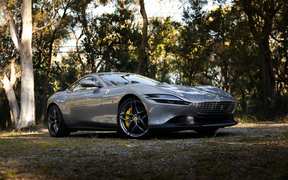
Toyota’s Next-Gen Sports Car Powerhouse: Deep Dive into the GR GT, GR GT3, and Revamped Lexus LFA
Toyota has finally pulled the covers off what many in the automotive world consider its “Holy Trinity” of performance: the Lexus LFA Concept, the GR GT, and the GR GT3 race car. These vehicles represent a seismic shift in Toyota’s strategy, signalling a full-throttle commitment to the world of high-performance motoring. After years of whispers and rumors, the Japanese automotive giant is not just playing catch-up—it’s looking to lead the charge.
This exclusive first look gives us an unprecedented opportunity to get up close with these groundbreaking machines. In a series of intensive technical briefings, we sat down with Chief Program Manager Takashi Doi and the engineering teams responsible for the chassis, powertrain, design, and aerodynamics. While some questions were met with the polite deflection typical of a major OEM, we gleaned invaluable insights into the future direction of Toyota’s performance lineup.
The overwhelming takeaway is that Toyota is approaching the development of these cars with the meticulous patience of a traditional artisan. Each vehicle represents a carefully managed milestone on the journey from conceptualization to the showroom, ensuring that when these cars hit the streets, they are not just fast, but world-class in every sense of the word.
The All-New GR GT: A 2028 Performance Benchmark
Pricing, Availability, and Premium Positioning
The road-legal GR GT is slated for a 2028 model year release, serving as the homologated counterpart to the GR GT3 race car. While its race counterpart is expected to debut shortly after, we’ve seen in the past—notably with the Ford GT—that manufacturers often race their vehicles years before their road-going versions hit the pavement.
Pricing has been a hot topic, and Project Manager Doi was refreshingly candid, suggesting we look at benchmark competitors like the Porsche 911 and Mercedes-AMG GT. Based on the GR GT’s claimed 641 horsepower and 3,858-pound curb weight, the vehicle boasts an impressive 6.0 lb/hp power-to-weight ratio.
Here is a snapshot of how the GR GT stacks up against its rivals:
| Vehicle | Curb Weight | Horsepower | Weight/Power | Base Price |
| :— | :— | :— | :— | :— |
| 2028 Toyota GR GT | 3,858 lb | 641 hp | 6.0 lb/hp | N/A |
| 2026 Porsche 911 GT3 | 3,278 lb | 502 hp | 6.2 lb/hp | $235,500 |
| 2026 Porsche 911 Turbo S | 3,859 lb | 701 hp | 5.5 lb/hp | $275,650 |
| 2026 AMG GT Pro 4Matic | 4,299 lb | 603 hp | 7.1 lb/hp | $202,200 |
| 2026 Aston Martin Vantage S | 3,847 lb | 671 hp | 5.7 lb/hp | $235,000 |
(Note: Turbo S and AMG GT Pro specifications are estimated for the 2026 model year.)
This competitive set strongly indicates that the GR GT will be priced at or above $200,000. Toyota is not positioning this car as a budget-friendly alternative but as a true flagship competitor in the elite segment of the luxury performance market.
Performance Modes and Driving Dynamics
The GR GT features a fiendishly complex hybrid powertrain with a mechanical limited-slip differential (LSD), designed to deliver not just engaging driving dynamics but also the raw, tire-scorching thrills that enthusiasts crave. Can it drift? Does it have a dedicated drift mode?
Doi-san confirmed that the engineering team is developing various driving modes, although the official names remain confidential. However, the steering wheel provides compelling clues. A knob on the right, labeled ‘Sport Boost,’ likely activates the full hybrid power output for an aggressive acceleration profile.
Mirroring this on the lower left is a button for traction and stability control, labeled ‘TRC/VSC’ (Traction Control/Vehicle Stability Control) with an “Off” option. When questioned about the ability to turn these systems off entirely, Doi eventually confirmed that drivers will have the freedom to disable them for pure track performance.
Looking to the future, we asked about higher-performance variants such as a Nürburgring Edition (akin to the special runs offered at the LFA’s conclusion), GRMN (Gazoo Racing Masters of Nürburgring), or GT R variants. Doi’s response was guarded but definitive: “Obviously we can’t talk about future product, but variations and improvements is something we’re always looking for. And that’s crucial, very important for a sports car.” This strongly suggests that future performance iterations are not only possible but likely.
The Nürburgring Nordschleife: A Crucible of Redemption
The Nürburgring Nordschleife remains a central focus for Toyota. When Akio Toyoda, the visionary behind Gazoo Racing and the grandson of the founder, unveiled the GR GT and GR GT3, he stood before a giant screen displaying the word “HUMILIATION.”
Akio spoke at length about the challenges of competing on the Green Hell in previous Toyota prototypes, including the fourth-generation Supra. He vividly described the feeling of being passed by faster, better-handling cars, predominantly from German manufacturers.
It is this very Japanese concept of using humiliation as a catalyst for improvement that has driven the development of the GR GT and GT3. When asked about the importance of the Nürburgring and whether the team is targeting a sub-7-minute lap time—like the Mustang GTD (6:52), Corvette ZR1 (6:50), and ZR1X (6:49)—Doi declined to offer specific numbers. However, he reaffirmed the strategic importance of the circuit to Toyota, the GR brand, and the company’s motorsports programs. He reiterated Akio’s commitment: the GR GT will not be the one getting passed on the Green Hell.
Given the characteristic modesty of Japanese automotive engineers and the competitive set, we interpret this as a declarative statement. The GR GT is almost certainly targeting a lap time under seven minutes. When considering the track records of the current 911 GT3 and AMG GT models, which have all comfortably dipped below this benchmark, the GR GT is undoubtedly being engineered to join this elite club.
The Lexus LFA Concept: A Glimpse into the Future
For those who fell in love with the soul-stirring Lexus LFA, the news is both exhilarating and uncertain. When asked about its arrival date and pricing, the consistent response from Toyota representatives, including Doi-san, was “several years” away.
When the original LFA debuted in 2010, it was priced at a staggering $375,000, and the final Nürburgring Edition left the market at $445,000. Doi-san acknowledged that the automotive world has changed significantly since the original LFA’s departure, and the shift to an all-electric powertrain complicates matters considerably. This suggests the new LFA needs to be significantly less than $350,000, but this is where things get very interesting.
The EV Supercar Quandary
The market for luxury sports coupes has always been niche, and the electric segment is even more so. Currently, there are virtually no electric sports coupes priced above $200,000. A few high-end electric luxury and performance cars exist, such as the Lucid Air Sapphire, Rolls-Royce Spectre, and Cadillac Celestiq, but none fit the direct competitive profile of the LFA.
Stepping into the electric hypercar realm, vehicles like the Rimac Nevera and Lotus Evija command $2.3 to $2.4 million—a universe away from the Lexus brand. The closest comparison might be the rumored second-generation Tesla Roadster, potentially priced between $200,000 and $250,000, assuming Elon Musk’s vaporware ever materializes.
Will the LFA Debut with Solid-State Battery Technology?
There is one major technological development that could push the LFA into a rarefied, ultra-exclusive position: the integration of solid-state battery (SSB) technology. While no one at the event confirmed this under direct questioning, the rumor holds substantial weight.
Toyota has been aggressively pursuing solid-state batteries since 2020, primarily through its joint venture with Panasonic, Prime Planet Energy & Solutions, Inc. The company announced in 2024 that SSB technology is slated for release between 2027 and 2028, offering a 621-mile (1,000 km) range and rapid recharging in approximately 10 minutes.
This level of performance would represent a revolutionary leap in the automotive world—precisely the kind of game-changing technology a brand like Lexus would want to feature in its flagship sports car. It also offers a potential solution to the

 Toyota’s Next-Gen Sports Car Powerhouse: Deep Dive into the GR GT, GR GT3, and Revamped Lexus LFA
Toyota has finally pulled the covers off what many in the automotive world consider its “Holy Trinity” of performance: the Lexus LFA Concept, the GR GT, and the GR GT3 race car. These vehicles represent a seismic shift in Toyota’s strategy, signalling a full-throttle commitment to the world of high-performance motoring. After years of whispers and rumors, the Japanese automotive giant is not just playing catch-up—it’s looking to lead the charge.
This exclusive first look gives us an unprecedented opportunity to get up close with these groundbreaking machines. In a series of intensive technical briefings, we sat down with Chief Program Manager Takashi Doi and the engineering teams responsible for the chassis, powertrain, design, and aerodynamics. While some questions were met with the polite deflection typical of a major OEM, we gleaned invaluable insights into the future direction of Toyota’s performance lineup.
The overwhelming takeaway is that Toyota is approaching the development of these cars with the meticulous patience of a traditional artisan. Each vehicle represents a carefully managed milestone on the journey from conceptualization to the showroom, ensuring that when these cars hit the streets, they are not just fast, but world-class in every sense of the word.
The All-New GR GT: A 2028 Performance Benchmark
Pricing, Availability, and Premium Positioning
The road-legal GR GT is slated for a 2028 model year release, serving as the homologated counterpart to the GR GT3 race car. While its race counterpart is expected to debut shortly after, we’ve seen in the past—notably with the Ford GT—that manufacturers often race their vehicles years before their road-going versions hit the pavement.
Pricing has been a hot topic, and Project Manager Doi was refreshingly candid, suggesting we look at benchmark competitors like the Porsche 911 and Mercedes-AMG GT. Based on the GR GT’s claimed 641 horsepower and 3,858-pound curb weight, the vehicle boasts an impressive 6.0 lb/hp power-to-weight ratio.
Toyota’s Next-Gen Sports Car Powerhouse: Deep Dive into the GR GT, GR GT3, and Revamped Lexus LFA
Toyota has finally pulled the covers off what many in the automotive world consider its “Holy Trinity” of performance: the Lexus LFA Concept, the GR GT, and the GR GT3 race car. These vehicles represent a seismic shift in Toyota’s strategy, signalling a full-throttle commitment to the world of high-performance motoring. After years of whispers and rumors, the Japanese automotive giant is not just playing catch-up—it’s looking to lead the charge.
This exclusive first look gives us an unprecedented opportunity to get up close with these groundbreaking machines. In a series of intensive technical briefings, we sat down with Chief Program Manager Takashi Doi and the engineering teams responsible for the chassis, powertrain, design, and aerodynamics. While some questions were met with the polite deflection typical of a major OEM, we gleaned invaluable insights into the future direction of Toyota’s performance lineup.
The overwhelming takeaway is that Toyota is approaching the development of these cars with the meticulous patience of a traditional artisan. Each vehicle represents a carefully managed milestone on the journey from conceptualization to the showroom, ensuring that when these cars hit the streets, they are not just fast, but world-class in every sense of the word.
The All-New GR GT: A 2028 Performance Benchmark
Pricing, Availability, and Premium Positioning
The road-legal GR GT is slated for a 2028 model year release, serving as the homologated counterpart to the GR GT3 race car. While its race counterpart is expected to debut shortly after, we’ve seen in the past—notably with the Ford GT—that manufacturers often race their vehicles years before their road-going versions hit the pavement.
Pricing has been a hot topic, and Project Manager Doi was refreshingly candid, suggesting we look at benchmark competitors like the Porsche 911 and Mercedes-AMG GT. Based on the GR GT’s claimed 641 horsepower and 3,858-pound curb weight, the vehicle boasts an impressive 6.0 lb/hp power-to-weight ratio.