A New Supercar Contender Emerges: The Las Vegas Concours at Wynn
The world of high-end automotive events is a fierce landscape, dominated by titans like the Pebble Beach Concours d’Elegance. These gatherings represent the pinnacle of automotive history, where rare and exquisite classic cars meet the critical eye of discerning judges. Yet, in recent years, a new breed of event has captured the attention of a rapidly growing segment of the collector community: the supercar and hypercar showcase. For enthusiasts of modern, cutting-edge machinery, the traditional concours often falls short. This is where The Quail: A Motorsports Gathering has historically reigned supreme, serving as the ultimate preview for the world’s most exclusive new models.
But the automotive hierarchy is in constant flux. A challenger has emerged from the glittering heart of the desert, and it’s making waves that threaten to redraw the map of automotive exclusivity. The Concours at Wynn Las Vegas, while perhaps not yet a household name in the way Pebble Beach is, is rapidly evolving into a major destination for collectors, manufacturers, and automotive media. Its aggressive rise has forced a serious question upon the industry: Is The Quail about to be dethroned?
The Evolution of Automotive Power
The term “concours d’elegance” traditionally signifies a gathering centered on classic cars. Entries are judged primarily on aesthetic perfection and historical significance. For decades, this definition has been the standard for events like Pebble Beach, Goodwood, and Amelia Island. These shows are steeped in tradition, celebrating the golden age of motoring with vintage chassis, gleaming chrome, and a sense of nostalgic reverence.
However, the automotive landscape has shifted dramatically. The rise of the modern supercar and hypercar represents a technological and engineering revolution. These vehicles are the result of bleeding-edge materials science, advanced aerodynamics, and performance metrics that dwarf the capabilities of anything that came before. For a growing segment of the collector market, the beauty lies not in the patina of age, but in the sharp lines of carbon fiber and the raw power of hybrid drivetrains.
For these enthusiasts, events like Pebble Beach have become increasingly irrelevant. The emphasis on pre-war elegance and classic design leaves little room for the breathtaking innovations of 21st-century engineering. The death of the Geneva International Motor Show further exacerbated this divide. For years, Geneva was the epicenter for major supercar debuts, from the Lamborghini Aventador to the Bugatti Chiron. Its absence left a void in the global automotive calendar, a gap that The Quail has valiantly tried to fill.
The Quail’s Reign
The Quail has long been the superior alternative for those who prefer modern speed over vintage class. It has established itself as the definitive place to witness the unveiling of the latest and most extreme hypercars. When manufacturers want to show off their most exclusive creations, they turn to The Quail. The launch of the McLaren Speedtail, the Ferrari Purosangue, and the Rimac Nevera are all high-profile debuts that happened at this iconic event. For years, this has been the undisputed kingdom of new hypercars.
For instance, the Bugatti Divo and Mistral made their first appearances at The Quail. Similarly, the revolutionary Ferrari Icona SP1 and SP2 were first shown to the world at this event. The Audi PB18 e-tron concept made its global premiere here, as did numerous other vehicles that pushed the boundaries of automotive design and technology. This consistent track record has cemented The Quail’s reputation as the premier showcase for the industry’s most innovative and exclusive models.
For those who have attended The Quail, the experience is legendary. The event is set against the stunning backdrop of the Quail Lodge, with rolling hills and manicured grounds creating a picturesque stage. The culinary experience is equally refined, featuring Michelin-star chefs and an array of premium delicacies. However, this exclusivity comes at a cost. A single ticket to The Quail can cost upwards of $1,300, and this price is reserved for legacy ticket holders. First-time attendees are often charged $1,600.
Furthermore, the cost for manufacturers to participate is astronomical. Setting up a display at The Quail can cost OEMs nearly $400,000 for just six hours. The logistics of transporting hypercars to the Monterey Peninsula are complex and expensive, and the traffic can be nightmarish. While the event delivers an unparalleled viewing experience, the economic barrier is incredibly high, and the logistical challenges are significant.
The Las Vegas Challenger
Until recently, The Quail’s supremacy seemed secure. But the automotive world is always looking for the next big thing, and The Quail is about to face some serious competition. The Las Vegas Concours, held annually in the shadow of the iconic Las Vegas Strip, has emerged as a serious contender for the title of the world’s premier supercar event.
The Unprecedented Scale of 2025
The 2025 iteration of the Concours at Wynn Las Vegas was nothing short of astonishing. It was an event defined by sheer scale, featuring an overwhelming collection of rare and significant automobiles that redefined what a car show can be. The event was a global phenomenon, drawing attention from manufacturers, collectors, and enthusiasts worldwide.
One of the most striking features of the show was the extraordinary number of Bugatti Veyrons on display. In fact, the Wynn hosted 48 Bugatti Veyrons—a staggering 48 of the 450 total Veyrons ever built. Of those, 49 were present, as Bugatti also showcased a stunning white Vitesse Super Sport to celebrate the Veyron’s 20th anniversary. The French manufacturer also displayed a Bolide, Centodieci, Chiron Super Sport, Divo, Mistral, and a model of the upcoming Tourbillon, its 18-cylinder hybrid successor to the Chiron. Presenting more than 10% of all the Bugatti Veyrons ever made in one location was a feat that left heads spinning.
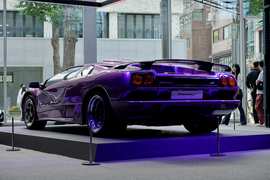
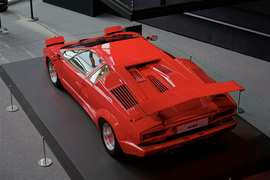
The enthusiasm for rare European hypercars was palpable, particularly with the Lamborghini section. The event featured the largest gathering of Lamborghinis in North American history, with an estimated 230 cars on display—nearly half of the 600 cars present at the show. This staggering collection included an ultra-rare Veneno Coupe (one of only three ever sold to the public), a Sesto Elemento (one of ten), a Centenario Coupe and Convertible (one of twenty each), and a Reventón (one of twenty-one). Seeing these legendary “few-offs” together again was an awe-inspiring sight, reminiscent of the Lamborghini factory museum. The presence of so much precious Italian metal made the Las Vegas Concours an unforgettable spectacle.
Adding to the excitement, Horatio Pagani, the founder of Pagani Automobili, was honored onstage by emcee Justin Bell for his contributions to automotive design. This validation from one of the industry’s most revered figures underscores the growing importance of the Las Vegas Concours. Even more remarkably, Pagani chose this event to debut his highly anticipated Huayra Codalunga Speedster, a limited-edition hypercar with a price tag of $7 million. With only ten models planned, the debut under the covers belonged to Apple’s Tim Cook, adding another layer of celebrity allure to the already electric atmosphere. The fact that Pagani chose to introduce such a significant vehicle in Vegas speaks volumes about the show’s escalating profile.
A Breadth of Extraordinary Engineering
While Bugattis and Lamborghinis steal the spotlight, the Las Vegas Concours features an exhaustive range of extraordinary engineering marvels. For those who appreciate precision, performance, and innovation, the event is a treasure trove of automotive excellence. The show includes a remarkable collection of Koenigseggs, the pinnacle of Swedish hypercar engineering, as well as the aggressive Gumpert Apollo and the unique Czingers.
The McLaren booth showcased the Project Endurance race car, marking a significant moment for the British manufacturer. The event also featured a selection of highly exclusive cars that were actually judged, including a stunning 1929 Mercedes-Benz 680 S Barker Tourer, an insane Pebble Beach Concours-winning car that also took home the prewar Best of Show honors in Vegas.
Additional highlights included the HWA EVO, a Mercedes-AMG One, two Oldsmobile Aerotechs, and a McLaren F1. The breadth of high-performance vehicles on display demonstrated that the Las Vegas Concours is not just a show, but a comprehensive celebration of automotive history and innovation across all eras and manufacturers.
The Economics of the Automotive Spectacle
Beyond the stunning visuals, the economics of the Las Vegas Concours highlight why it is so attractive to both manufacturers and enthusiasts. While The Quail faces astronomical costs for participation, the Wynn’s offering is significantly more accessible.
A Value Proposition
The cost barrier for attending The Quail is prohibitive for many. Legacy ticket holders pay $1,300, and first-time attendees pay $1,600. For manufacturers, the investment is even higher, with participation costing around $400,000 for a six-hour engagement.
The Las Vegas Concours charges approximately 1/20th of that cost for manufacturers. For enthusiasts, the tickets are remarkably affordable, priced at just $100 each—an incredible value when considering the sheer volume of rare and exclusive vehicles on display. This represents approximately $2 per Veyron, offering unparalleled access to automotive excellence without breaking the bank.
Logistical Advantages
In addition to the cost savings, the logistics of attending the Las Vegas Concours are far more manageable. Unlike the grueling traffic in Monterey, which often involves long drives between events, Las Vegas is built

 A New Supercar Contender Emerges: The Las Vegas Concours at Wynn
The world of high-end automotive events is a fierce landscape, dominated by titans like the Pebble Beach Concours d’Elegance. These gatherings represent the pinnacle of automotive history, where rare and exquisite classic cars meet the critical eye of discerning judges. Yet, in recent years, a new breed of event has captured the attention of a rapidly growing segment of the collector community: the supercar and hypercar showcase. For enthusiasts of modern, cutting-edge machinery, the traditional concours often falls short. This is where The Quail: A Motorsports Gathering has historically reigned supreme, serving as the ultimate preview for the world’s most exclusive new models.
But the automotive hierarchy is in constant flux. A challenger has emerged from the glittering heart of the desert, and it’s making waves that threaten to redraw the map of automotive exclusivity. The Concours at Wynn Las Vegas, while perhaps not yet a household name in the way Pebble Beach is, is rapidly evolving into a major destination for collectors, manufacturers, and automotive media. Its aggressive rise has forced a serious question upon the industry: Is The Quail about to be dethroned?
The Evolution of Automotive Power
The term “concours d’elegance” traditionally signifies a gathering centered on classic cars. Entries are judged primarily on aesthetic perfection and historical significance. For decades, this definition has been the standard for events like Pebble Beach, Goodwood, and Amelia Island. These shows are steeped in tradition, celebrating the golden age of motoring with vintage chassis, gleaming chrome, and a sense of nostalgic reverence.
However, the automotive landscape has shifted dramatically. The rise of the modern supercar and hypercar represents a technological and engineering revolution. These vehicles are the result of bleeding-edge materials science, advanced aerodynamics, and performance metrics that dwarf the capabilities of anything that came before. For a growing segment of the collector market, the beauty lies not in the patina of age, but in the sharp lines of carbon fiber and the raw power of hybrid drivetrains.
A New Supercar Contender Emerges: The Las Vegas Concours at Wynn
The world of high-end automotive events is a fierce landscape, dominated by titans like the Pebble Beach Concours d’Elegance. These gatherings represent the pinnacle of automotive history, where rare and exquisite classic cars meet the critical eye of discerning judges. Yet, in recent years, a new breed of event has captured the attention of a rapidly growing segment of the collector community: the supercar and hypercar showcase. For enthusiasts of modern, cutting-edge machinery, the traditional concours often falls short. This is where The Quail: A Motorsports Gathering has historically reigned supreme, serving as the ultimate preview for the world’s most exclusive new models.
But the automotive hierarchy is in constant flux. A challenger has emerged from the glittering heart of the desert, and it’s making waves that threaten to redraw the map of automotive exclusivity. The Concours at Wynn Las Vegas, while perhaps not yet a household name in the way Pebble Beach is, is rapidly evolving into a major destination for collectors, manufacturers, and automotive media. Its aggressive rise has forced a serious question upon the industry: Is The Quail about to be dethroned?
The Evolution of Automotive Power
The term “concours d’elegance” traditionally signifies a gathering centered on classic cars. Entries are judged primarily on aesthetic perfection and historical significance. For decades, this definition has been the standard for events like Pebble Beach, Goodwood, and Amelia Island. These shows are steeped in tradition, celebrating the golden age of motoring with vintage chassis, gleaming chrome, and a sense of nostalgic reverence.
However, the automotive landscape has shifted dramatically. The rise of the modern supercar and hypercar represents a technological and engineering revolution. These vehicles are the result of bleeding-edge materials science, advanced aerodynamics, and performance metrics that dwarf the capabilities of anything that came before. For a growing segment of the collector market, the beauty lies not in the patina of age, but in the sharp lines of carbon fiber and the raw power of hybrid drivetrains.